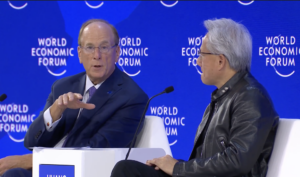
As artificial intelligence accelerates, attention is shifting from software and algorithms to the physical infrastructure that underpins it. Speaking at the World Economic Forum in Davos, Jensen Huang framed AI as an energy-intensive industrial system, with power, computing and manufacturing capacity forming its foundation.
“AI is essentially a five-layer cake,” explained Huang. “At the bottom is energy AI, because it’s processed in real time, and it generates intelligence in real time.”
In practice, this places sustained power supply at the centre of AI deployment, with real-time processing tying performance directly to energy availability. That shift is increasingly visible beyond the technology sector itself.
… to continue reading this article and more, please login, register for free, or consider subscribing to gasworld