The Saskatchewan Minister of Environment the company’s Environmental Impact Statement (EIS) for the shallow, high grade Patterson Lake South (PLS) project on 18 February. The approval follows technical acceptance of the document in June 2025 and an extensive public review period from July to September last year.
Paladin is proposing to construct, operate and decommission underground and surface facilities to support the mining and processing of uranium ore at the PLS project, which it acquired in 2024 through its acquisition of Canadian uranium project developer Fission Uranium Corporation. The main components include an underground mine, an onsite mill to process an average of 1,000 tonnes of ore per day, surface facilities to support the short- and long-term storage of waste rock and ore, an underground tailings management facility, water-handling infrastructure and an effluent treatment circuit, and additional infrastructure to support mining activities.
“The Environmental Assessment approval is an important regulatory milestone for the PLS Project and a prerequisite for permits and licences issued by provincial and federal authorities leading to construction and operation,” Paladin said.
The company said it continues to work closely with the Canadian Nuclear Safety Commission (CNSC) to progress the project within its licensing process at the federal level. Paladin is advancing the technical detail needed to support the application for a construction licence submitted to the CNSC by Fission Uranium Corporation in April 2023.
“The Patterson Lake South Project supports the province’s Growth Plan and Saskatchewan’s role as an energy supplier,” added Minister of Environment Darlene Rowden. “I am pleased to see this project moving forward with strong environmental safeguards. The environmental and sustainability aspects of the PLS Project have been subject to our robust Environmental Assessment process including scrutiny of our review panel of subject matter experts and having undergone considerable public and indigenous consultation. I commend Paladin on its approach to the approval process and congratulate their team on achieving this important milestone in their development.”
Paladin Managing Director and CEO Paul Hemburrow said: “Paladin is delighted that the Minister, the Saskatchewan Government and its environmental regulatory agency have formally recognised that our approach to delivering a sustainable and safe development at the PLS Project is both environmentally and socially appropriate and achievable. The PLS Project is an economically and strategically important development within Canada and we will continue to progress the construction licencing process with the CNSC.”
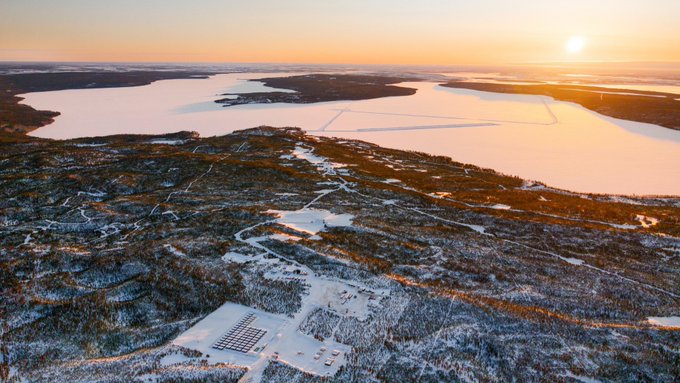
PLS is on the southwest margin of the Athabasca Basin and incorporates the Triple R deposit, which is both high grade and shallow – mineralisation starts just 50 metres below the surface. The deposit has indicated mineral resources of 114.9 million pounds U3O8 (44,196 tU) at an average grade of 1.94% U3O8, inferred resources of 15.4 million pounds at an average grade of 1.10% and probable reserves of 93.7 million pounds at an average 1.41% U3O8, all reported at a cut-off grade of 0.25%.
In 2023, Fission Uranium Corporation filed an NI 43-101 technical report summarising the feasibility study for the project, including a construction timeline of 3 years with an estimated initial capital cost of CAD1.155 billion (USD840 million) for a ten-year life-of-mine with total production of 90.9 million lbs U3O8 (35,000 tU), and an average unit operating cost of CAD13.02 per pound U3O8.