Under the – submitted on 12 March – the current Nuclear Energy Act, which was enacted in 1987, would be repealed and 14 other acts, including the Radiation Act and the Criminal Code, would be amended.
“The primary objectives of the reform are to keep the use of nuclear energy in line with the overall interest of society, to ensure the safety of operations and the responsible management of nuclear waste generated in Finland,” the Ministry of Economic Affairs and Employment said. “At the same time, it is intended to ensure that the use of nuclear energy does not contribute to the proliferation of nuclear weapons and that Finland complies with EU regulations and its international nuclear obligations.”
It added: “In accordance with Prime Minister Petteri Orpo’s government programme, the aim is to strengthen Finland’s position as an attractive investment destination for nuclear energy production and as a location for the construction of new plants. To this end, the aim is to accelerate the progress of nuclear plant projects and increase the cost-effectiveness and predictability of projects, so that the construction of new plants would be smoother.”
The Nuclear Energy Act would provide for nuclear material control, nuclear facilities, the transport of nuclear materials and nuclear waste, nuclear waste management and nuclear material recovery facilities, and other uses of nuclear energy. The ministry said the Nuclear Energy Act comprehensively regulates nuclear activities, but it has taken into account small modular reactors (SMRs), for example through the development of a permit model. In addition, the reform of the Radiation and Nuclear Safety Authority’s (STUK’s) regulations, which is linked to the reform, takes SMRs into account in many ways.
The new legislation would introduce more flexible approval, licensing and reporting procedures, which would facilitate the replication of plant solutions and the use of different implementation models throughout the plant’s life cycle. At the same time, the reform would support the introduction of new nuclear energy solutions, such as SMRs, and would enable the location of plants closer to energy use.
The licensing system would be simplified, especially in the early stages of projects, so that preparations could be carried forward more flexibly and project risks could be better managed without compromising the level of safety. The first comprehensive assessment of the overall benefit of society for a new facility project would be made in a decision-in-principle, which would be more general than at present. It would be decided by the government, but for nuclear power plant projects with a maximum thermal output of up to 50 MW, by the Ministry of Economic Affairs and Employment. The government’s decision-in-principle would be submitted to parliament as a report. The regulation of the validity of a nuclear facility’s operating licence would also be reformed so that it would be possible to extend the validity if the prescribed conditions are met.
The overall reform will change the regulation of the sector at the legal level, the ministry said. At the company level, operations are also significantly guided by STUK’s regulations, which would be completely reformed at the same pace as the law. “The main principle is a regulatory framework that maintains safety, but is more enabling, and significantly reduces detailed regulations,” it noted. “Some of the draft STUK regulations have already been subject to opinions.”
The safety regulations and licensing system for mining and ore enrichment activities would also be reformed. Uranium or thorium-containing ore is a nuclear material that is controlled in accordance with the Nuclear Energy Act to prevent the proliferation of nuclear weapons. The requirements and licensing system for a nuclear material recovery facility would be the same as for nuclear facilities, where applicable. STUK would be the licensing authority.
“Finland will always need carbon-free, affordable and reliable energy, such as nuclear energy,” Minister of the Environment and Climate Sari Multala said. “With this reform, we will ensure that its regulation adapts to different technology options and technological developments. At the same time, we will enable different implementation concepts for nuclear plant projects and improve risk management for project developers, investment certainty related to nuclear plants and access to financing for investments.
“With the reform, we will create clear, up-to-date and consistent nuclear energy legislation, which will be coordinated with other regulations. We will also clarify the roles of authorities, reduce unnecessarily detailed technical regulations and strengthen the conditions for supervision from the perspective of safety, security of supply and nuclear material safeguards.”
The new law is intended to enter into force on 1 January 2027, which would allow industry players, for example, to apply for a decision-in-principle under the revised rules during this government term.
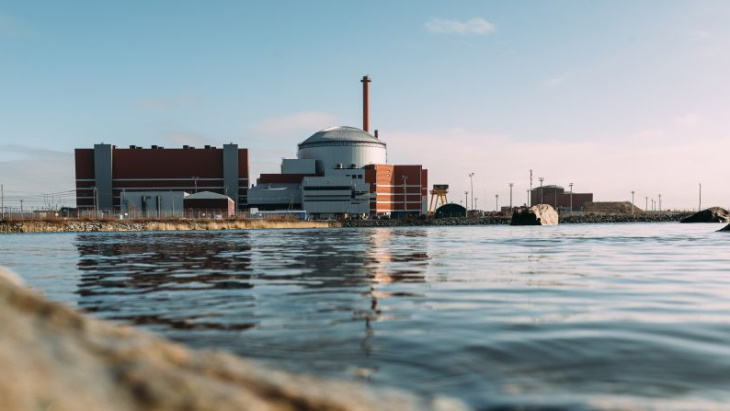
Finland currently has five operating nuclear reactors providing about one-third of its electricity.