By
13 min ago 3 min read
The European Commission (EC) ReFuelEU Aviation mandate is now active, exposing a widening gap between regulatory sustainable aviation fuel (SAF) demand and available supply.
ReFuelEU Aviation requires a 2% share of SAF in EU airports from 2025, scaling up to 70% from 2050, driving demand growth that is currently misaligned with limited production capacity.
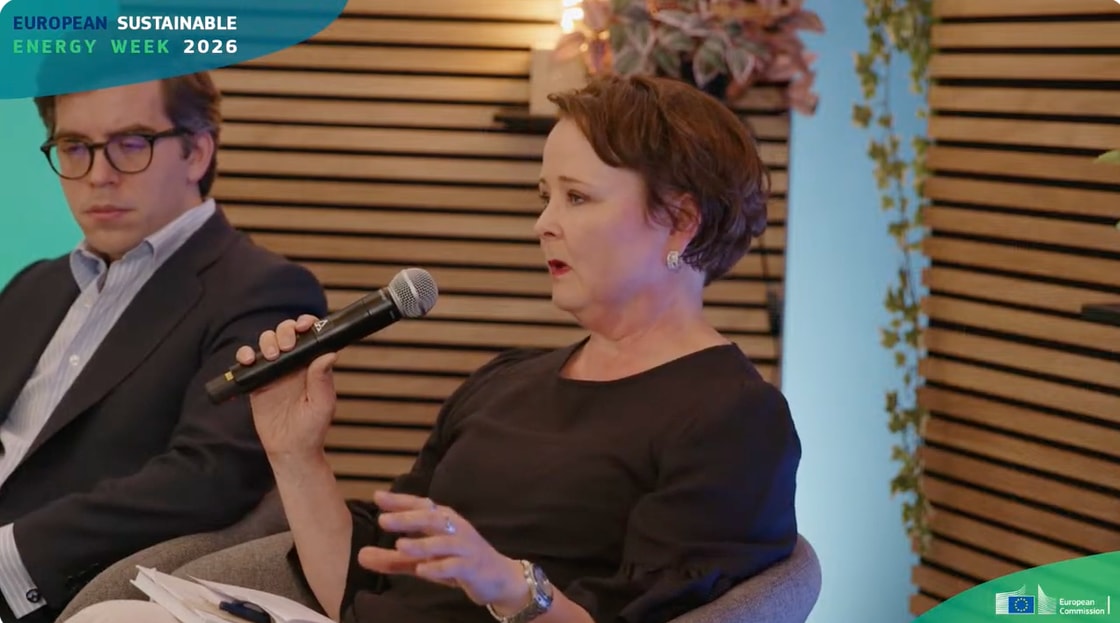
However, industry participants say the constraint is no longer policy direction, but physical availability. Speaking at the EC’s European Sustainable Energy Week (EUSEW), Anna Sotaniemi, Senior Manager of Public Affairs at Finnish airline company Finnair, said airlines are not yet able to secure the volumes required to meet emerging obligations.
Panel host Damien Meadows, Advisor on EU climate action at the EC, asked whether the eSAF debate is shifting from commercial viability to strategic procurement and supply security for airlines.
Sotaniemi said Finnair is “not yet in a position” to act on that shift in practice due to limited availability.
She also added that, while airlines are not yet able to act on eSAF at scale, the industry is still expected to prepare for future obligations.
“It doesn’t mean that we shouldn’t do anything. We should take the opportunity and make all the necessary decisions, whether policy or otherwise, so that we will be in that position,” she said.
eSAF is a synthetic aviation fuel produced via power-to-liquid processes using renewable hydrogen and captured CO2.
Finnair is active in the Finnish hydrogen cluster, which has outlined a roadmap to position Finland as one of Europe’s most competitive hydrogen economies by 2035, with eSAF identified as a key early driver.
Within this, it has set a target to produce 60,000 tonnes of eSAF annually by 2030 – around 10% of the expected EU mandate – rising to 250,000 tonnes by 2035.
“[We’re] actively seeking solutions to find a way to be part of the eSAF value chain in Finland,” Sotaniemi added.
In August 2025, Finland-headquartered technology company Liquid Sun launched an eSAF production pilot, using biogenic carbon dioxide (CO2), with Finnair, Finnish airline operator Finavia, and Nordic hydrogen technology specialists ABB and Fortum to support EU eSAF production.
Sotaniemi added that, amid jet fuel prices rising with global crude oil supply chain disruptions, airlines are expected to turn to SAF, which could be viewed as going from one dependence to another.
In 2023, around 0.2% (2,265 tonnes) of Finnair’s total kerosene consumption was SAF, but the company expects this to scale amid European SAF mandates.
Sotaniemi said eSAF represents a long-term pathway for European energy resilience, but added that airlines and producers cannot scale it alone and will require broader support.