Fuel debris removal from Fukushima reactors delayed

Tuesday, 29 July 2025

The start of full-scale fuel debris removal from the damaged reactors at Japan’s Fukushima Daiichi nuclear power plant is now expected to begin in 2037 at the earliest, instead of the early 2030s.
Fuel debris removal from Fukushima reactors delayed
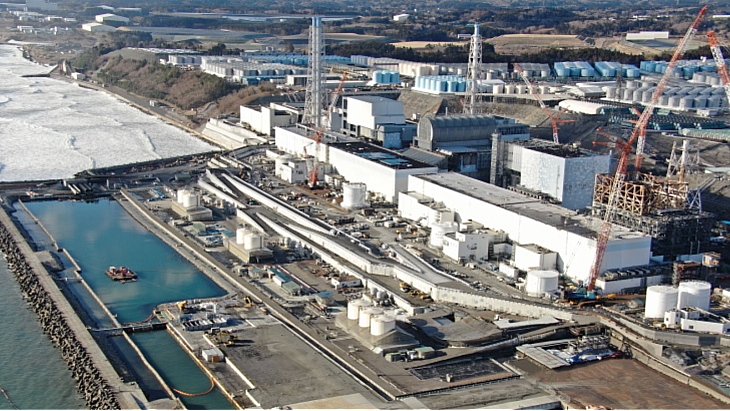
The Fukushima Daiichi plant (Image: Tepco)

In Fukushima Daiichi units 1 to 3, the fuel and the metal cladding that formed the outer jacket of the fuel rods melted, then re-solidified as fuel debris. Unit 4 does not contain any used fuel or fuel debris as it had already been defuelled before the accident.

There is an estimated total of 880 tonnes of fuel debris in units 1-3. To reduce the risk from this fuel debris, preparations are under way for retrieving it from the reactors. The aim had been to begin retrieval from unit 3, from which used nuclear fuel has already been removed. The retrieved fuel debris will be stored in the new storage facility that will be constructed within the site.

Plant operator Tokyo Electric Power Company Holdings Inc (Tepco) succeeded in extracting small samples of fuel debris from the unit 2 reactor in November 2024 and in April this year.

However, Tepco has reportedly concluded after studying the specific removal method that it would take around 12 to 15 years just to prepare for the work.

“The difficulty of retrieving the first handful of debris has become apparent,” Toyoshi Fuketa, head of the decommissioning work at the Nuclear Damage Compensation and Decommissioning Facilitation Corporation (NDC) told a press conference on 29 July, Kyodo reported.

Tepco has presented two plans to prepare for the fuel debris removal. One option involves demolishing a radioactive waste disposal building next to unit 3, while the other would keep the building in place.

In a statement, Tepco said: “Fuel debris retrieval is an extremely vital task for moving forward with decommissioning not only because it will reduce risk at the Fukushima Daiichi Nuclear Power Station but also because it presents unprecedented technological challenges. TEPCO will proceed with difficult tasks for the fuel debris retrieval step by step while prioritising safety as it aims to finish decommissioning in 30-40 years, as laid out in the Mid-and-Long-Term Roadmap, and fully complete the decommissioning of the Fukushima Daiichi Nuclear Power Station.”


   

  • Related Posts

    Newcleo advances MOX fuel licensing in France

    Prior to applying for authorisation to construct a nuclear facility in France, a project developer may submit all or part of the design of its nuclear installation to the Autorité…

    Mochovce 4 preparing for physical start-up tests

    Two weeks after the 349 fuel assemblies were loaded, a series of checks and tests have taken place to confirm the readiness of the primary circuit for the next stage…

    Have You Seen?

    Magnolia Oil & Gas to Buy WildFire Energy in $4.06 Billion Deal

    • July 21, 2026
    Magnolia Oil & Gas to Buy WildFire Energy in $4.06 Billion Deal

    Oil Stocks in US Strategic Petroleum Reserve Fall by 5.1 Million Barrels to Lowest Level Since 1983

    • July 21, 2026
    Oil Stocks in US Strategic Petroleum Reserve Fall by 5.1 Million Barrels to Lowest Level Since 1983

    Chevron Shuts in US Gulf Platform in Preparation for Developing Tropical Storm

    • July 21, 2026
    Chevron Shuts in US Gulf Platform in Preparation for Developing Tropical Storm

    Oil Settles 1% Higher as Hopes of Renewed US-Iran Negotiations Offset Houthi Threat

    • July 21, 2026
    Oil Settles 1% Higher as Hopes of Renewed US-Iran Negotiations Offset Houthi Threat

    Gulf Oil Exports Briefly Recovered to Pre-War Levels Before Latest Escalation

    • July 20, 2026
    Gulf Oil Exports Briefly Recovered to Pre-War Levels Before Latest Escalation

    LNG Shipments Through Strait of Hormuz Grind to a Halt as Conflict Escalates

    • July 20, 2026
    LNG Shipments Through Strait of Hormuz Grind to a Halt as Conflict Escalates

    China’s Fuel Oil Exports Hit 2026 High as Shipping Demand Rebounds

    • July 20, 2026
    China’s Fuel Oil Exports Hit 2026 High as Shipping Demand Rebounds

    Tankers Fear Hormuz Transit as Iran Stops Vessels

    • July 20, 2026
    Tankers Fear Hormuz Transit as Iran Stops Vessels

    China’s LNG Buying Spree Tightens Global Gas Market

    • July 20, 2026
    China’s LNG Buying Spree Tightens Global Gas Market

    India’s Crude Oil Import Bill Soars 60% as Iran War Drives Prices Higher

    • July 20, 2026
    India’s Crude Oil Import Bill Soars 60% as Iran War Drives Prices Higher