Friday, 21 March 2025
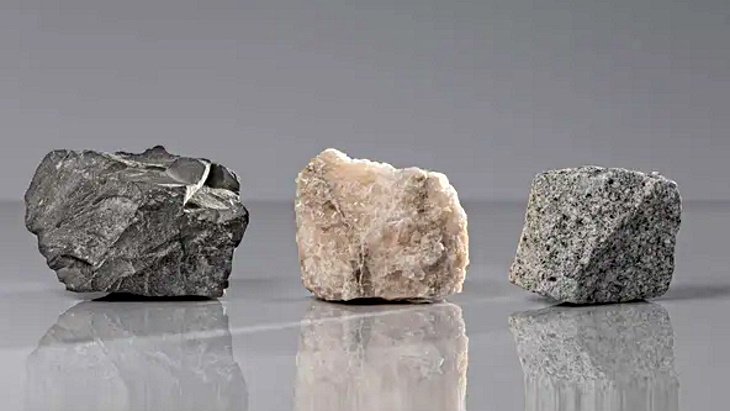
Last year, the Federal Office for the Safety of Nuclear Waste Management (BASE) published a study which determined timescales up to 2074 to find the site with the best possible safety for a million years.
The Federal Company for Radioactive Waste Disposal (BGE) – which is responsible for proposing a suitable site – notes that, in addition to permits, the exploration work requires a variety of rights of use and access to the land on which the exploration is to be carried out. This represents a bottleneck, and this entails considerable time-related risks, BGE said. In order to be able to carry out the exploration work in the designated siting regions promptly, specific legal adjustments are necessary to accelerate the process. BGE proposes applying regulations that have already proven successful in the expansion of renewable energies to the search for a final repository. It proposes structuring the exploration phase in a similar way to that used in the search for raw materials.
BGE proposes merging Phases II and III of the site selection process into a single phase with a phased exploration to gradually identify a maximum of three optimal sites, which will then be compared with each other. BGE intends to propose a small number of sites (between five and ten) for surface exploration to BASE by the end of 2027. The site-specific exploration programmes must also be submitted to BASE for review along with the site region proposal.
The Law on the Search and Selection of a Site for a Repository for High-Level Waste (the Site Selection Act – StandAG) stipulates a multi-phase search for a site with the best possible safety precautions and the full participation of the public, especially in the regions where the sites will be located.
BGE said if the potential for combining Phases II and III is to be utilised, the groundwork for amending the StandAG must be laid within the next two years to ensure that the exploration programmes are adapted to the new strategy in a timely manner.
“From a project perspective, BGE’s proposals are essential for ultimately successfully and timely proposing the site with the best possible safety for the final repository for high-level radioactive waste,” said BGE CEO Iris Graffunder. “If the current rules regarding rights of use and access remain in place, even the denial of access rights for a single piece of land where exploration measures are required could delay the site selection process by years.
“If the current regulations remain in place, BGE would have to submit identical applications in several federal states without knowing when the respective responsible states would grant their permits, or not. This also has a high potential for delays.”
She added: “Site selection for the repository for high-level radioactive waste is a highly complex process. But it is still possible to have a site determined by the middle of this century.”
BASE recommendations
BASE – which is responsible for ensuring people and the environment are protected from ionising radiation from radioactive waste – says that accelerating the search for a repository for high-level waste is necessary “in view of the aspects of intergenerational justice, the ultimate safety of people from high-level radioactive waste, and the trust of citizens in the process and the state institutions involved in the process”.
It says its proposals include changes in the implementation of the site selection procedure as well as the StandAG itself, “but are compatible with its principles”.
According to BASE, the aim of the acceleration proposals should be to develop a binding timetable, including milestones, for all parties involved in the search process, with which a safe site can be identified by around 2050.
BASE’s recommendations include: limiting the number of location regions at the end of Phase I to a maximum of six; more closely linking preparatory work for mining approval procedures to the submission of the site region proposal; enabling exploration work all year round through legal adjustments; and using modern exploration methods and drilling techniques for underground exploration instead of digging entire exploratory mines as required by law.
“From BASE’s perspective, these measures promise the greatest acceleration potential, ranging from several years to decades. At the same time, they are generally the most complex and, due to their long-term impact, should be implemented early in the process to ensure their full impact,” it said.
The Federal Ministry for the Environment, Nature Conservation, Nuclear Safety and Consumer Protection (BMUV) has announced that, after examining the proposals submitted, it will hold discussions with BASE and BGE to identify and implement ways to accelerate the process.
In September 2020, BGE published a list of potential storage sites in Germany for radioactive waste. It identified 90 areas covering 54% of the country’s surface area as potentially geologically suitable. The report excluded a site at a former salt mine in Gorleben that was previously thought suitable. The selected site would store about 1900 containers of waste, which account for 5% of Germany’s total nuclear waste but 99% of its radioactivity.