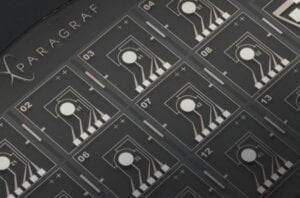
UK-based medical technology company Paragraf is using a contamination-free approach to produce high-purity two-dimensional graphene at wafer scale and has spoken about how essential high-purity specialty gases are to this process.
The company uses a technique called metal-organic chemical vapour deposition (CVD) to create the material. This involves decomposing gases at high temperature so their atoms deposit onto a colder surface as a thin film. In the case of graphene, carbon-rich methane is deposited while hydrogen helps clean and control the growth and nitrogen or argon is used to keep impurities out.
In its Somersham facility, Paragraf’s two reactors produce enough graphene to make 150,000 graphene-based sensors a day. These products are already being used in electronic devices such as magnetic field sensors and biosensors, with applications spanning healthcare diagnostics, automotive systems and quantum computing platforms.
… to continue reading this article and more, please login, register for free, or consider subscribing to gasworld