By
28 min ago 2 min read
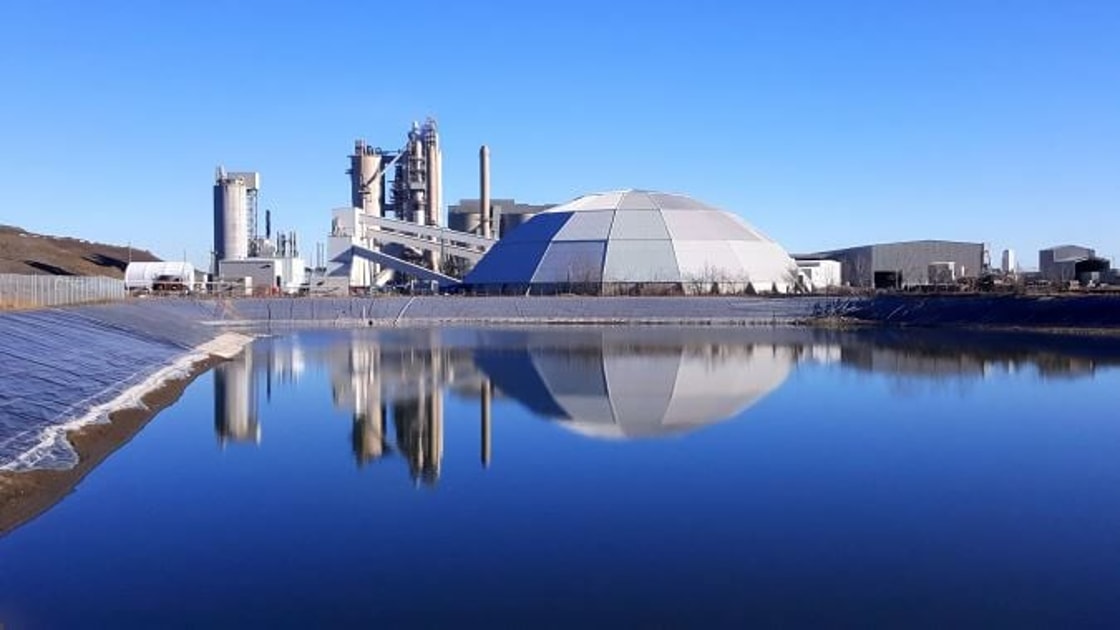
Cement producer Heidelberg Materials North America has faced project delays at its integrated C$1.36bn Edmonton carbon capture, utilisation, and storage (CCUS) cement plant in Alberta, according to reports.
Carbon capture operations were to begin late 2026, with the facility intended to become the first net-zero cement plant globally. A revised start date has not been confirmed.
The Edmonton CCUS project has a planned capture capacity of around one million metric tonnes (Mt) of carbon dioxide (CO2) per year.
In February 2024, French engineering technology firm Technip Energies was selected to partner with Heidelberg Materials in the landmark project, having been awarded a front-end engineering and design (FEED) contract for the carbon capture technology.
MHI-LCSC, a division of Mitsubishi Heavy Industries Group specialising in CO2 capture services and clean fuel initiatives in Canada, along with construction engineering firm Kiewit, also a FEED contract for the carbon capture technology at the Edmonton CCUS project in April 2024.
Concrete decarbonisation in Canada
In 2023, the Canadian government signed a partnership with Heidelberg Materials aimed at decarbonising the domestic cement and concrete sector.
Under a signed memorandum of understanding (MoU), the Canadian government agreed to support the development of the CCUS and combined heat and power (CHP) systems at the Edmonton site.
The project was viewed as a major step towards achieving the Canadian government’s goal of net-zero carbon concrete manufacturing by 2050.
According to Natural Resources Canada, there are over 570 CCUS projects in development worldwide, but a larger project pipeline is needed to achieve global net-zero targets.
By 2030, 368 CCUS projects are expected to be operational, with a projected capture capacity of 743 Mt of CO2 annually.
In 2022, the Canadian government reported that more than 1,100 ready-mix concrete, precast concrete, concrete pipe, and masonry plants were operational across Canada.
Between 2022 and 2027, Canada is projected to produce 55 million tonnes of cement and 400 million tonnes of concrete.
The cement industry is one of the most carbon-intensive manufacturing sectors. According to the European Commission, the cement sector is responsible for around 7% of global CO2 emissions.