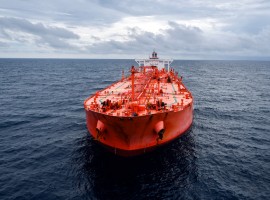
Shipping across the crucial Strait of Hormuz has picked up in recent days despite a continuation of hostilities in the Middle East, with the US claiming its navy escorted some tankers across the waterway.
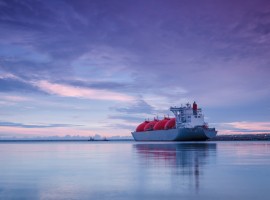
The Al Areesh openly exited the Persian Gulf early Thursday carrying a liquefied natural gas cargo from Qatar, the country’s first shipment in three weeks, while the liquefied petroleum gas carrier CYH Yongchun appeared to transit the strait with its transponder off, according to ship-tracking data.
Fourteen commodity vessels crossed Hormuz in both directions on Wednesday, data from market intelligence firm Kpler shows, up from single digits last week. The figures may still be revised with new information. A crude supertanker has also been provisionally booked at nearly $500,000 per day to collect a cargo at an unnamed Persian Gulf port next week for delivery to China.
Shipowners and traders have zeroed in on maritime activity through Hormuz and the Bab el-Mandeb strait in the Red Sea for signs of how vessels are navigating a constantly changing security environment. Traffic through these waterways has ebbed and flowed with each wave of attacks, including on tankers.
Traffic through Hormuz dwindled after the US intensified its strikes on Iran in mid-July, which was met by retaliatory attacks by Tehran on countries including Kuwait. Hostilities resumed this week after a brief pause, but Energy Secretary Chris Wright said oil has continued to flow with US military support.
“We are using the United States military to escort out oil and gas out of the Strait of Hormuz,” he told Bloomberg Radio, saying about 6.5 million barrels of oil a day exited the gulf via the strait over the past week. “We are restoring supplies of global oil and refined products to the world out of that region.”
In the Red Sea, some tankers were seen entering the Gulf of Aden, signaling their intention to call at the Saudi Arabian port of Yanbu, despite the threat of attack from Iran-back Houthi militants. Some Asian buyers appear to be picking up cargoes at Egypt’s Mediterranean port of Sidi Kerir, where Saudi Arabia is known to export its crude.
In other shipping developments:
Strait of Hormuz, the Persian Gulf, Gulf of Oman
- A Norwegian-flagged products tanker appears to be preparing to exit
- Two Iran-linked Suezmaxes, Chloe and Kariz, sailed into the strait and are now idling off Iran’s Bandar Abbas
- Very large crude carrier Jamaica Prosperity was provisionally fixed by the shipping unit of a Chinese charterer to pick up a Persian Gulf cargo on Aug. 3 at 465 Worldscale points, or nearly $500,000 per day
Southern Red Sea
- Twenty-one commodity vessels crossed the Bab el-Mandeb strait in either direction on Wednesday, compared to 38 a day earlier: Kpler
- Only Russian crude left via the chokepoint, totaling about 3.5 million barrels, although some vessels may have transited with transponders off
- South Korean-controlled VLCC V Glory seen approaching Gulf of Aden recently before going dark; Saudi-flagged Samha seen doing so on Thursday
- On Wednesday, some ships were provisionally booked to load from Yanbu in August, with the option of exiting via Bab el-Mandeb to reach South Korea
Northern Red Sea
- Two LNG carriers were struck late Wednesday at Egypt’s Damietta port near the mouth of the Suez Canal; no one has claimed responsibility yet
- Japanese-flagged VLCC Takamatsu Maru is the latest to divert to Egypt’s Sidi Kerir on the Mediterranean coast as a destination from US previously; ship is currently southeast of Africa
- Bidbid and VL Prosperity have arrived at and loading from Sidi Kerir, with previously reported destinations in Asia
- Three VLCCs – Olympic Luck, DHT Gazelle and DHT Mustang – that departed Yanbu are currently idling off Sidi Kerir with no clear destination
What do you think? We’d love to hear from you, join the conversation on the
The is a new social experience created for you and all energy professionals to Speak Up about our industry, share knowledge, connect with peers and industry insiders and engage in a professional community that will empower your career in energy.