In a post on X on Wednesday evening, the agency said: “The IAEA has been informed by the Russian Federation that the ZNPP (Zaporizhzhia Nuclear Power Plant) chief engineer was killed in a drone strike near the site today. DG condemns the reported incident which he says represents an unacceptable attack on the plant and its management, seriously threatening nuclear safety. The IAEA calls for an immediate end to all attacks on or near nuclear sites and their staff.”
According to Russia’s state nuclear corporation Rosatom, Alexander Yakovlev, chief engineer at the plant, was killed in a drone strike, along with the driver when their vehicle was hit “at the border of the plant’s industrial site and the city of Energodar”.
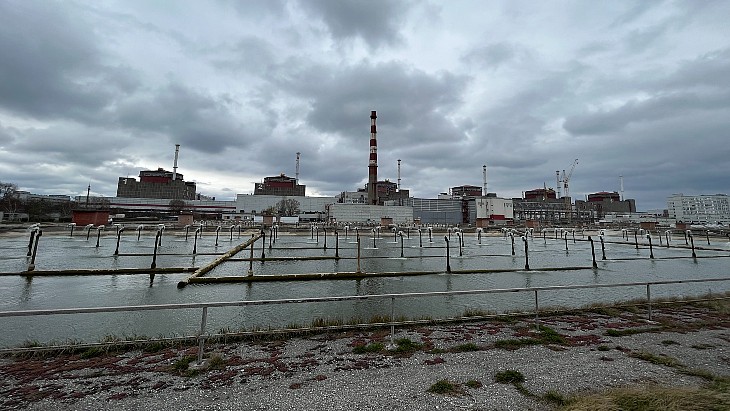
The six-unit Zaporizhzhia Nuclear Power Plant has been under Russian military control since early March 2022. It is located close to the frontline of Russian and Ukrainian forces. There has been an IAEA team of experts sited at the plant since September 2022 as part of efforts to ensure safety and security at the site.
The IAEA has a long-held policy of not attributing blame for incidents during the conflict, which was explained by its director general in 2024 at a United Nations Security Council press conference: “We are not commentators. We are not political speculators or analysts, we are an international agency of inspectors. And in order to say something like that, we must have proof, indisputable evidence, that an attack, or remnants of ammunition or any other weapon, is coming from a certain place.”
Calls for restraint
Earlier on Wednesday the IAEA had published its latest update on the situation in Ukraine, saying that “in recent days, the ZNPP reported several drone attacks in Energodar, where many plant staff live. On 12 July, drone attacks reportedly caused several casualties, including among ZNPP workers and subcontractors. On 13 July, further attacks reportedly targeted residential buildings, the city fire station, grocery stores and Energodar hospital, which remained operational despite damage to a service vehicle and diesel generator. The IAEA team observed smoke in the direction of the hospital. On 14 July, a ZNPP staff transportation vehicle also came under drone attack, with no casualties or injuries reported, the ZNPP said”.
Grossi said in that earlier update that staff at the plant “continue to work under extremely difficult circumstances. Military activity in Energodar can add to the pressures facing them and their families. This is directly relevant to nuclear safety and the IAEA’s Seven Indispensable Pillars, which state that operating staff must be able to fulfil their duties and make decisions free of undue pressure. Once again, I call for maximum military restraint in the vicinity of nuclear power sites to avoid any risk of a nuclear accident”.
He also reported that the plant had lost all external power for a short period on Tuesday afternoon, for the 22nd time since the war began. The plant is currently relying on its one operating backup power line, with work continuing to get its main external line back up and running. When external power is lost the plant has to rely on emergency backup diesel generators.
Grossi said: “The frequent interruptions in external power show how fragile the electrical grid situation remains … the plant needs a reliable and stable grid connection to maintain its essential safety and security functions, including in its current shutdown state. The repeated outages demonstrate the need for continued efforts to shore up the off-site power situation, and the IAEA will continue its intensive work in this area.”
The update also included the IAEA reporting that it had been told that eight drone flights had been detected in the area of the Chernobyl Nuclear Power Plant site between 9 and 14 July. “The continued presence of drones near nuclear sites is a further reminder of the risks this war poses to nuclear safety and security,” Grossi said.