Friday, 29 November 2024
In the agency’s latest update it said that the nuclear power plants – Khmelnitsky, Rivne and South Ukraine – had to lower their power levels on Thursday for the second time in two weeks as a precautionary safety step. The three plants have a total of nine reactors between them. One reactor at Rivne was disconnected from the grid and all three plants continued to receive off-site power, although Khmelnitsky lost connection to two of its power lines.
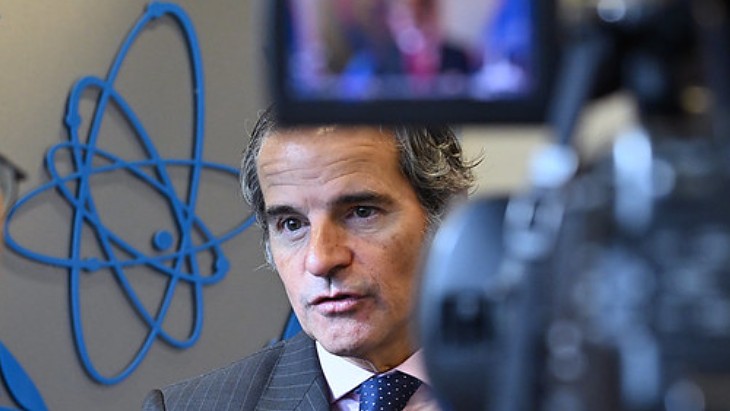
Grossi said: “Ukraine’s energy infrastructure is extremely fragile and vulnerable, putting nuclear safety at great risk. Once again, I call for maximum military restraint in areas with major nuclear energy facilities and other sites on which they depend.”
IAEA teams visited seven substations located outside the nuclear power plants in Ukraine in September and October to assess the situation after strikes on the energy infrastructure in August. Grossi reported to the IAEA board of governors earlier this month that there had been “extensive damage” and concluded that the reliability of off-site supply to nuclear power plants had been “significantly reduced”.
In his statement issued on Thursday, he said: “The IAEA will continue to assess the extent of damage to facilities and power lines that are essential for nuclear safety and security. The IAEA will continue to do everything in its power to reduce the risk of a nuclear incident during this tragic war.”
The IAEA has had teams stationed at each of Ukraine’s nuclear power plants, and it said there had been no reports of direct damage to nuclear power plants.
Nuclear power plants need to have an electricity supply to ensure necessary safety functions can take place as well as reactor cooling, and they also need reliable connections to the grid to be able to distribute the electricity they produce. In addition to Ukraine’s three operating nuclear power plants, Zaporizhzhia nuclear power plant has been under Russian military control since early March 2022. Its reactors are all shut down and it has had to rely on emergency diesel generators on occasions when it has lost all access to off-site power.
The IAEA has set out its seven rules for nuclear safety and security during the Russian-Ukraine conflict, which have been adopted by the United Nations Security Council. They include the core principles that no-one should fire at, or from a nuclear power plant, or use a nuclear power plant as a military base.