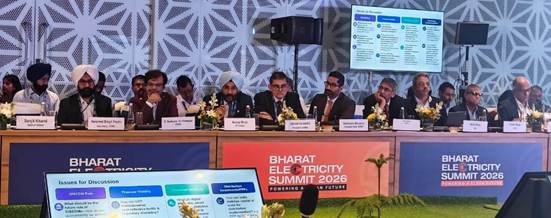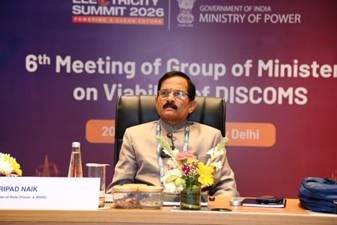
Shripad Yesso Naik, Union Minister of State for Power and New & Renewable Energy, chaired the 6th meeting of the Group of Ministers (GoM) focused on addressing the financial viability of electricity distribution utilities (DISCOMs) in India.
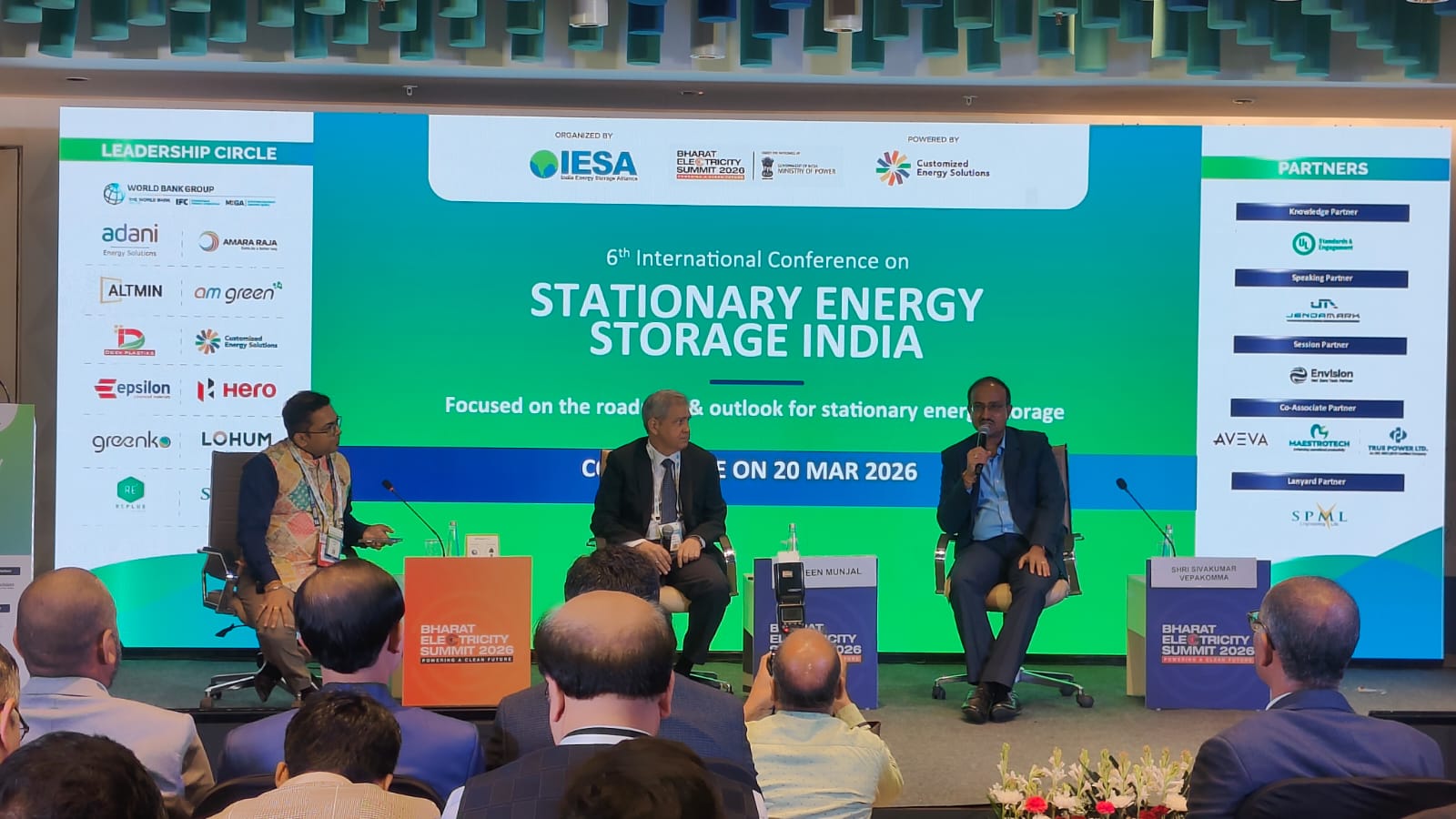
The meeting was held on the sidelines of the Bharat Electricity Summit 2026 in New Delhi and witnessed participation from key state energy leaders, including A. K. Sharma, Pradyuman Singh Tomar, Hiralal Nagar, and Meghana Bordikar, along with senior officials from central and state governments and power utilities.
In his opening remarks, Naik highlighted that India’s power distribution sector has, for the first time, recorded a sector-wide profit, driven by reductions in Aggregate Technical & Commercial (AT&C) losses and narrowing of the ACS-ARR gap. However, he cautioned that these gains remain fragile and uneven, with nearly half of DISCOMs still operating at a loss and burdened by significant debt.
The Minister underscored structural challenges, including non-cost-reflective tariffs, delays in subsidy disbursements, and reliance on short-term borrowing, which continue to weaken the financial health of utilities. He also pointed to rising open access adoption by industrial and commercial consumers, driven by cross-subsidy distortions, as a growing threat to DISCOM revenues.
Naik emphasized that sustainable reform must be anchored on three key pillars: regulatory discipline through timely and cost-reflective tariffs, decisive government action including debt restructuring and professional management of utilities, and operational excellence led by digitalisation, smart metering, and data-driven efficiency improvements.
Officials from the Ministry of Power presented the current financial status of state DISCOMs and outlined recommendations aligned with the 16th Finance Commission to enhance sector viability. Discussions also reviewed findings from previous GoM meetings and explored actionable reform pathways.
During deliberations, states broadly endorsed the GoM’s recommendations and called for stronger policy mandates to ensure cost-based tariff implementation. They also sought central support for reform-linked debt restructuring and proposed follow-up meetings with time-bound action plans for stakeholders.
The meeting concluded with a collective commitment from the Group of Ministers to accelerate reforms aimed at improving the financial sustainability of distribution utilities. Naik urged states to take ownership of structural reforms, positioning the distribution segment as a cornerstone of India’s energy transition and its broader vision of a developed nation.
The discussions reaffirmed that ensuring DISCOM viability is critical to unlocking long-term investments and achieving a resilient and efficient power sector in India.
Subscribe to get the latest posts sent to your email.