Monday, 19 May 2025
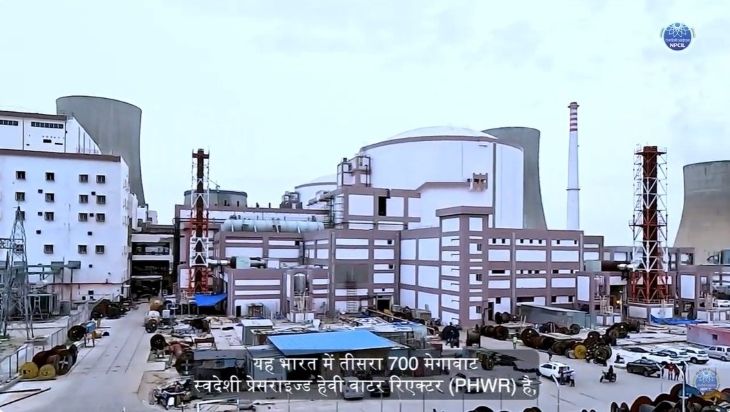
The Atomic Energy Regulatory Board (AERB) consent is for the siting of four Indian-designed 700 MWe pressurised heavy water reactors (PHWRs) at the site, near the village of Napla, in the Banswara district. The AERB’s consent is valid for five years.
The AERB describes siting consent as the first major stage in its licensing of nuclear facilities, followed by construction, commissioning, operation and decommissioning. Consent for siting involves ensuring of the suitability of the site for the proposed facility, including from an engineering point of view, and includes reviews of the site itself, how the facility and the site will interact with each other, and the site’s suitability for the implementation of emergency actions. The review process includes a range of studies depending what is applicable to that particular site and project, such as geotechnical, hydrogeological, radioactive impact assessment, baseline natural background, soil studies, and mapping of surrounding areas.
According to the , the Mahi Banswara site has undergone the reviews required under its regulations. It has consented to the siting of the four units – also known as MBRAPP – subject to satisfactory compliance with conditions including obtaining environmental clearance from the “relevant competent authority”.
The four Mahi Banswara units are among ten units that the Indian government has sanctioned to be built under a “fleet” approach: the others are Kaiga units 5 and 6 (in Karnataka), Gorakhpur units 3 and 4 (Haryana), and Chutka units 1 and 2 (Madhyar Pradesh). Two 700 MWe PHWR units at Kakrapar, in Gujurat, are already in commercial operation. Another, Rajasthan unit 7, was connected to the grid in March, and construction is ongoing on Rajasthan unit 8.
The Mahi Banswara units are to be developed under Anushakti Vidhyut Nigam Ltd (Ashvini), a joint venture between Nuclear Power Corporation of India Ltd (NPCIL) and National Thermal Power Corporation (NTPC). Formation of the 51% NPCIL:49% NTPC joint venture set up to construct, own and operate nuclear power plants in India received approval from the government last year.
Under current Indian legislation, only two companies – NPCIL and Bharatiya Nabhikiya Vidyut Nigam Limited (Bhavini, set up to build and operate fast reactors) – are legally allowed to own and operate nuclear power plants in India, but a 2016 amendment to the 1962 Atomic Energy Act allows public sector joint ventures. In January, NPCIL signed an agreement to enable the transfer of the MPRAPP project from NPCIL to the Ashvini joint venture.
Article researched and written by WNN’s