Summary
• Trump, mad at Putin, threatens tariffs on buyers of Russian oil
• Market would look for OPEC response to any drop in Russian supply, analysts say
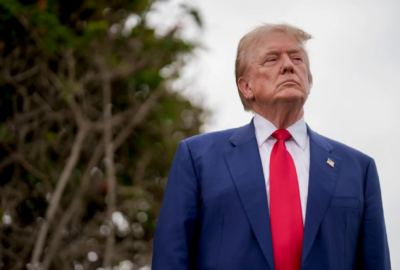
(Reuters) – Oil markets rose on Monday after U.S. President Donald Trump threatened to hit buyers of Russian oil with tariffs, although gains were muted as traders tried to determine how seriously to take the latest pronouncement from the White House.
Trump’s off-the-cuff proposal to hit any country buying Russian oil with a 25% to 50% tariff would be significant for oil markets if it turned into an order, but analysts and traders questioned whether the president was serious.
“There’s an element of fatigue with the announcements from the U.S. administration on tariffs and sanctions,” said ING’s head of commodities strategy Warren Patterson.
“So I suspect until we get something more concrete, the market is not going to overreact to this,” he said.
Oil prices rose on Monday with the more active June Brent crude futures up 69 cents, or 0.95%, to $73.45 a barrel by 0817 GMT, and the U.S. West Texas Intermediate crude climbed 68 cents, or 0.98%, to $70.04 a barrel.
China and India are the major buyers of Russian crude and their acquiescence would be crucial to making any secondary sanctions package seriously hurt exports from the world’s second-largest oil exporter.
In the aftermath of Russia’s invasion of Ukraine in 2022, India surpassed China to become the biggest buyer of seaborne Russian crude, which comprised about 35% of India’s total crude imports in 2024, raising the stakes for what has become a crucial outlet for Moscow if Trump exerts pressure on New Delhi.
In February, India’s oil secretary said the country’s refiners would buy Russian oil supplied by companies and ships not sanctioned by the U.S., effectively reducing the number of cargoes and vessels available.
Meanwhile Chinese state oil companies have shied away from Russian oil, with Sinopec and Zhenhua Oil halting purchases, while two others scaled back volumes in the face of renewed U.S. sanctions, Reuters has reported.
However, on Monday morning several Chinese traders said they were unfazed by the latest threat. Three who spoke with Reuters all said Trump’s penchant for brinkmanship meant they discounted what he said.
“It’s hard to tell what the impact would be as Trump is always bluffing,” said one trader.
In India, a refinery official said the threat added uncertainty to the purchasing plans for Indian refiners and was creating a bad situation for crude buyers.
Refiners have already tied up purchases for April and May, added the official, who was not authorised to speak publicly on the matter and asked not to be named.
China’s Ministry of Foreign Affairs said its cooperation with Russia is neither directed nor affected by third parties, in response to a question about the tariffs at a daily news briefing.
India’s oil ministry did not immediately respond to a request for comment.
If the tariffs became a serious threat, markets would look to how strictly the policy would be enforced and whether the Organization of the Petroleum Exporting Countries would ramp up production to make up for any drop in Russian exports, analysts said.
The secondary sanctions imposed on Venezuelan oil last week could serve as a model for markets to assess the impact of a similar set of policies against Russia, said Patterson.
Chinese buyers had already paused purchases ahead of those sanctions taking effect on Wednesday. Traders and analysts expect some sales to resume as buyers find workarounds unless Beijing issues a blanket ban.
Reporting by Lewis Jackson in Beijing, Siyi Liu in Singapore, and Nidhi Verma in New Delhi; additional reporting from Joe Cash in Beijing; Editing by Sonali Paul, Ros Russell and Joe Bavier
Share This:
More News Articles