Yemen’s Houthi rebels have now formally joined the escalating Middle East conflict, J.P. Morgan analysts, including the company’s head of global commodities strategy, Natasha Kaneva, said in a report sent to Rigzone by Kaneva late Sunday.
“While their involvement is not yet decisive, it introduces a second maritime pressure point in the Red Sea, alongside the Strait of Hormuz,” the analysts warned.
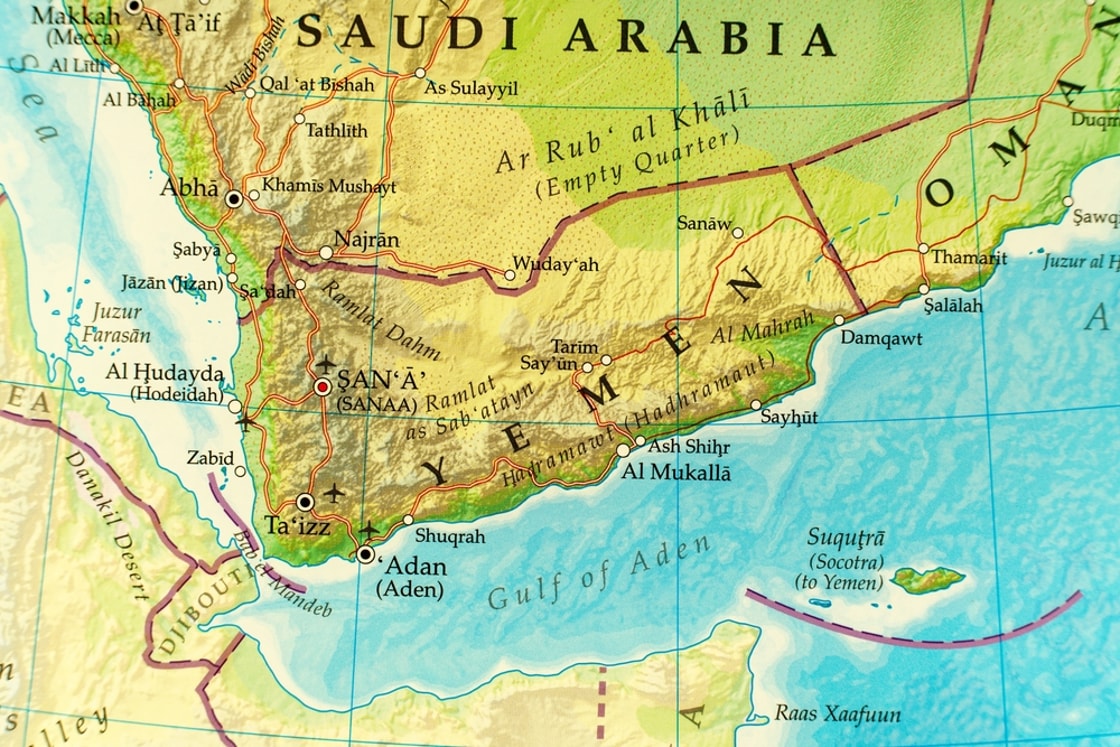
“The immediate implication is geographic: the conflict is no longer concentrated in the Persian Gulf and around the Strait of Hormuz but now extends into the Red Sea and the Bab el-Mandeb – one of the world’s most crucial chokepoints for crude and refined product flows,” they added.
“In effect, two major corridors of global energy trade are exposed simultaneously, narrowing rerouting options and increasing system-wide supply-chain risk,” they continued.
The J.P. Morgan analysts stated in the report that, operationally, the Houthis’ most meaningful leverage is their ability to threaten Saudi Arabia’s Yanbu export hub on the Red Sea and to disrupt commercial traffic through the Bab al-Mandeb strait at the Red Sea’s southern entrance.
“Even smaller nodes, such as Saudi Rabigh port with 200,000 barrels per day of oil product exports, could come under pressure,” the analysts said.
“Taken together, these risks could erode Riyadh’s ability to bypass the Strait of Hormuz,” they warned.
“In practical terms, that places roughly five million barrels per day of Saudi bypass capacity – currently routed through Yanbu – at risk, a vulnerability that could add $20 per barrel to oil prices, by our estimates,” the analysts went on to state.
In a market comment sent to Rigzone on Monday, Aaron Hill, chief market analyst at FP Markets, highlighted that the Middle East conflict has entered its fifth week, adding that “we are left with mixed messages”.
“The Strait of Hormuz – a key waterway through which a fifth of the world’s seaborne oil flows – remains all but impassable, gas pump prices are on the rise, and Trump appears to be running foreign policy through his Truth Social feed,” Hill noted.
“Suffice it to say, it was an interesting week,” he pointed out.
In that market comment, Hill said “energy prices, for the most part, largely overlooked Trump’s late week attempts at de-escalation”.
“Brent Crude spot prices settled firmly back above $100 per barrel, up 6.2 percent at the close last Friday to $106.30, with WTI spot ending last week considerably off worst levels and just inching back above $100 to $101.17,” he added.
“Should oil remain elevated, this does not bode well for stocks, as high oil prices function as a tax on nearly every aspect of economic activity, and stocks are reflecting this,” Hill warned.
In a commodity note sent to Rigzone last Friday, Ole Hansen, Saxo Bank’s head of commodity strategy, stated that the past month “has seen energy markets undergo a regime shift”.
“What began as a geopolitical risk premium has evolved into a tangible supply shock, driven by the effective disruption of flows through the Strait of Hormuz,” Hansen said in the note.
Hansen highlighted in that note that a “critical development now unfolding is the depletion of ‘oil on water’”.
“Tankers that departed the Gulf prior to the escalation have largely completed their journeys and discharged cargoes. With limited new supply entering the market, the buffer that initially dampened price spikes is rapidly eroding,” he warned.
“At the same time, rerouting of vessels around the Cape of Good Hope has extended shipping times and increased costs, tightening prompt availability of both crude and refined products,” he added.
“This is most clearly reflected in the continued strength of diesel and jet fuel markets, where prices remain significantly elevated relative to crude, all highlighting how the market is transitioning from a futures-driven risk repricing to a physical shortage dynamic,” Hansen went on to state.
To contact the author, email