Monday, 25 November 2024
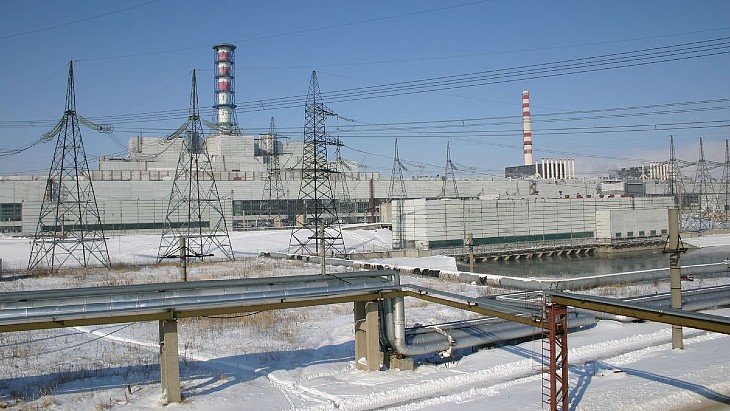
The company, part of state nuclear giant Rosatom, said the plan for the production of a broad range of medical isotopes had been supported in a public consultation process carried out over the past month. It says more than 300 people took part.
The isotopes to be produced are samarium-153, iodine-131, iodine-125, molybdenum-99 and lutetium-177. They are used for the production of radiopharmaceuticals for the diagnosis and treatment of a range of health conditions included heart-related issues and cancers.
The production of the medical isotopes, as well as radiation-doped silicon, is currently only carried out in Russia at the Leningrad nuclear power plant.
Alexander Uvakin, Director of Kursk NPP, said: “The most important goal of our activities in the production of medical isotopes is the well-being and health of our fellow citizens, increasing the availability of modern methods of diagnosis and treatment of ailments. The nuclear industry benefits not only from its energy component. By developing competencies in the field of modern radiation technologies, we use the ability of our reactors not only to generate electricity, but also to produce products that are in demand in the country and in the world.”
Nikolay Kushkovoy, Head of the Radiation Technologies Department of the Kursk NPP, said: “Due to the design features of the RBMK reactors … without shutting down the reactor, it is possible to load a large amount of starting material, the so-called targets, simultaneously with different types of isotopes. Medical-grade isotopes are irradiated in short periods, allowing them to be produced in larger quantities. For example, it takes 120 hours to produce samarium-153, and iodine-131 takes three weeks. The irradiated target after removal with the help of special equipment will be placed in a packaging shipping container, then delivered to the customer by special transport. At the next stage, the target isotope necessary for the manufacture of radiopharmaceutical products is isolated from the irradiated target.”
The Kursk nuclear power plant began producing the cobalt-60 isotope in 2018 – it has applications in sterilising foodstuffs, medical instruments and materials, for stimulating the growth and yield of grain and vegetable crops, disinfecting and cleaning industrial waste, radiation surgery for various pathologies, and for gamma flaw detection of various products.
Rosatom says that demand for its radioisotope products has been growing, with exports up 15% in 2023 and around 2.5 million diagnostic and therapeutic procedures performed worldwide using Rosatom’s isotopes, which it says are supplied to around 170 companies in 50 countries.
Kursk nuclear power plant is home to four RBMK-1000 reactors. Kursk unit 1 was shut in 2021 after 45 years of operation, while unit 2 shut earlier this year. Units 3 and 4 are due to retire by 2031. They are being replaced by four VVER-TOI reactors at the nearby Kursk II site.