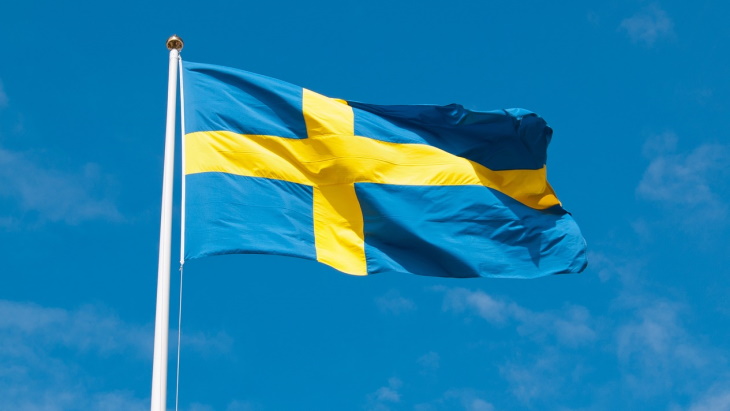
In May 2018, the Swedish parliament passed an amendment to the Environmental Code banning uranium exploration and mining in the country. As from 1 August that year, no permits for uranium exploration or mining have been issued for any such applications submitted from that date.
In February last year, Climate and Environment Minister Romina Pourmokhtari announced that a government inquiry would look into abolishing the uranium mining ban. In December, the inquiry concluded that Sweden should remove its prohibition on uranium mining to allow it to be exploited like other natural resources regulated under the Minerals Act.
The government has now proposed that the prohibition in the Environmental Code against granting permits for mining or processing facilities that involve uranium-containing material be removed and that uranium be a concession mineral according to the Minerals Act.
These changes mean that it will be possible to extract uranium in Sweden and that a complete investigation of the bedrock can be carried out during exploration. The changes also make it possible to apply for and, under certain conditions, obtain an exploration permit and processing concession for uranium.
“It must be legal to take care of the Swedish uranium that is already out of the ground; it is completely incomprehensible that the miners had to treat it as waste,” Pourmokhtari said. “The Swedish mining and mineral industry is crucial for Sweden, Europe and for the climate.”
“The ban on uranium mining was wrong when it was introduced – the fact that we are now removing it is positive for Sweden as an industrial and mining nation,” said Mats Green, group leader in the Moderate Party’s economic affairs committee. “The ban has made it more difficult for us to mine other critical and strategic minerals that are often found together with uranium. With this decision, we can improve Sweden’s and Europe’s energy dependence and secure our self-sufficiency in critical minerals.”
Tobias Andersson, chairman of the Sweden Democrats’ business committee, added: “The Sweden Democrats opposed the ideologically motivated ban on uranium mining in Sweden and since the ban came into place have worked to return to the previous order. It is time that we do so now, which is a prerequisite for coping with the increased need for uranium in the wake of the nuclear renaissance.”
In November 2023, Sweden’s parliament approved a bill that cleared the way for new nuclear power in the country by removing the current limit on the number of nuclear reactors in operation, as well as allowing reactors to be built on new sites. The amendment entered into force on 1 January 2024.
There is currently no uranium mining in Sweden, which has six nuclear power reactors providing about one-third of its electricity. Sweden imports most of its nuclear fuel, including all enrichment services.
In June this year, Australian mineral company Aura Energy and Neu Horizon Uranium Limited announced plans plan to enter into a strategic collaboration agreement to develop Sweden’s uranium resources should the country remove its prohibition on uranium mining. Aura Energy owns the Häggån vanadium, potash and uranium project in Sweden, which is claimed to be “one of the largest undeveloped uranium resources globally” with an Inferred Mineral Resource of 800 million pounds of contained U3O8 (307,718 tU). Neu Horizon Uranium is an Australian-based unlisted public company focused on advancing Sweden’s uranium resources. The company holds a portfolio of high potential uranium projects in key mineralised regions of Sweden.