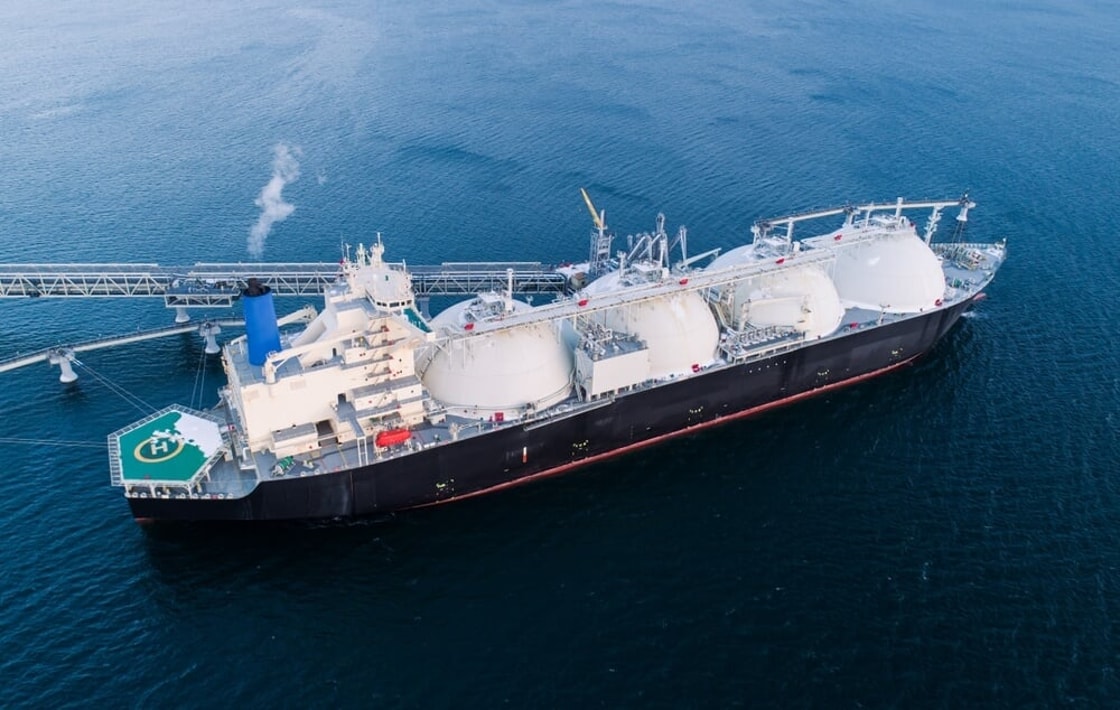
The liquefied natural gas market is bracing for a surge in supply next year, largely from top exporter the United States, but what is less certain is just how low spot prices will have to drop to clear the additional volumes.
Global supply of the super-chilled fuel is expected to rise to 475 million metric tons in 2026, according to data from commodity analysts at Kpler, a 10.2% gain over the 431 million tons forecast for 2025.
To put this figure in context, the expected increase in supply is equivalent to the total annual demand of South Korea, the world’s third-biggest LNG importer behind China and Japan.
Get the Latest US Focused Energy News Delivered to You! It’s FREE:
The bulk of the increase in LNG supply comes from the United States, with Kpler’s principal LNG analyst Go Katayama telling a seminar in Sydney on Thursday that U.S. capacity will rise to 130 million tons next year.
This is up from 90 million tons in 2024 and an expected 110 million this year.
Such a jump in supply is likely to weigh on prices, with Kpler forecasting that benchmark Asian spot prices will average $10 per million British thermal units (mmBtu) in 2026, down from about $12 in 2025.
That doesn’t seem overly bearish, but within an average price forecast for a calendar year there can be quite some movement on a week-by-week basis.
For instance, it’s likely that demand during the upcoming northern winter will keep the spot price around its current $11.10 per mmBtu, with the risk that a colder-than-usual season will push the price higher.
This means the spot price will start 2026 well above the $10 average forecast for the whole year, giving it scope to drop throughout the year.
If all 44 million tons of forecast new LNG supply does eventuate and hit the market, much of it will come in the second half of 2026.
This makes it likely that spot prices will be weaker in the second half as the market struggles to absorb additional supply.
WHO BUYS?
The question is who is likely to buy the new LNG, much of which is uncontracted and thus available for spot transactions.
China’s weak LNG imports this year may well reverse amid stronger residential and trucking demand, with Kpler expecting imports to rise 8 million tons to 75 million in 2026.
Other potential bright spots for LNG demand are India and Southeast Asian nations such as Thailand and the Philippines.
However, these countries can largely be described as price-sensitive buyers, and it would likely take a drop to below $8 per mmBtu to drive them to take significant volumes.
Europe’s LNG demand may also increase as the continent continues to walk away from Russian pipeline natural gas, but growth may be more modest as renewables increase their share of the region’s energy mix.
Whether the new volume of LNG hitting the market in 2026 will be enough to drive the spot price as low as $8 is debatable, but a further wave of supply in 2027 could be enough to rout prices.
Qatar, which vies with Australia as the second-biggest LNG producer, is advancing work to boost its output from 77 million tons to 126 million by 2027.
QatarEnergy CEO Saad al-Kaabi said last week the Middle East producer is on track to start up new production from its massive North Field by the middle of next year, with the fourth quarter being the latest it would commence.
The LNG market is heading for a situation where supply additions are running ahead of demand growth.
This is leading to a market consensus that spot prices are likely to drop on a sustained basis, which will help boost demand in Asia.
But for any lift in demand to be sustained, prices will have to remain depressed, a situation that is likely to curb future investment in new LNG capacity.
The views expressed here are those of the author, a columnist for Reuters.
(Editing by Tom Hogue)
Share This:
More News Articles