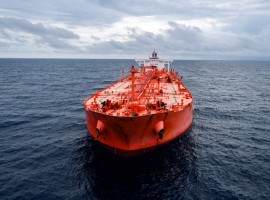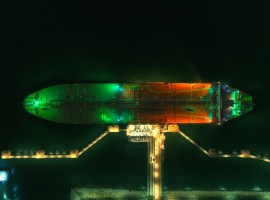
Iran’s dark fleet vessels have been increasingly engaged in ship-to-ship transfers just outside Malaysian waters, exploiting gaps in jurisdiction and enforcement rules to continue shipping oil to China, according to the Malaysian Maritime Enforcement Agency.
Despite the U.S. blockade outside the Strait of Hormuz aimed at stopping Iranian oil exports, Iran has continued to ship its oil to China—its key buyer taking more than 90% of all Iranian exports—since the war began.
Amid the U.S. blockade, Iran’s shadow fleet has significantly increased its dark mode operations within Iranian waters around the Strait of Hormuz and has expanded covert shipping operations well beyond the chokepoint, on the route to Iran’s key oil customer, China.
Malaysia and the straits around its many islands have long been a key area for ship-to-ship (STS) transfers, which load crude from one vessel to another, primarily with the purpose of hiding the cargo origin or throwing authorities off.
Since the conflict began, at least 32 Iran-flagged tankers have reached Southeast Asian waters bound for the Eastern Outer Port Limits (EOPL) anchorage off Johor, Malaysia, U.S.-based advocacy group United Against Nuclear Iran (UANI) said earlier this week.
At the same time, at least 34 Iran-flagged tankers have begun returning and reporting empty to Iran from the Malaysian EOPL and Southeast Asian sea lanes, since the start of the conflict.
As many as 42 STS transfers of Iranian oil took place in the EOPL anchorage, “a ghost fleet hotspot approximately 70 km off Malaysia’s coast,” between February 28 and May 12, according to satellite imagery analyzed by UANI.
But Malaysian authorities say Iran is exploiting a loophole in jurisdictions and therefore Malaysia can do little to stop these STS shipments.
The transfers are often carried out outside Malaysia’s territorial waters, very close to maritime boundaries, or in remote areas not covered by radar, Mohamad Rosli, Director-General of the Malaysian Maritime Enforcement Agency, told The Associated Press.
“The selection of such locations is intended to exploit jurisdictional gaps and limit direct enforcement action by local authorities,” Rosli said.
By Tsvetana Paraskova for Oilprice.com
More Top Reads From Oilprice.com
- Cuba Runs Out of Diesel and Fuel Oil as Blackouts Worsen
- BP Buys 40% Stake in Uzbek Oil and Gas Blocks
- IEA Revises 2026 Forecast: Oil Deficit Widens as Iran War Cuts Production