By | Graphics/Design
Key Takeaways
- Renewables generate 67% of Canada’s electricity, compared to just 22% in the U.S.
- Natural gas is the top power source in most U.S. states, while hydro dominates in Canada.
- Coal, nuclear, wind, solar, and even petroleum still lead in select regions.
What powers your state or province?
Get the Latest US Focused Energy News Delivered to You! It’s FREE:
The answer depends heavily on where you live. While natural gas dominates much of the United States, Canada generates two-thirds of its electricity from renewables, largely thanks to hydro power.
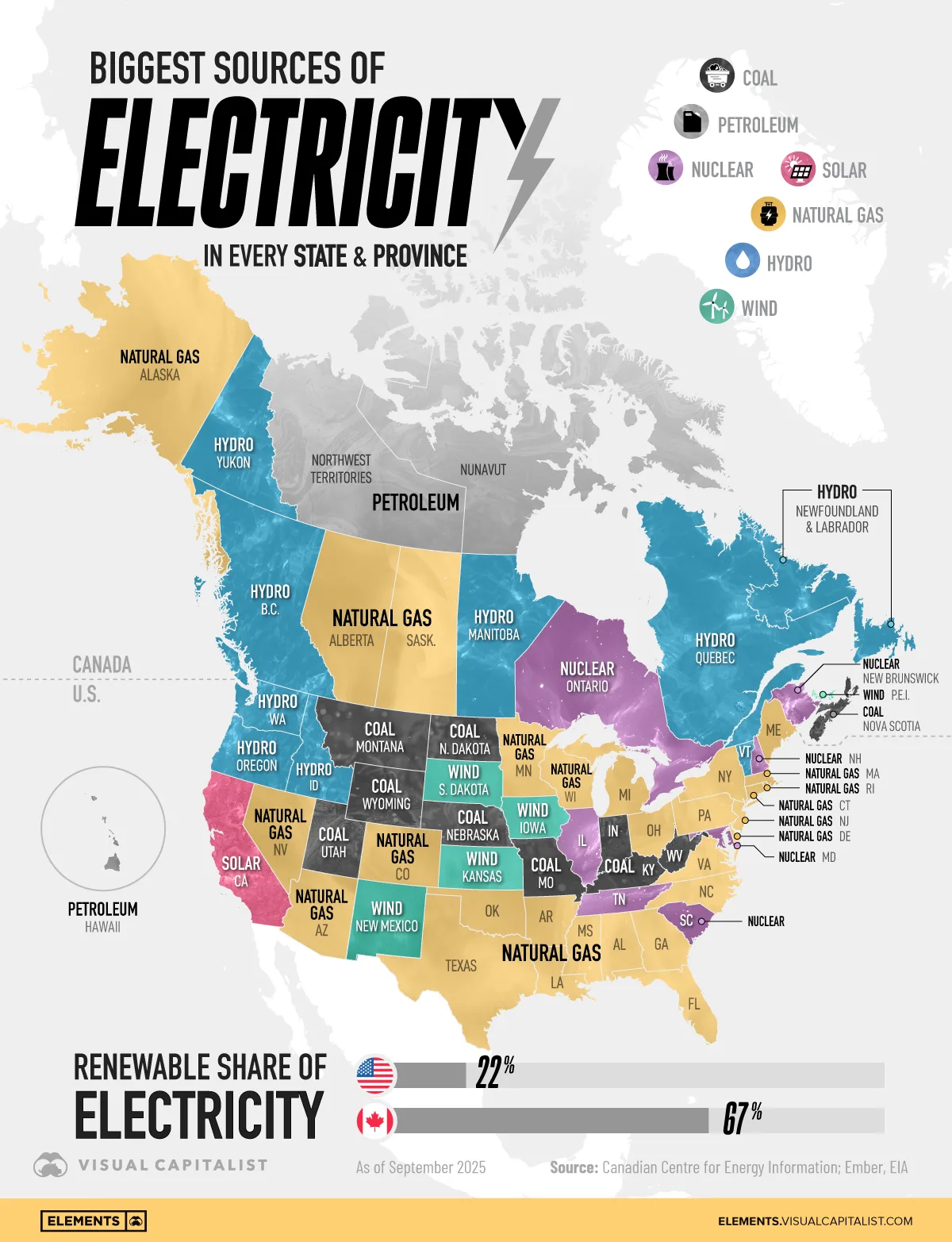
This map shows the single largest source of electricity generation in every U.S. state and Canadian province and territory, as of September 2025. The data for this visualization comes from the and .
Overall, renewables account for 67% of the power mix in Canada, compared to 22% in the United States.
Natural Gas Dominates the U.S. Map
Natural gas is the leading source of electricity in over half of U.S. states. From Texas and Florida to Pennsylvania and Virginia, gas-fired power plants anchor local grids.
This shift reflects the shale boom of the past 15 years, which made gas abundant and relatively cheap. As coal plants retired, natural gas stepped in as a flexible replacement. While cleaner than coal, it remains a fossil fuel and a major source of emissions.
Coal still leads in several states, including West Virginia, Wyoming, and Kentucky—regions historically tied to coal mining and production.
Hydro Power Anchors Canada
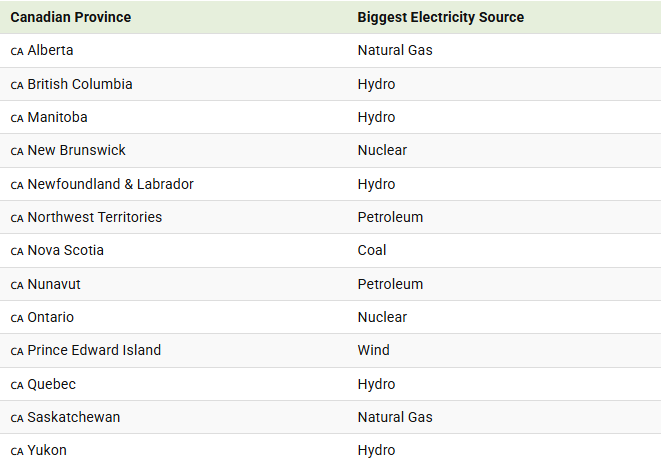
In Canada, hydroelectricity dominates much of the map. Provinces such as British Columbia, Manitoba, Quebec, and Newfoundland & Labrador generate most of their electricity from large-scale hydro projects.
Hydro’s strength comes from geography. Abundant rivers and elevation changes allow Canada to produce stable, low-carbon power at scale. As a result, Canada’s power mix is significantly lower in carbon intensity than that of the United States.
However, fossil fuels still play a role. Alberta and Saskatchewan rely primarily on natural gas, while Nova Scotia remains coal-dependent.
Nuclear and Wind Carve Out Regional Strongholds
Nuclear power leads in several key regions. Illinois, Maryland, New Hampshire, Tennessee and South Carolina are the U.S. states where nuclear is the largest source of electricity, while Ontario and New Brunswick also rely heavily on nuclear generation in Canada.
Wind also stands out across the U.S. Midwest. States like Iowa, Kansas, South Dakota, and New Mexico generate more electricity from wind than any other source. Prince Edward Island is Canada’s lone wind-dominant province.
Meanwhile, solar leads in California, reflecting years of aggressive renewable energy policy and large-scale solar investment.
Share This:
More News Articles