By
16 min ago 3 min read
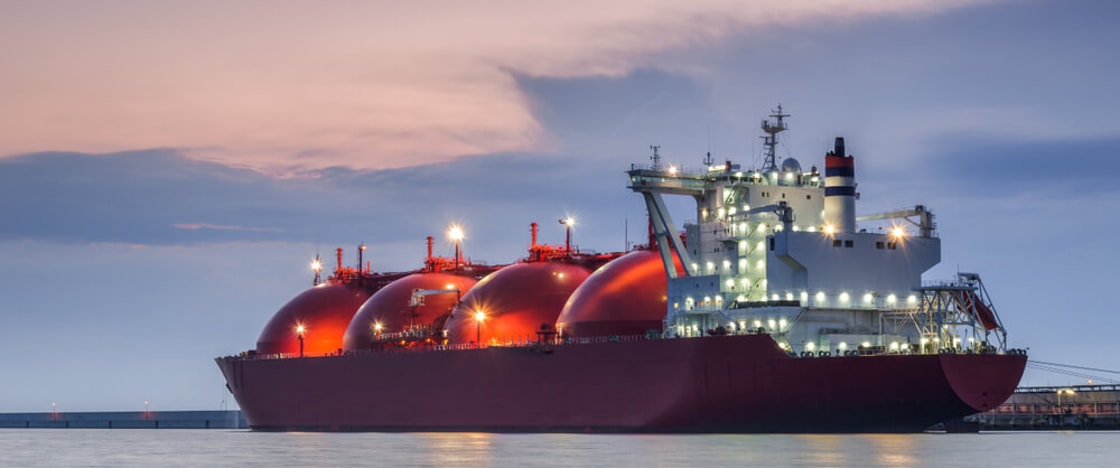
The five maritime emissions frameworks now simultaneously in force or approaching formal adoption are splitting the LNG shipping industry in two, according to research from Wood Mackenzie.
On one side, modern vessels fitted with ME-GI engines are generating the lowest methane slip and the lowest carbon compliance costs on routes to Europe. On the other, older steam turbine and dual fuel diesel electric (DFDE) vessels are accumulating compliance liabilities that are beginning to outweigh their commercial utility.
“That split is the direct consequence of … The EU Emissions Trading System, FuelEU Maritime, the IMO Net-Zero Framework, the Carbon Intensity Indicator, and the Energy Efficiency Existing Ship Index [which] are not calibrated equally across vessel types. The difference is already showing up in freight economics,” it states.
The EU ETS reached 100% emissions coverage from January 2026, completing a phase-in that began at 40% in 2024. Methane (CH₄) and nitrous oxide (N₂O) are now included alongside CO₂.
For LNG vessels with low-pressure propulsion systems such as DFDE, methane slip is no longer an environmental compliance consideration. It is a cost, calculated per unit of unburned gas escaping the engine, with EU Allowance prices at $75/tonne CO₂e in May and averaging $72/tCO₂e in 2024.
Itzel Torruco, Research Analyst – LNG Freight, Wood Mackenzie, said owners who invested in DFDE vessels expecting them to be their compliance answer are facing a more uncomfortable reality.
“Under EU rules from 2030, a DFDE ship on a European route faces penalties that make it commercially unattractive to charterers. The window to retrofit or exit is narrowing, and it has not yet been fully priced in,” he said.
By 2030, the combined EU ETS and FuelEU Maritime cost on Very Low Sulphur Fuel Oil (VLSFO) is estimated at approximately $1,256/t. That figure is 131% above fuel cost alone and compares with $705/t under the IMO framework.
FuelEU Maritime, in its first active enforcement year in 2026, requires a 2% reduction in well-to-wake GHG intensity from a 2020 baseline of 91.16 gCO₂e/MJ. Targets tighten to -6% from 2030 and -80% by 2050, with the non-compliance penalty of approximately €645/tonne CO₂e intentionally set above current EU Allowance prices.
Steam turbine vessels, penalised most harshly under the current framework, have been the primary scrapping candidates, though lower-than-expected volumes reflect sustained high charter rates.
That DFDE vessels now face the same trajectory is the more significant market development. Without investment in retrofits, they are likely to exit the trading fleet by mid-decade. FSRU conversion is emerging as the preferred exit route over scrapping.
The outcome most likely to alter this trajectory is the formal adoption vote at MEPC 85 in December 2026. The IMO’s Net-Zero Framework survived a US-led attempt to reopen its terms at MEPC 84 in April-May 2026, with LNG combined with upstream carbon capture and storage (CCS) formally added as a potential zero or near-zero emission fuel pathway.
“December 2026 is the most consequential vote for LNG shipping in a decade,” added Torruco.
“If the IMO framework is adopted and the EU recognises it as Paris-aligned, the compliance architecture operators have spent two years building could be simplified considerably. If it fails, the overlap between EU ETS, FuelEU Maritime, and the IMO framework becomes the permanent operating environment. That is a very different commercial proposition.”