In 2026, the Middle East continues to play a pivotal role in the global energy landscape as national oil companies (NOCs) strengthen their position through disciplined investment and strategic planning. Regional NOCs have reinforced their function as a stabilizing buffer, with plans to increase capital expenditure to around $110 billion this year. These investments aim to expand capacity, reduce costs, and maintain hydrocarbon primacy while responding to shifting market and climate dynamics. OPEC+ has shifted from reactive production cuts to a strategy of controlled optionality, using spare capacity to influence markets and safeguard price floors amid a projected global liquids surplus.
In 2025, Middle Eastern NOCs deployed over $100 billion in upstream projects, expanding crude spare capacity and accelerating gas development. Key projects included Saudi Aramco’s Jafurah unconventional gas development, Qatar’s North Field expansion, UAE initiatives for gas self-sufficiency, and Iraq’s flared-gas capture programs. The focus on natural gas addresses rising domestic power demand driven by industrial growth and data infrastructure while freeing higher-value crude for export. Investment discipline combined with long-cycle project approvals demonstrates the region’s commitment to maintaining global supply leadership while managing costs and carbon intensity.
OPEC+ strategies now emphasize monetizing spare capacity when market fundamentals are favorable while retaining flexibility to manage seasonal demand fluctuations. The alliance’s approach in 2026 will depend on how it navigates a projected liquids surplus of over three million barrels per day, balancing market share objectives and price stability. OPEC+ will also conduct an independent audit of member states’ production capacities, which may influence quotas and test alliance cohesion, particularly for high-investment members such as Saudi Arabia and the UAE.
The Middle East energy sector faces structural cost pressures from supply-chain inflation, rising operating expenditure, and complex project execution. Offshore vessel rates, subsea equipment, and fabrication yard costs remain elevated due to limited capacity and strong global demand. At the same time, artificial intelligence is being increasingly deployed in predictive maintenance, autonomous drilling, production optimization, and emissions management, helping NOCs offset cost inflation and improve efficiency. Contracting strategies with escalation clauses, risk-sharing mechanisms, and close partnerships with EPCs are expected to continue as cost-control measures in 2026.
Portfolio engineering has become central to Middle Eastern NOCs, with infrastructure monetization and capital recycling enabling aggressive expansion while maintaining operational control. ADNOC, Saudi Aramco, and QatarEnergy executed significant deals in 2025, including international equity acquisitions, leaseback arrangements, and LNG infrastructure investments. In 2026, NOCs will increasingly leverage digital technologies, such as Aramco’s HUMAIN AI initiative, and pursue global equity partnerships to generate liquidity and fund low-carbon transition programs.
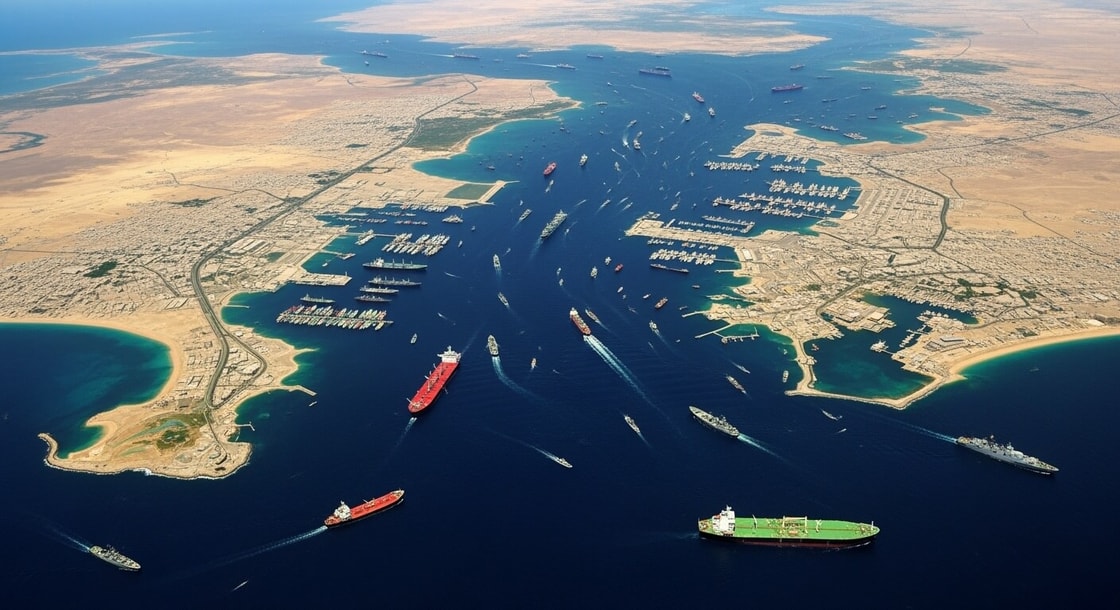
Geopolitical and operational resilience remain crucial. Investments in alternative export routes, strategic storage, and pipeline bypasses aim to reduce dependence on the Strait of Hormuz and mitigate regional risks. Asian companies, particularly Chinese service providers, are expanding their role in upstream production and contracting, providing competitive cost advantages and reinforcing the region’s operational ecosystem. Maintaining flexibility amid US-China tensions, Red Sea security risks, and shifting Iran relations will be essential to sustaining energy stability and uninterrupted exports.
efforts have moved from pilot projects to commercial-scale execution. Hub-based carbon capture, utilization, and storage, methane abatement, and electrification using nuclear and solar energy are now integrated into core operations. Saudi Aramco, ADNOC, and other NOCs are advancing projects in blue hydrogen, CCS hubs, and industrial clusters, while hydrogen strategies focus on domestic industrial demand rather than export-only models. In 2026, scaling infrastructure-led transition economically, improving drilling efficiency, and leveraging AI for emissions reduction will be central priorities as the region seeks to lower its carbon intensity without compromising competitiveness or production.
Overall, the Middle East in 2026 is consolidating its dual role as a global energy stabilizer and a forward-looking transition leader, combining investment discipline, technological adoption, strategic geopolitics, and decarbonization to maintain resilience in a rapidly evolving global energy system.
Subscribe to get the latest posts sent to your email.