By
35 min ago 3 min read
A recent study published in Nature shows that methane emissions are higher than previous estimates, but the majority of emissions could be eliminated at no net cost despite Europe scaling biomethane as a climate solution.
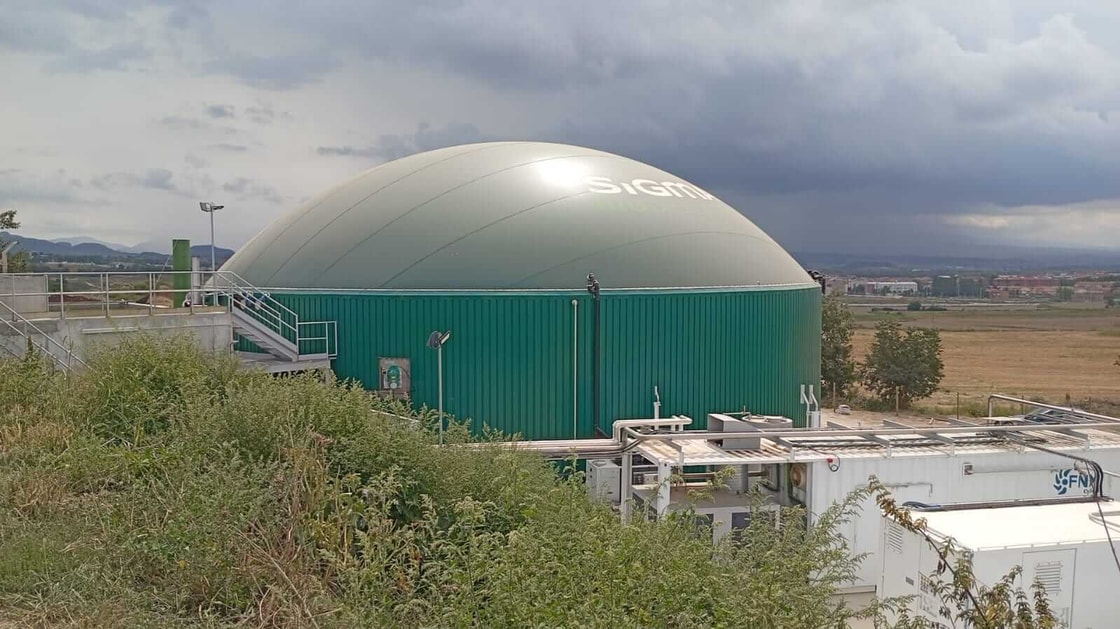
A research team examined 31 biogas plants across Germany, Poland and the UK and used real-world measurements.
It found that, on average, 14.4kg of methane was emitted per hour per site. This is equivalent to 5.4% of methane produced.
The team found that these emissions often came from storage tanks, pressure relief venting, fugitive leaks, digestate storage, and combined heat and power exhaust – also known as methane slip.
Some of the most effective fixes were basic operational changes. This includes sealing tanks, integrating storage into gas systems, leak detection and repair programmes, and better gas storage management.
Researchers estimate that 83% of emissions could be eliminated using those methods and 59% could be cut at no net cost.
In this context, ‘no net cost’ means the value of captured methane gas equals or exceeds repair costs over time. In other words, the leaks are wasting fuel that could be sold.
However, cost-effectiveness varies by country. The share of emissions fixable at no net cost 38% for Germany, 57% for the UK, and 67% for Poland.
This is due to different subsidy systems and operator incentives. Also, some plants profit less from conserving gas.
The environmental cost could also be reduced.
When the team examined the full supply chain, methane accounted for 47% of total greenhouse warming over a 100-year timeframe and 60% over a 20-year timeframe.
The findings land at a time when Europe is aggressively expanding biomethane. The EU aims to reach 35 billion cubic metres of biomethane production by 2030 as part of the REPowerEU Plan – a strategy designed to end Europe’s dependence on Russian fossil fuels and advance the green transition.
Despite its potential, there are still concerns over feedstock availability. UK decarbonisation charity MCS Foundation explored a range of ‘credible scenarios’ and found that the volume of biomethane will be limited by the production of biogas and other competing uses for feedstocks.
In addition to cost, a factor that has become more important in recent studies is biomethane’s potentially high carbon footprint.
The Green Gas Support Scheme requires biomethane to have a production carbon intensity lower than 86.4 kg per CO2 equivalent per MWh. Studies by the European Biogas Association and the European Commission Joint Research Centre have shown that some feedstocks do not always meet this standard and can have higher whole-cycle emissions than fossil methane.