By
6 min ago 3 min read
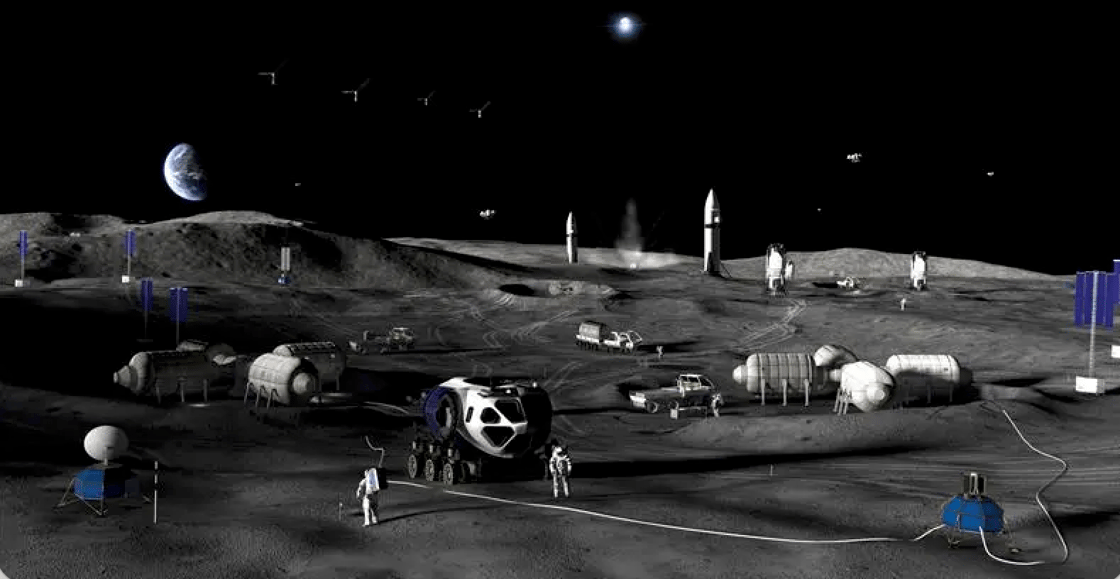
NASA has provided a futuristic glimpse into how Artemis astronauts will live and work at humanity’s first lunar outpost from 2032.
The $20bn moon base represents one of the most ambitious engineering and exploration efforts in human history. The base will act as a ‘lunar gas station’ and a training ground to test technology before eventually sending humans to Mars.
Three phases are scheduled. Firstly until 2029, robots will map terrain in high detail. Thereafter, the infrastructure will be built (2029-2032) with permanent living slated from 2032.
The moon base will be located on the South Pole which offers near continuous sunlight and deep craters holding frozen water, which can support life and be turned into breathable oxygen. The hydrogen and oxygen could also be split to create rocket fuel.
But a host of issues need to be overcome. They include extreme temperatures, abrasive lunar dust, and power and logistical challenges. Safe landing pads would need to be developed and more research is needed into extended stays on astronauts’ health.
Three missions are planned from the outset, with the first no earlier than autumn this year. It will use Blue Origin’s Blue Moon Mark 1 Endurance lander to deliver NASA payloads.
The second will deliver more than 1,100 pounds of cargo on Astrobotic’s Griffin lander, including Astrolab’s FLIP rover, to mature mobility systems that inform future lunar terrain vehicle operations.
The third will include payloads from ESA (European Space Agency) and the Korea Astronomy and Space Science Institute, reflecting commercial and international participation in Moon Base activities.
Many more missions will be needed before the moon base is completed. But the plans are now starting in earnest.
“The Moon Base will be America’s and humanity’s first outpost on another celestial world,” said NASA Administrator Jared Isaacman.
“Every mission, crewed and uncrewed, will be a learning opportunity as we return to the lunar surface, build the infrastructure to stay, and master the skills required to live and operate in one of the most demanding and dangerous environments imaginable. We will go for the science, for all we stand to gain from an economic and technological perspective, for the innovations that will make life better here on Earth, and to prepare for where we will inevitably go next.”
NASA will provide an update on the agency’s Artemis III mission and announce astronauts assigned to the test flight on 9 June.
Read more: