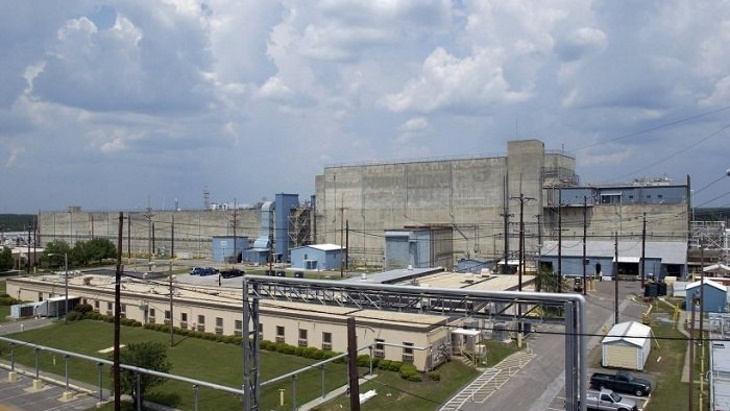
The Savannah River Site (SRS) is a 310-square-mile (803-square-kilometre) site in Aiken, South Carolina, which was focused on the production of plutonium and tritium for use in the manufacture of nuclear weapons from the early 1950s until the end of the Cold War. H Canyon – so named because the processing areas inside the building resemble a gorge in a deep valley between steeply vertical cliffs – began operations in 1955. According to the Department of Energy’s Office of Environmental Management (DOE EM), the facility historically recovered uranium and neptunium from fuel tubes used in nuclear reactors at SRS, to produce radioactive materials used in making nuclear weapons.
“H Canyon remains the only operating, production-scale, radiologically shielded chemical separations facility in the US, successfully operating and recovering uranium and other valuable materials from used nuclear fuel for more than 70 years,” DOE EM noted.
DOE EM has now announced that it is restarting uranium recovery operations at the H Canyon facility.
The decision to restart uranium recovery will produce high-assay low-enriched uranium (HALEU) needed for advanced reactors, as well as recovering valuable isotopes currently available in limited domestic quantities, supporting critical needs in scientific research, medical applications and commercial uses. In addition, the facility will continue to safely process used nuclear fuel as part of SRS’s cleanup mission.
HALEU – uranium enriched to contain between 5% and 20% uranium-235 – will be used to fuel many advanced reactors. The current inventory of used nuclear fuel at SRS contains enough highly enriched uranium to produce as many as 19 metric tons of HALEU, enough to fuel several proposed small modular reactors.
“Thanks to President Trump’s leadership, we’re maximising the value of existing assets, supporting national security objectives and advancing our cleanup mission – all while supplying America’s next generation of advanced nuclear reactors,” EM Assistant Secretary Tim Walsh said.
Vacant Hanford facility
Meanwhile, DOE EM has signed a lease with General Matter, unlocking the potential of the Fuels and Materials Examination Facility (FMEF) at the Hanford site to be used for advanced nuclear fuel cycle technologies and materials.
“This partnership holds great promise for rebuilding the domestic nuclear fuel supply chain and unlocking nuclear energy critical for meeting growing demand for affordable, reliable baseload power needed to fuel the artificial intelligence (AI) race,” DOE EM said.
Hanford was the site of US military plutonium production activities from 1943 until 1987, with nine nuclear reactors and associated processing facilities. The DOE’s Richland Operations Office now manages the site and is responsible for the clean-up of all its remaining waste streams.
The FMEF was constructed in the Cold War to support the Liquid Fast Breeder Reactor Program. Spanning 190,000 square feet, the FMEF was never used in any nuclear capacity. Although fully constructed and equipped, the facility never supported an operational nuclear mission and has remained dormant for three decades.
Alongside the DOE, General Matter will undertake the evaluations necessary to assess returning the facility to service, including site characterisation, potential facility upgrades and engagement with community leaders and stakeholders.
“Activating FMEF for a modern mission reflects responsible stewardship and forward momentum for the site,” said Ray Geimer, manager for Hanford Field Office. “This lease puts an asset back to work for the American people and reinforces the Department’s commitment to safe revitalisation across the Hanford footprint.”
“Rebuilding America’s nuclear fuel capabilities is critical to strengthening our nuclear industrial base, reducing our reliance on foreign providers and lowering energy costs for utilities and consumers,” added General Matter CEO Scott Nolan. “We thank our partners in Hanford and the Department of Energy for supporting us in the development of a stronger, more secure nuclear fuel supply chain built here in the United States.”
General Matter said the FMEF lease builds on its ongoing development of a new enrichment facility at the former Paducah Gaseous Diffusion Plant in Kentucky.
General Matter was one of four companies selected in October 2024 by the DOE to provide enrichment services to help establish a US supply of HALEU. The company did not emerge from stealth until April 2025, and in August signed a lease with the DOE for the reuse of federal land at the former Paducah Gaseous Diffusion Plant in Kentucky for a new commercial uranium enrichment facility.