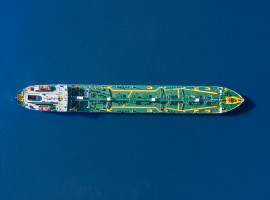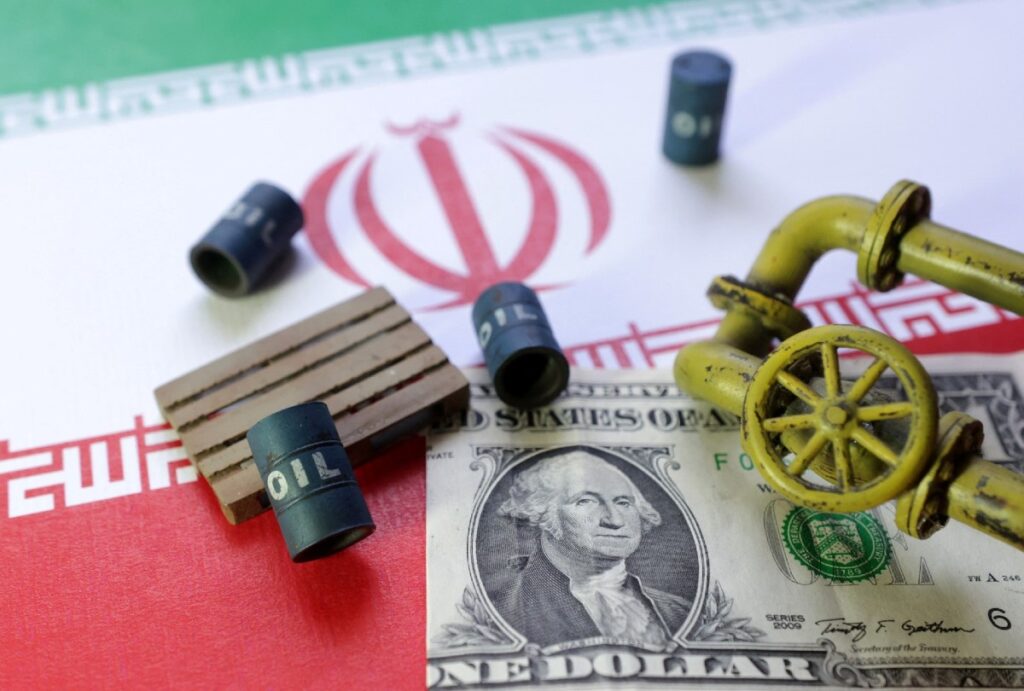
A planned two-week ceasefire between the United States and Iran and negotiations to end their conflict may mark the first genuine attempt to de-escalate, but there’s still much to be concerned about the world of pain physical oil markets are in.
Crude oil futures responded to the news by plunging, with Brent contracts dropping as much as 16% to a low of $91.70 a barrel in early Asian trade on Wednesday after ending at $109.27 on Tuesday.
Get the Latest US Focused Energy News Delivered to You! It’s FREE:
The sharp selloff reflects relief that President Donald Trump’s highly alarming threats to wipe out Iranian civilisation have been delayed.
It also reflects optimism that crude oil, refined product and liquefied natural gas (LNG) flows may resume through the Strait of Hormuz, and continue to do so if negotiations prove successful.
However, there is a rule of thumb that any time the word “if” appears in a sentence, it is automatically the most important word in that sentence.
In this case, it’s a very large “if” that peace talks will yield a lasting solution as the two sides appear far apart on most key issues.
Negotiations are slated to begin in Pakistan on Friday and last for two weeks, with an extension possible if required.
Iran’s 10-point proposal certainly aims to cement effective control over the Strait of Hormuz, through which up to 20% of the world’s crude oil, refined products and LNG moved prior to the U.S. and Israeli attack on Iran on February 28.
Control of the strait and unresolved issues around Iran’s nuclear programme are likely to be challenging issues at talks, and the market optimism over the ceasefire may be tested if an agreement proves elusive in coming weeks.
The ceasefire will also make little immediate difference in the real world of physical crude oil and refined product supply and demand.
Disruptions from the effective closure of the strait are now working their way through supply chains, and physical markets in Asia are under stress and will remain so for months even if it does reopen fully.
SAUDI PRICES
One example of the scale of the disruption is Saudi Aramco’s decision to jack up its official selling prices (OSPs) for May-loading cargoes to record highs.
The kingdom’s state-controlled oil company raised the OSP for its benchmark Arab Light grade for Asian refiners to a premium of $19.50 a barrel over the Oman/Dubai average.29dk2902l
This was up $17 a barrel from the $2.50 premium for April-loading cargoes and reflects the increasing desperation among some Asian refiners to secure whatever crude is available.
Oman crude ended at $119.31 a barrel on Tuesday and cash Dubai was at $123.20, meaning that if these prices are maintained through to May, the cost of a barrel of Arab Light crude for an Asian refiner will be close to $150.
Of course, if the ceasefire deal does result in the re-opening of the Strait of Hormuz on a sustained basis, prices for grades such as Oman and Dubai will likely retreat sharply.
But refiners would still be grappling with the problem of obtaining sufficient crude while supply chains remain severely disrupted.
The Saudi price hike may help re-balance flows by shifting barrels from China, the world’s largest crude importer, to other buyers such as Japan, South Korea and Singapore.
China is taking the lion’s share of Saudi exports in April, with commodity analyst firm Kpler estimating arrivals of 1.37 million barrels per day (bpd), up from 1.04 million bpd in March.
Total imports of Saudi oil in April are estimated at 4.73 million bpd, meaning China is receiving about 29%.
However, the high price of Saudi crude for May-loading cargoes may encourage Chinese refiners to minimise imports and instead seek cheaper supplies from Russia, Africa and South America.
This may free up Saudi cargoes for countries such as Japan and South Korea, which have seen imports from the world’s top exporter slump in April.
South Korea’s imports from Saudi Arabia are forecast to drop to 520,000 bpd in April, the lowest in Kpler data going back to 2013 and down from a recent high of 1.14 million bpd in January.
Similarly, Japan’s imports from Saudi Arabia are estimated at 373,600 bpd in April, also a Kpler data low, and down from the recent peak of 1.41 million bpd in December.
Ultimately the crude oil market will use prices to determine where supply goes and wealthy countries will likely be able to secure sufficient crude and products to see them through the current disruption.
But developing nations in Asia and Africa will likely suffer from fuel shortages and the resulting economic damage.
Enjoying this column? Check out Reuters Open Interest (ROI), your essential new source for global financial commentary. ROI delivers thought-provoking, data-driven analysis of everything from swap rates to soybeans. Markets are moving faster than ever. ROI can help you keep up. Follow ROI on LinkedIn and X.
The views expressed here are those of the author, a columnist for Reuters.
(Editing by Edwina Gibbs)
Share This:
More News Articles