
Thursday, 15 May 2025
Uranium is one of four minerals added by the Nova Scotia Department of Natural Resources to its critical minerals list in an update to the province’s critical minerals strategy, bringing the total number in the list to 20. A new list of four “strategic minerals” – aggregate, gold, gypsum and potash – has also been drawn up.
“This update shows that we are moving forward to unlock the full potential of Nova Scotia’s abundant natural resources,” said Tory Rushton, Minister of Natural Resources. “We’ve lifted blanket bans and we’re targeting minerals that are in great demand for the clean energy transition in Canada and around the world. We’re also focusing on minerals that will help us grow our economy and create good-paying jobs for Nova Scotians.”
According to the Mining Association of Nova Scotia, the province experienced a “boom in uranium exploration” from around 1976 to 1981, when tens of millions of dollars were spent on exploration by various companies. Uranium occurrences were documented all over Nova Scotia, and other minerals were also discovered during this period as a result of exploration for uranium. But uranium exploration came to an end in 1981 with the imposition of the moratorium – which according to the Mining Association was “politically-motivated” and had no basis in scientific evidence.
The Nova Scotia Legislature passed a bill repealing that ban on 25 March this year, with the bill coming into effect the next day.
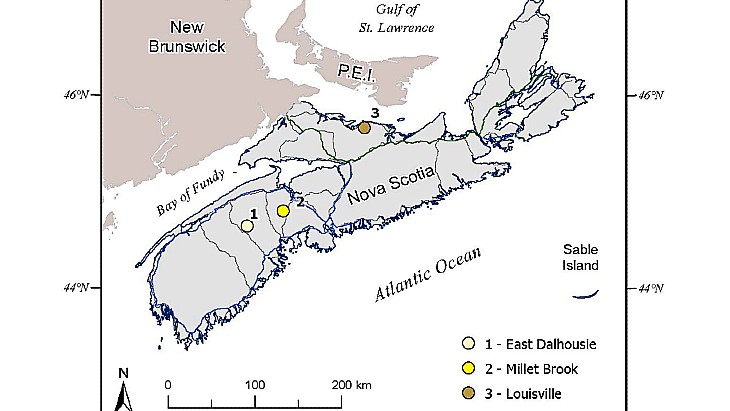
Following the repeal, the Department of Natural Resources has issued a from individuals and companies interested in exploring for uranium in the areas of East Dalhousie, Louisville, Millet Brook, which are already known to have “higher levels of uranium” and for which permits are required before exploration can begin. Proposals must be submitted by 11 June, the Department intending to issue exploration licences on 11 July.
For most other areas of the province, companies that are licensed by the Department of Natural Resources can begin exploration for uranium using “non-disturbance activities to examine the rocks, soil and collect hand samples” without needing a permit, but are required to inform the Department of their intent to do so.
According to the Mining Association of Nova Scotia, Millet Brook – discovered in 1978 – is the largest known uranium deposit in the province with “at least 1.3 million pounds of 0.2% uranium”.
“Ending Nova Scotia’s uranium ban allows the industry to do exploration and determine whether our uranium deposits, including Millet Brook’s, are economically viable,” the association said. “It also generates more data on the province’s geology which governments can use to help keep Nova Scotians safe from geohazards like radon and uranium in drinking water.”
Article researched and written by WNN’s