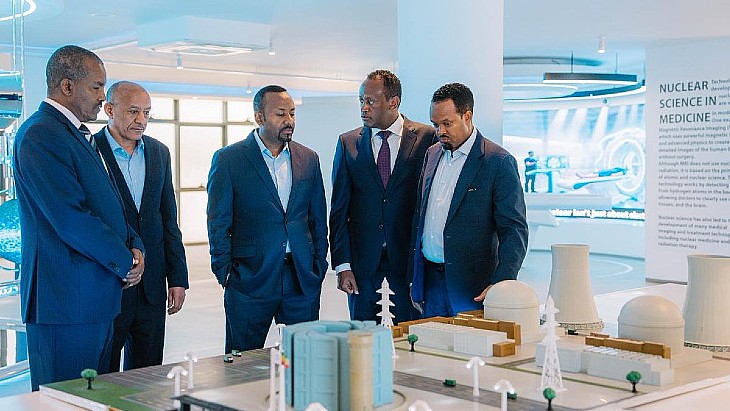
The Commission was established last year as the African country officially launched a nuclear energy programme. In a YouTube video shared to mark his visit to view the Commission’s facilities, Ali said Ethiopia plans to build two 1200 MWe reactors. He acknowledged that this would take “at least” ten years to achieve, but said that while the initial investment needed in nuclear was high compared with energy sources such as hydro or solar, nuclear’s reliable, consistent high-level output without the seasonal fluctuations that can affect other sources gave it a “distinct advantage”.
Three potential sites – from an initial list of more than 30 that have been assessed – have been identified as potential locations for a nuclear plant, Ali said. The sites’ viability and suitability must now be confirmed by “external institutions”, before agreements are entered into with a technology provider, he added. Ethiopia also needs to prepare its workforce: “It is not a simple matter of awarding a contract, starting, and finishing,” the prime minister said.
“Reliable and sustainable energy is essential for industrialisation, manufacturing, digital infrastructure, and economic transformation. Nuclear technology offers an important opportunity to strengthen energy security while contributing to progress in healthcare, agriculture, industry, and environmental protection. The Commission plays a vital role in laying the institutional and technical foundations for Ethiopia’s national nuclear energy programme. Building skilled human capital, advancing scientific research, and transferring knowledge to future generations will be essential to ensuring that nuclear energy is developed peacefully, safely, responsibly, and sustainably,” he said.
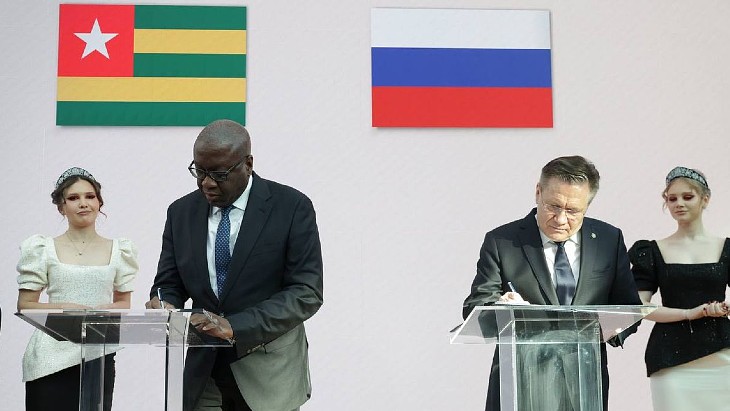
Ethiopia has been formally cooperating with Russia on nuclear energy plans for some time. An intergovernmental agreement between Ethiopia and Russia was signed in 2019; a roadmap for bilateral cooperation which outlined steps to explore construction of a nuclear power plant, a Nuclear Science and Technology Centre, and included measures to strengthen Ethiopia’s national nuclear infrastructure and workforce development was signed in 2023; and in March this year the Ethiopia Nuclear Energy Commission and Russia’s Rosatom signed a strategic roadmap for nuclear energy development, following on from an action plan drawn up in September 2025.
According to Russian news agency Tass, Russia’s Ambassador to Ethiopia Yevgeny Terekhin has said this week that Rosatom, through the Rusatom International Network, and the Ethiopia Nuclear Energy Commission are in the process of coordinating a draft intergovernmental agreement on the fundamental principles of cooperation for the construction of a nuclear power plant in Ethiopia. “The signing of the agreement will initiate the phase of design and engineering work. It should be noted that the interaction is carried out in strict accordance with IAEA standards and regulations,” he said, ahead of the Russia-Africa summit which is taking place in Moscow from 28-29 October.