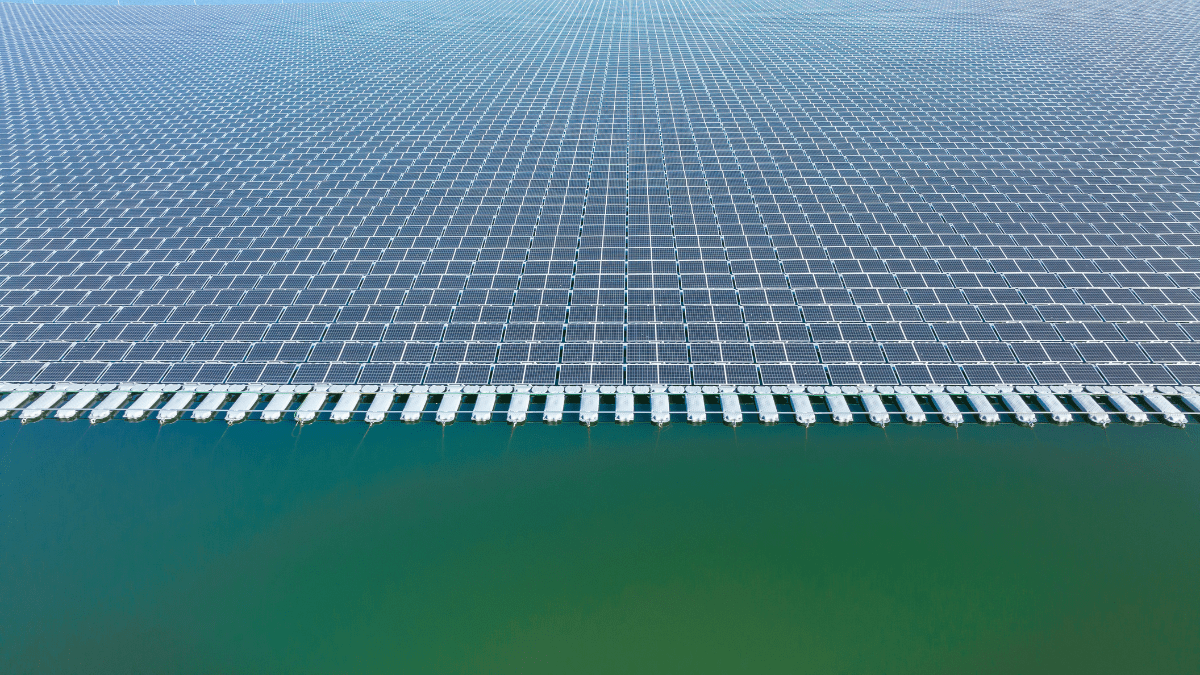
Offshore floating solar power has emerged as a promising new opportunity in the renewable energy sector, with a new international study highlighting major cost advantages and deployment potential across several regions, particularly Southeast Asia. The research was conducted by a global team led by experts from the environmental and energy division of RINA Consulting in Australia, part of Italy-based RINA. Their preliminary techno-economic study assesses the global potential for offshore floating PV (OFPV), providing benchmarking for project costs, country-specific economic assumptions, and a global evaluation of the levelized cost of electricity (LCOE).
The study analyzed OFPV resources by considering key technical and geographic factors such as wind, wave levels, ocean depth, ice conditions, shipping routes, and protected environmental zones. By integrating diverse geographic, climatic, and economic datasets, the researchers modeled offshore PV energy output across multiple countries. The modeling included ten different configurations of panel tilt and tracking technologies to generate performance projections. The researchers also estimated the system cost and LCOE within territorial waters and exclusive economic zones (EEZ) for each evaluated country.
One of the key findings is that 34% of the analyzed global offshore regions can achieve an LCOE of below 10 U.S. cents per kWh, making offshore solar highly competitive with many conventional and renewable energy sources. Southeast Asia stood out as the most favorable location for cost-effective offshore floating solar installations. Among these countries, Indonesia, Thailand, and Malaysia showed the strongest combination of technical and economic suitability due to high solar irradiance, appropriate sea depth ranges, and favorable cost metrics.
According to the , Thailand and Malaysia demonstrated particularly impressive results: “Most of the areas with very low LCOE values (below 6 USD cents per kWh) are located in Malaysia and Thailand, each contributing 53% and 27% of the total available PV capacity within this range, respectively.” For many regions, only a small portion of the water surface would be needed to meet existing power consumption demands. The analysis showed that in 53% of regions assessed, offshore FPV can serve electricity needs at an LCOE below US$0.15/kWh, reinforcing the competitive potential of offshore solar. The study also found that up to 95% of evaluated offshore zones are suitable for today’s floating solar technology, demonstrating expansive deployable area availability.
Performance comparisons indicated that solar tracker-based OFPV configurations deliver higher generation efficiency, although fixed-tilt systems equipped with bifacial modules were identified as the most practical choice for early-stage development. The modeling was validated using real operational data from existing FPV installations in Singapore, Israel, Norway, and the Maldives across inland, coastal, and open-sea sites. Further, the research team benchmarked its cost model using real floating solar project pricing and tender records from 2020 to 2025 to align projections with real financial performance.
The report notes that offshore floating solar remains at an early stage of maturity, facing environmental, engineering, and regulatory challenges. However, with continued innovation and pilot development, costs are expected to fall further, enhancing the competitiveness of the technology. The researchers anticipate that the study will support governments, utilities, and developers in planning future offshore FPV investments, identifying the most promising zones for development, and guiding localized feasibility assessments.
The findings were published in the journal Energy & Environmental Science under the title “Global assessment of offshore floating photovoltaics: technical potential, cost competitiveness, and deployment pathway.” The researchers concluded that offshore floating PV could play a key role in enabling a resilient and diversified global renewable energy transition, particularly for countries with land constraints but abundant maritime zones.
Subscribe to get the latest posts sent to your email.