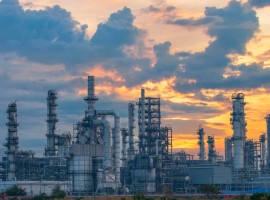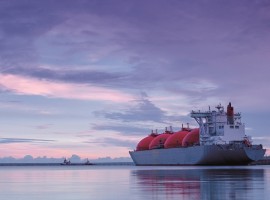
The world’s biggest oil companies are expected to press ahead with plans to accelerate production growth when they report earnings this week, despite weak crude prices and higher supplies from OPEC and its allies.
Exxon Mobil Corp., Chevron Corp., Shell Plc, BP Plc and TotalEnergies SE will likely grow output 3.9% this year and 4.7% in 2026, according to analysts’ estimates compiled by Bloomberg. The increases — which include new projects as well as acquisitions — appear designed to capitalize on an expected oil-price upturn in the latter half of next year.
But they could add to the supply glut in the short term.
“They’re taking the long view that oil demand is going to be a lot more resilient post-2030,” Noah Barrett, a research analyst at Janus Henderson, which manages about $457 billion. “If they’re not making the investments today, then their portfolios will be really disadvantaged when prices move higher.”
After years of outsized profits as oil demand roared back following the pandemic, the world’s largest energy companies are feeling the pinch of crude prices that have dropped about 14% this year near to a four-year low. In response, they’re cutting jobs, reducing low-carbon investments and trimming share buybacks to channel funds toward the most valuable part of their business: oil and gas production.
“All the supply coming to the market is shrinking OPEC’s spare capacity — so there’s a light at end of the tunnel, Betty Jiang, an analyst at Barclays Plc. “Whether that’s second half of 2026 or 2027, the balance is going to tighten. It’s just a matter of when.”
Recent giants Rosneft PJSC and Lukoil PJSC provided respite from oil’s fall this year, with Brent crude rising 7.5% last week to more than $65 a barrel. But the oil market is oversupplied heading into 2026 and the Organization of the Petroleum Exporting Countries and its allies on adding more supply.
It may seem counterintuitive for the supermajors to add barrels to such a market, but executives have an eye on the future, when crude may not be so plentiful. Oil demand is still growing, albeit slowly, while US shale and supply from new fields in Guyana and Brazil are likely to decelerate in the latter half of the decade.
The growth is coming from three main sources. The first is investments made within the past few years that are now bearing fruit, like Chevron’s project in the US Gulf. The second source is new projects, such as Exxon’s development in Guyana. And the third is acquisitions, which add to companies’ individual production without adding barrels to global supply. The biggest examples are Exxon buying Pioneer Natural Resources Co. and Chevron buying Hess Corp.
The US majors are advancing on all three of those fronts while Shell and BP are focusing on the first two for now. That’s because their lower value stock makes deals more difficult to pull off. The trend stands in stark contrast to the downturn in oil prices during the pandemic, when companies cut capital spending and slowed majors projects because oil demand fell fast and they were unsure when it would return.
“These are multi-year investments” that cannot be ramped up or down based on short-term price fluctuations, Jiang said. “Building them now means they’ll be ready for when oil prices inevitably turn.”
Selling more barrels will also help mitigate lower prices in the short run. The five supermajors will likely post combined profits of $21.76 billion for the third quarter, according to analysts’ estimates compiled by Bloomberg. That’s 7% higher than the previous three months, helped by . But it’s less than half the levels of 2022. The industry has hiked dividends and buybacks since then, making the payouts harder to sustain.
“This has been the most well-telegraphed oil glut in history, which suggests that it won’t be that bad,” James West, managing director of energy and power research at Melius Research. “The supermajors have been preparing it for a while, but there is going to be pressure on free cash flow.”
Chevron, BP, and TotalEnergies have already slowed buybacks, citing market volatility and a need to preserve flexibility in a weaker price environment. More may be on the way, unless companies are willing to take on more debt, RBC Capital Markets analyst Biraj Borkhataria wrote in a research note.
“We expect further buyback cuts into 2026,” he said. “The ability to sustain buybacks largely depends on balance sheet strength and willingness to utilize it.”
Cutbacks are also coming in other areas. BP, Chevron and Exxon are eliminating up to 17,000 jobs combined in bids to reduce large headcount costs. At the same time, the majors are scaling back low-carbon efforts once billed as the industry’s future.
BP has several renewable projects, narrowed its and has shifted spending to upstream from low carbon. Shell has moved spending away from low carbon projects, recently taking a $600 million on a Dutch biofuels plant it already started building. TotalEnergies postponed some clean-energy projects and capped low-carbon investments, citing cost pressure and uncertain returns.
Executives argue the strategy is pragmatic. Upstream profits — the business of producing oil and gas — still fund the vast majority of the industry’s earnings and currently offer higher returns than low-carbon investments, which have been hurt by high interest rates and the Trump administration’s anti-renewable policies. They’re also well aware of BP’s recent travails caused by former CEO Bernard Looney’s decision to let oil and gas production fall as part of his climate goals.
“BP is the poster child of changing the message,” Barrett said. “They’ve recognized that if you stop investing, the natural declines kick in, and you don’t want to be on that treadmill.”
Still, BP and fellow Europeans Shell and TotalEnergies are expected to keep a lid on net debt this quarter as their latest cost-cutting programs and refocus on oil and gas are being felt, analysts say. For the Americans, all eyes are Chevron’s forthcoming longer-term production targets after completing its $53 billion acquisition of Hess Corp. in July.