Oil is right in the middle of a geopolitical knife fight, and the market is feeling every jab.
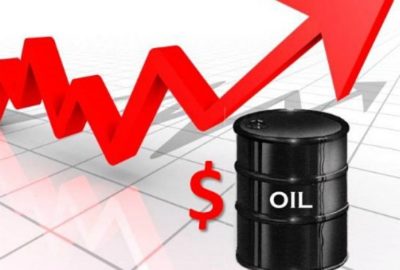
That’s what Naeem Aslam, Chief Investment Officer at Zaye Capital Markets, said in a statement sent to Rigzone on Thursday, highlighting that the price of West Texas Intermediate (WTI) oil was hovering near $105.20 per barrel and that the price of Brent was around $107.38 per barrel.
Aslam outlined in the statement that oil prices were “caught between genuine supply panic and constant hope that the Iran conflict cools off fast”.
“Every new threat around the Strait of Hormuz or tanker disruption pushes prices higher on real fear of a major supply shock, yet the repeated talk of a quick resolution keeps slamming the brakes on any sustained rally,” he added.
“Traders are flipping positions like crazy between ‘supply Armageddon’ and ‘this ends tomorrow’ scenarios,” he continued.
“Add in OPEC’s tight-lipped caution, the IEA’s warning on tight balances, and today’s unemployment claims data that could either confirm economic resilience or flash warning signs on demand – and you’ve got a market that’s elevated, twitchy, and ready to swing hard on any headline,” he went on to state.
“Bottom line: as long as the Middle East tension lingers and the macro picture stays mixed, oil stays volatile with a clear upward bias on fear, but brutally quick to sell off the moment de-escalation hopes surface,” Aslam warned.
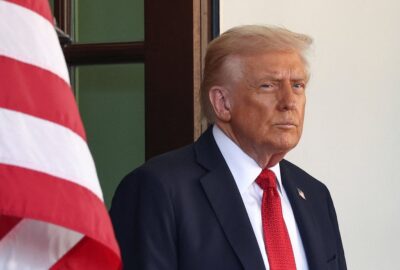
In a market update sent to Rigzone earlier this morning, Rystad Energy noted that oil markets remained volatile in response to U.S. President Donald Trump’s national address on the Iran war on Wednesday.
Rystad highlighted in that update that, in the opening minutes of Trump’s address, oil futures “fell initially before rapidly paring losses and trading above $105 per barrel as he confirmed a timeline of two to three more weeks of U.S. military engagement”.
In the update, Rystad Energy Chief Economist Claudio Galimberti, who is based in Houston, Texas, said, “President Trump’s address anchors expectations toward a relatively rapid de-escalation, with a stated timeline of weeks rather than months”.
“This remains broadly consistent with our House View, which anticipated a process of normalization in the Strait starting by mid-April,” he added.
“Implicit in this message is the assumption that a cessation of hostilities by the U.S., whether unilateral or coordinated, will be followed by a normalization of flows through Hormuz,” he continued.
“That linkage is critical, but not automatic, as the resumption of shipping depends on security assurances, insurance coverage and a return of operational confidence,” he noted.
In the update, Galimberti said flows can begin to resume within days after the end of hostilities but warned that returning toward around 20 million barrels per day is likely to take several weeks.
“Trade patterns and inventories will take longer to rebalance, while production may require months to return to pre-war levels,” he said.
“This implies a period where financial markets may point to normalization, while physical markets continue to reflect tightness,” he added.
Galimberti went on to warn that “there remains a non-negligible risk that the timeline outlined by the administration does not fully materialize”.
“A more protracted conflict, or deeper damage to production and infrastructure, would delay the reopening of the Strait and extend disruptions across global supply chains,” he said.
“In that scenario, both the pace of normalization and the broader market outlook would need to be reassessed,” he added.
“In a nutshell, the president’s characteristic ambiguity leaves multiple military options open in the near term, even as it sketches a relatively short timeline for U.S. involvement,” Galimberti highlighted.
“Until there is greater clarity on the path to de-escalation, markets are likely to remain highly volatile,” he warned.
In a BMI report sent to Rigzone by the Fitch Group on Thursday, analysts at BMI, a unit of Fitch Solutions, said the prolonged closure of the Strait of Hormuz “has escalated the short-term oil and gas supply shortages into energy security issues, with emerging markets facing the greatest economic and import exposure risks”.
“Our Energy Transition Index measures energy security across three pilars: economic stability (energy affordability relative to GDP and purchasing power), exposure (physical dependency on imported fuel) and resilience (fuel-switching capacity and grid adaptability),” the analysts noted.
“We find that oil and gas-importing emerging markets face the highest overall risks,” they warned.
To contact the author, email