(Bloomberg) – Oil headed for a weekly gain as traders awaited details on a U.S. campaign to isolate Iran’s economy, with no apparent end in sight to a conflict that has slashed Middle East exports.
Treasury Secretary Scott Bessent said Thursday the administration would provide details of the initiative Monday after President Donald Trump described the push as an “economic D-day.” The measures will target Tehran and could also affect countries that deal with Iran, potentially including China.
Global benchmark Brent remained on track for a weekly increase of about 6% as prices traded near $94 a barrel. West Texas Intermediate was near $87 following five consecutive sessions of gains.
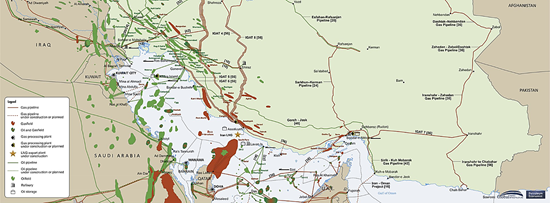
Oil has rallied more than 50% this year after the U.S.-Iran war disrupted Middle East energy flows, with the two sides vying for control of the Strait of Hormuz. Bessent said Washington controls the waterway and ships can exit via a southern lane, according to an interview with CNBC. Tehran has repeatedly insisted it retains authority over the strait, where additional vessel attacks occurred this week.
Trump’s threat of increased economic pressure follows months of military strikes and a U.S. naval blockade of Iranian ports. Iran has faced sanctions for years, however, raising questions about what additional measures Washington could impose.
“The market narrative is: ‘Iran has been under sanctions for 50 years and will not give in — this will just prolong the crisis further’,” said Arne Lohmann Rasmussen, chief analyst at AS Global Risk Management.
China, by far the largest importer of Iranian oil, said sanctions and pressure would not work and called for a diplomatic resolution. Bessent noted China receives much of its energy from the region, adding that “it would do them a big service to get with the program.”
“It is unclear to me how we are going to choke off Iran more than we have financially without triggering immense blowback from China,” Josh Lipsky, vice president of international economics at the Atlantic Council, told Bloomberg Television.
Prices briefly eased from session highs after Iranian President Masoud Pezeshkian said Iran should end the conflict “now that we are strong and have dignity,” according to the semi-official Iranian Students’ News Agency. Pezeshkian has been among the more vocal proponents in Tehran of ending the conflict through diplomacy.
Additional supply pressures are coming from Russia, where Ukrainian attacks on refineries and ports have disrupted the country’s energy industry and contributed to tightness in global diesel markets.
In the U.S., average retail diesel prices rose above $5.55 a gallon this week, the highest since late May, according to the American Automobile Association. The margin for producing diesel from crude recently surpassed $100 a barrel to reach a record.
Crude and other dollar-denominated commodities have also received support from a weaker U.S. currency, which on Friday was headed toward its lowest close since May.