(Bloomberg) — Oil surged above $100 a barrel as Middle East producers began cutting output amid a near-total halt of tanker traffic through the Strait of Hormuz, choking off supplies to global markets.
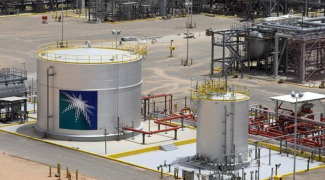
Saudi oil tanks. Image: Aramco.
Brent crude traded about 13% higher near $104 a barrel after earlier spiking close to $120, marking one of the largest single-day gains since futures trading began in 1988. Prices later eased as major economies weighed a coordinated release of emergency oil stockpiles, with Group of Seven finance ministers expected to discuss potential action.
Saudi Arabia has begun trimming production as storage tanks fill amid stalled exports, according to a person familiar with the matter. The move follows similar steps by other Persian Gulf producers, including Kuwait, the United Arab Emirates and Iraq, which have reduced output to avoid overwhelming storage capacity.
The disruption stems from the war in the Middle East following U.S. and Israeli strikes on Iran more than a week ago. Tanker traffic through the Strait of Hormuz — a narrow waterway that normally carries about one-fifth of global oil flows — has largely come to a halt as shipowners avoid the region amid missile and drone attacks.
Saudi Aramco has attempted to reroute some shipments through the Red Sea via the kingdom’s east-west pipeline to the port of Yanbu. However, the pipeline lacks sufficient capacity to fully replace exports that typically move through Hormuz.
Kuwait and the United Arab Emirates began reducing refinery processing rates over the weekend as storage facilities filled rapidly. Iraq had already started shutting in production last week as export bottlenecks intensified. At one point during Monday’s trading session, Brent crude prices had surged as much as 29%.
“The longer the Strait stays closed, the more production gets shut in, requiring substantially higher prices to curb demand,” said Giovanni Staunovo, a commodity analyst at UBS Group AG.
Market participants remain focused on the risk that prolonged disruptions in the Gulf could significantly reduce global supply. Analysts at JPMorgan Chase & Co. estimate that Middle East production shut-ins could exceed 4 MMbpd by the end of next week if export bottlenecks persist.
See also: U.S. Energy Secretary says oil price spike driven by ‘fear premium’
The region accounts for roughly one-third of global crude supply, making the Strait of Hormuz one of the most critical chokepoints for the global energy system.
Producers have taken unusual steps to maintain supply flows where possible. Saudi Aramco recently issued rare tenders offering prompt cargoes for immediate delivery, including barrels stored on a supertanker near Taiwan. The company typically sells most of its crude under long-term supply contracts.
Despite the near-standstill in shipping, at least one tanker appears to have crossed the Strait of Hormuz in recent days with its satellite tracking signal switched off. Still, the overwhelming majority of shipowners continue to avoid the route.
The sharp rise in crude prices is already rippling across global energy markets. Diesel prices in Europe have surged, while Asian governments are scrambling to secure fuel supplies and protect domestic consumers from rising energy costs.
China has instructed major refiners to suspend exports of diesel and gasoline in order to prioritize domestic demand, while South Korea is reviewing whether to introduce an oil price cap for the first time in decades.
With the conflict escalating and tanker traffic through Hormuz largely halted, traders say the market’s primary concern remains the ability to move oil out of the Persian Gulf.
“Production shut-ins matter,” said Haris Khurshid, chief investment officer at Karobaar Capital LP in Chicago. “But the market really worries about barrels not being able to move.”
Map source: Global Energy Infrastructure