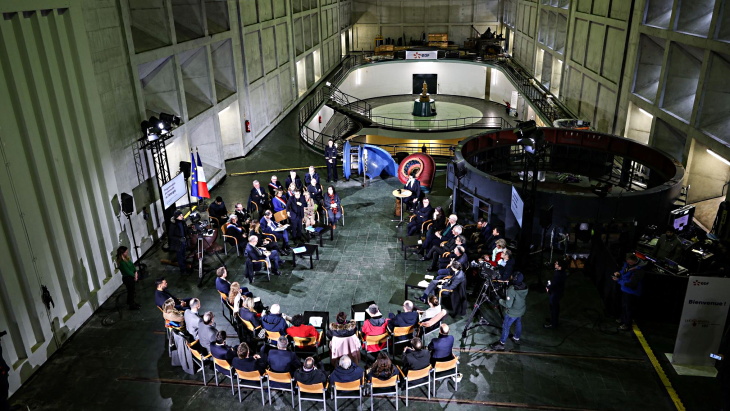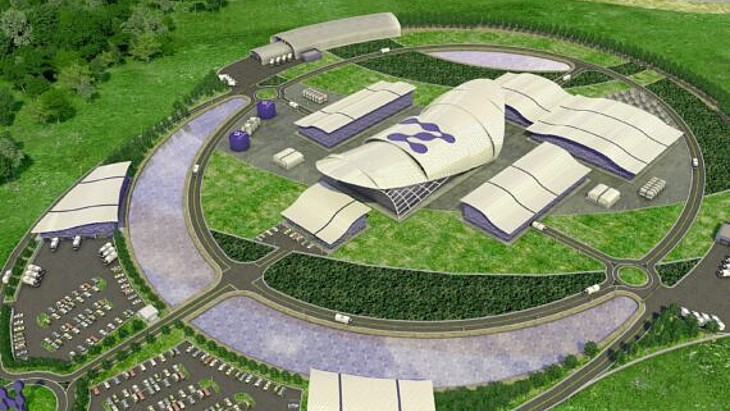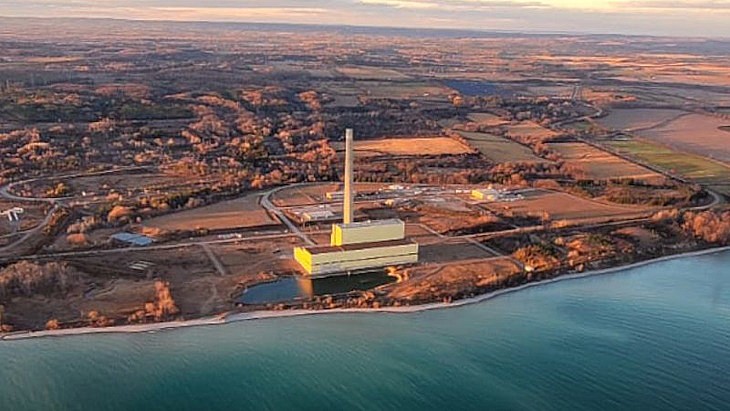
Representatives of Port Hope and Ontario Power Generation (OPG) signed a memorandum of understanding (MoU) “to advance collaboration on the potential for large-scale new nuclear generation” at OPG’s 1,300-acre Wesleyville site, where an oil-fired power station was built in the 1970s, but never operated.
Stephen Lecce, Ontario’s Minister of Energy and Mines, said: “This agreement is an important step forward as we build the world’s largest nuclear station, creating over 10,000 good-paying jobs and reliable power for up to 10 million homes.”
OPG submitted the Initial Project Description to the Impact Assessment Agency of Canada in January for approval. The company and Port Hope have agreed now to “work together throughout the Impact Assessment phase and any additional regulatory approvals and licensing processes”.
OPG has provided CAD4 million (USD2.9 million), in addition to an earlier CAD1 million, of “growth readiness funding to Port Hope to support the community in preparing for the workload of the Impact Assessment process and beginning stages of a proposed Wesleyville nuclear facility”. It has also installed a Discovery Centre in Port Hope where people can learn about nuclear power.
Nicolle Butcher, OPG’s President and CEO, said: “This important milestone, in a potential new nuclear development that is so critical to Ontario, is a testament to the strength of our relationship with this community. Working collaboratively with Port Hope, we can be sure the Municipality is able to engage fully on behalf of its residents in the multi-year process to assess and develop the site.”
Olena Hankivsky, Mayor of the Municipality of Port Hope, said: “The MoU between the Municipality and OPG represents the kind of forward-looking collaboration our community needs to prepare for future growth as we continue to explore the development of clean energy generation in Port Hope.”
Background
The Ontario government formally asked OPG to explore opportunities for new nuclear energy generation at Wesleyville in January last year, after the local municipality and Indigenous communities expressed their support. The OPG-owned site has been municipally zoned and maintained for electricity generation for more than 50 years. OPG has identified the potential to construct and operate nuclear generating stations on both the eastern and western portions of the site.
The New Nuclear at Wesleyville Project would provide up to 10,000 megawatts of new nuclear generating capacity – enough to power the equivalent of 10 million homes, according to OPG – and operate for 78 years. No reactor technology has yet been selected, but OPG has considered several technologies as part of so-called Plant Parameter Envelope approach which will be used for site licensing. These include pressurised water reactor technology (Westinghouse’s AP1000 and EDF’s EPR); pressurised heavy water reactor (CANDU) technology (Atkins Realis’ CANDU MONARK); and boiling water reactor technology (GE-Hitachi’s BWRX-300).
The Impact Assessment Agency of Canada-led Impact Assessment process will include an assessment of potential impacts and explore how adverse effects could be mitigated during site preparation, construction, operation, and decommissioning of the plant. The current timeline for the project outlined in the Initial Project Description envisages site preparation beginning in 2030 with construction starting in 2033 and the first unit coming online in 2040.
OPG acknowledges that Port Hope and the New Nuclear at Wesleyville site are within the shared traditional and treaty territory of the Chippewa and Michi Saagiig Anishinaabeg, collectively known as the Williams Treaties First Nations (WTFNs), and said it worked closely with them to ensure their collaborative input to the document.
In addition to Wesleyville, sites at Nanticoke in Haldimand County and Lambton in St Clair were also singled out in 2024 by the Ontario government for discussions with Indigenous, community and municipal leaders. Both former coal generation sites, Nanticoke and Lambton are, like Wesleyville, already zoned for electricity generation, have proximity to transmission, and are located in regions experiencing significant growth.