Tuesday, 29 April 2025
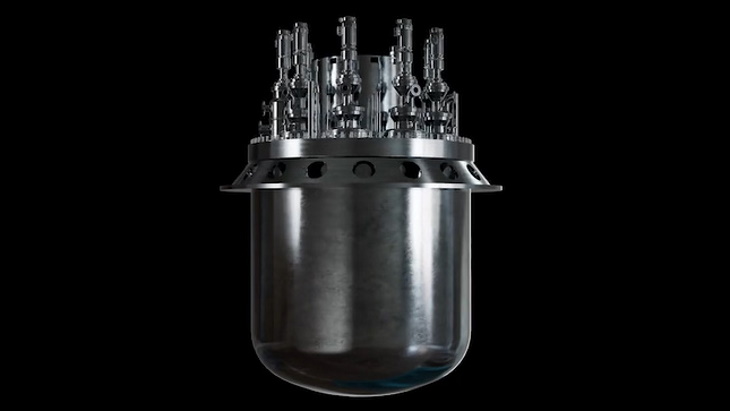
Blykalla – formerly called LeadCold – is a spin-off from the KTH Royal Institute of Technology in Stockholm, where lead-cooled reactor systems have been under development since 1996. The company – founded in 2013 as a joint stock company – is developing the SEALER (Swedish Advanced Lead Reactor) lead-cooled SMR.
The company said the new collaboration with the Institute of Energy Technology (IFE) focuses on a number of critical areas that are essential for scaling SEALER from prototype to full commercial readiness. These include the development of control room and operator environments, as well as the design of instrumentation and control systems to enable remote and autonomous operation. IFE will also contribute to the engineering of core mechanical components, such as shutdown assemblies and fuel handling systems, and support the design of radiation shielding to meet rigorous regulatory requirements.
Prototype development and component testing will be a central part of the work, helping to mature instrumentation of core, primary system and auxiliary systems, and reduce the technical risks associated with licensing and deployment. Together, Blykalla and IFE aim to speed up the transition from low technology readiness levels to the industrial standards needed for commercial rollout.
Blykalla said initial joint development will take place in Sweden and Norway, with further phases aligned to SEALER’s licensing and industrialisation timeline.
“We’re proud to work with the renowned research institute IFE,” said Blykalla CEO Jacob Stedman. “Strengthening Scandinavian collaboration feels both vital and natural at a time when technological sovereignty is becoming central to industrial growth and long-term sustainability. Partnerships between leading actors can make all the difference in bringing new technologies to market and securing a clean energy future for our region.”
Bjørn Axel Gran, vice president at IFE Nuclear, added: “We’re pleased that our competence and expertise will be used in the next stage of the nuclear area. Partnership with Blykalla allows them to take research into innovation and allows us to get first-hand learning of future research gaps.”
Blykalla’s plans to construct its first reactor, SEALER-One, in Sweden. It will function as a demonstration of its technology, and at the same time be used for pyrolysis, whereby industrial customers can utilise its steam for, among other things, decarbonised biochar production. The company aims to achieve criticality of SEALER-One by 2029. Blykalla has a letter of intent in place with nuclear operator Studsvik to develop SEALER-One on its site in Nyköping, Sweden. Licensing work is currently under way.
In the long-term, Blykalla plans to deploy up to 1000 SMRs by 2050, delivering 500 TWh of clean energy annually to industrial users that cannot rely on intermittent power sources. It says SEALER is designed to serve sectors such as hydrogen production, process heat, and pyrolysis, with the potential of significantly reducing global carbon dioxide emissions and securing industrial resilience and growth.
In February, Blykalla and Norwegian nuclear project developer Norsk Kjernekraft signed a memorandum of understanding to collaborate on the deployment of SEALER in Scandinavia. Under the MoU, the two companies will assess the business case for integrating the SEALER into power plant projects currently under development by Norsk Kjernekraft, evaluating site suitability, regulatory pathways, and economic feasibility for deployment in Norway. The agreement also outlines collaboration on licensing, financing, construction, and operational aspects of SEALER-One in Sweden.