Pipeline Disruption Adds Risk Premium to Russian Crude

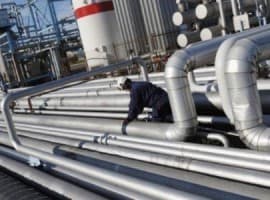
Russia’s pipeline operator Transneft has cut crude intake into its system by roughly 250,000 barrels per day after damage at the Kaleykino pumping station in Tatarstan, according to Reuters sources.

Kaleykino is a key blending and dispatch hub that can pump about 1 million bpd and feeds crude into the Druzhba pipeline network as well as export routes to Primorsk on the Baltic and Novorossiisk on the Black Sea. It is also where different crude streams are mixed into the Urals export grade.

The Druzhba system alone has capacity of about 1.4 million bpd across its northern and southern branches, making it one of Russia’s most important westbound export arteries. With southern flows already halted, additional throughput limits at Kaleykino further tighten the margin for redirecting barrels.

A 250,000 bpd intake cut does not automatically translate into a 250,000 bpd export loss. But it does mean the system is running below capacity. When a hub like Kaleykino slows, upstream producers either reduce flows or send crude into storage. One source said shipments from Tatneft were among those most affected.

The disruption comes on top of existing problems along the Druzhba route. Southern flows to Hungary and Slovakia have been suspended since late January following earlier infrastructure damage and a dispute over repairs. Those barrels would normally move west by pipe. If they cannot, they have to be redirected toward ports — assuming there is spare capacity.

The UK has also sanctioned Transneft this week along with dozens of tankers linked to Russia’s shadow fleet. Transneft handles more than 80% of the country’s oil exports.

By Julianne Geiger for Oilprice.com

More Top Reads From Oilprice.com


  • Related Posts

    Nigeria to Launch Exports of New Crude Grade as It Boosts Output

    Nigeria will launch exports of a new crude grade in March as OPEC’s biggest African oil producer looks to boost output and exports and seek a higher baseline in the…

    UK Hits Russian Oil Fleet with Biggest Sanctions in Years

    The UK government announced new sanctions on Russia’s so-called shadow oil fleet as it ramped up efforts to squeeze energy revenues funding the Kremlin’s war in Ukraine. Britain targeted 175…

    Have You Seen?

    Honeywell signs supply deal for seven planned eSAF plants

    • February 25, 2026
    Honeywell signs supply deal for seven planned eSAF plants

    Nigeria to Launch Exports of New Crude Grade as It Boosts Output

    • February 25, 2026
    Nigeria to Launch Exports of New Crude Grade as It Boosts Output

    Pipeline Disruption Adds Risk Premium to Russian Crude

    • February 25, 2026
    Pipeline Disruption Adds Risk Premium to Russian Crude

    Swiss firm completes tests for ammonia-fuelled two-stroke marine engine

    • February 25, 2026
    Swiss firm completes tests for ammonia-fuelled two-stroke marine engine

    UK Hits Russian Oil Fleet with Biggest Sanctions in Years

    • February 25, 2026
    UK Hits Russian Oil Fleet with Biggest Sanctions in Years

    Google Signs AES, Xcel Supply Deals to Meet Data-Center Energy Needs

    • February 25, 2026
    Google Signs AES, Xcel Supply Deals to Meet Data-Center Energy Needs

    Continental Resources Says Argentina Shale Resource Could be ‘Another Permian’

    • February 25, 2026
    Continental Resources Says Argentina Shale Resource Could be ‘Another Permian’

    Iran’s Foreign Minister Says Deal With U.S. Within Reach ‘Only if Diplomacy is Given Priority’

    • February 25, 2026
    Iran’s Foreign Minister Says Deal With U.S. Within Reach ‘Only if Diplomacy is Given Priority’

    Occidental CEO Says Industry Needs $70/barrel Oil to Grow Production

    • February 25, 2026
    Occidental CEO Says Industry Needs $70/barrel Oil to Grow Production

    Ten Years After First Cargo, US LNG Dominance Set to Keep Growing

    • February 25, 2026
    Ten Years After First Cargo, US LNG Dominance Set to Keep Growing