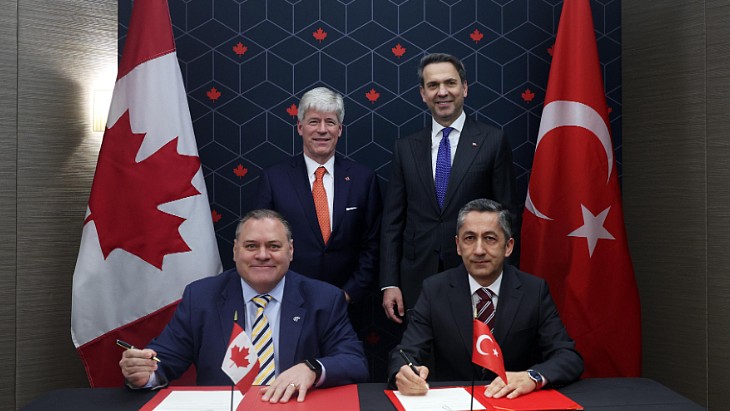
The Canadian company is part of AtkinsRéalis Group, which said the agreement provided a framework “for the exchange and sharing of relevant technical data, information, experience, know‑how and expertise” and the parties “will collaborate on the assessment of various CANDU reactor technologies and evaluate their suitability for sites” identified by Türkiye Nuclear Energy Company (TÜNAŞ).
There will also be an evaluation of the regulatory and licensing requirements and the two parties will “examine potential business models, including financing and structuring options, ownership arrangements, project delivery approaches, an assessment of localisation opportunities, as well as workforce development and human capital requirements”.
TÜNAŞ is responsible for the development of nuclear power plants in Turkey – the country already has the Akkuyu plant under construction, with plans being developed for two more new plants.
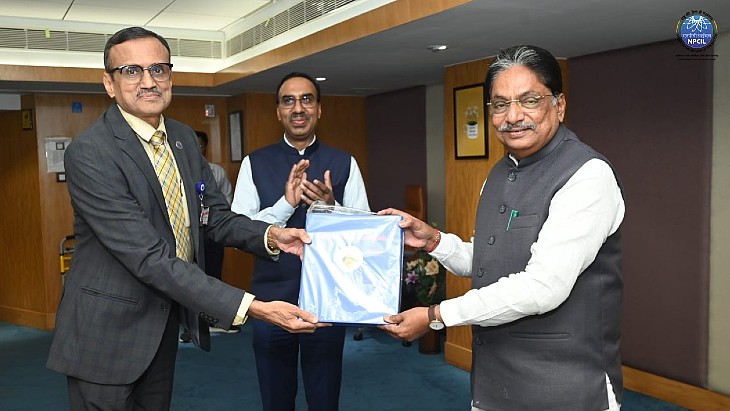
The MoU was signed on the sidelines of the Canadian Association of Mining Researchers and Developers Congress, and was attended by Canadian Minister of Energy and Natural Resources Tim Hodgson and Turkey’s Minister of Energy and Natural Resources, Alparslan Bayraktar.
Bayraktar said: “We attach great importance to the potential of working together between the two countries to diversify our energy basket and increase the capacity of nuclear energy.”
On the subject of broader relations between the two countries he said: “I believe we have entered a new era in Turkey-Canada relations. Geopolitical developments around the world, particularly in North America and elsewhere, mean that we are now in a period where there is a greater need for different partnerships and alliances.”
The 4,800 MWe Akkuyu plant, in the southern Mersin province, is Turkey’s first nuclear power plant. Russia’s Rosatom is building four VVER-1200 reactors, under a so-called BOO (build-own-operate) model. Construction of the units began between 2018 and 2023. When the plant is completed, it is expected to meet about 10% of Turkey’s electricity needs, with the aim that all four units will be operational by the end of 2028.
In March 2024, Bayraktar was reported to have said that Turkey was talking to Russia and South Korea about Turkey’s planned second nuclear power plant, at Sinop, and was also in talks with China about plans for a third plant, in the Thrace region in the country’s northwest.
Turkey is also developing plans for small modular reactors, with the aim of adding 5 GWe of capacity by 2050 – which would mean a total of at least 16 individual SMRs.
There are currently 31 Candu reactors in operation around the world, including in South Korea, Romania and China as well as 17 in Canada.
Candu units are pressurised heavy water reactors designed to operate for 30 years, with a further 30 years available subject to refurbishment. This includes the replacement of key reactor components such as steam generators, pressure tubes, calandria tubes and feeder tubes. It involves removing all the reactor’s fuel and heavy water and isolating it from the rest of the power station before it is dismantled. Thousands of components, including those that are not accessible when the reactor is assembled, are inspected, and all 480 fuel channels and 960 feeder tubes are replaced during the high-precision rebuild.
AtkinsRéalis unveiled plans for the 1,000 MW Candu Monark, a Generation III+ reactor with the highest output of any Candu technology, in November 2023. It completed the conceptual design phase in September 2024 and is in the planning stage of a vendor design review with the Canadian nuclear regulator.