The approval came via a vote of confidence in the governor during the session on Monday, and means that the process of obtaining local consent is completed and Tokyo Electric Power Company (Tepco) can advance plans to restart the units.
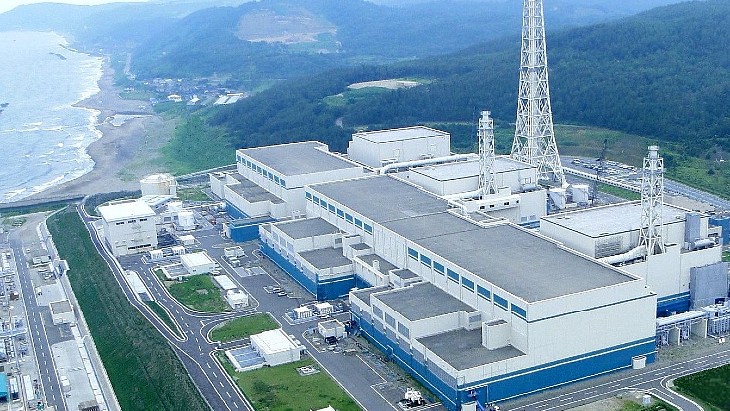
The seven-unit Kashiwazaki-Kariwa plant was unaffected by the March 2011 earthquake and tsunami which damaged Tepco’s Fukushima Daiichi plant, although the plant’s reactors were previously all offline for up to three years following the 2007 Niigata-Chuetsu earthquake, which caused damage to the site but did not damage the reactors themselves. While the units were offline, work was carried out to improve the plant’s earthquake resistance. All units have remained offline since the Fukushima Daiichi accident.
Although it has worked on the other units at the Kashiwazaki-Kariwa site, Tepco is concentrating its resources on units 6 and 7 while it deals with the clean-up at Fukushima Daiichi. These 1356 MWe Advanced Boiling Water Reactors began commercial operation in 1996 and 1997, respectively, and were the first Japanese boiling water reactors to be put forward for restart. Tepco received permission from the Nuclear Regulation Authority to restart units 6 and 7 in December 2017. Restarting those two Kashiwazaki-Kariwa units – which have been offline for periodic inspections since March 2012 and August 2011, respectively – would increase the company’s earnings by an estimated JPY100 billion (USD638 million) per year.
Tepco is prioritising restarting Kashiwazaki-Kariwa unit 6, where fuel loading was completed in June. The company has until September 2029 to implement anti-terrorism safety measures at unit 6, and it could operate until that time now it has local approval. Kashiwazaki-Kariwa 6 would become the first reactor owned by Tepco to restart following the Fukushima Daiichi accident.
, sources have told it that Tepco has been discussing plans to put unit 6 back online around 20 January with the aim, subject to checks and tests, of putting it back in service by the end of March.
In his published statement to the meeting of the prefectural assembly, Governor Hanazumi said: “How to deal with the Kashiwazaki-Kariwa Nuclear Power Plant has long been a major issue for the people of Niigata Prefecture. While opinions regarding the restart of the Kashiwazaki-Kariwa Nuclear Power Plant are currently divided among the public, we believe that by continuing to provide accurate information about nuclear power generation and to raise awareness of safety and disaster prevention measures, we can increase public understanding of the plant’s resumption.”
He said that a public opinion survey conducted this year suggested that the more people were aware of the disaster prevention and safety measures at the plant “the more likely people are to support restarting the plant. Furthermore, the survey also revealed that people in their 20s and 30s tend to be more favourable toward restarting the plant than older generations”.
He added: “I take seriously the concerns of the people of the prefecture who are worried about the restart of the reactors, and if I receive the confidence of the prefectural assembly to continue in my duties as governor, I will make every effort to revitalise the economy and society of the host region and the entire prefecture, as well as to improve the safety and security of the people of the prefecture.”
In October Tomoaki Kobayakawa, president of Tepco, informed the Niigata Prefectural Assembly that the utility was considering decommissioning units 1 and 2 at the plant.
Prior to the March 2011 accident at the Fukushima Daiichi plant, Japan’s 54 reactors had provided around 30% of the country’s electricity. All were shut down following the accident, pending regulatory change. So far, of 33 operable reactors, 14 have restarted and 11 are currently in the process of restart approval.