What recent innovations has Xiamen Mibet New Energy made in solar mounting systems to boost efficiency and durability?
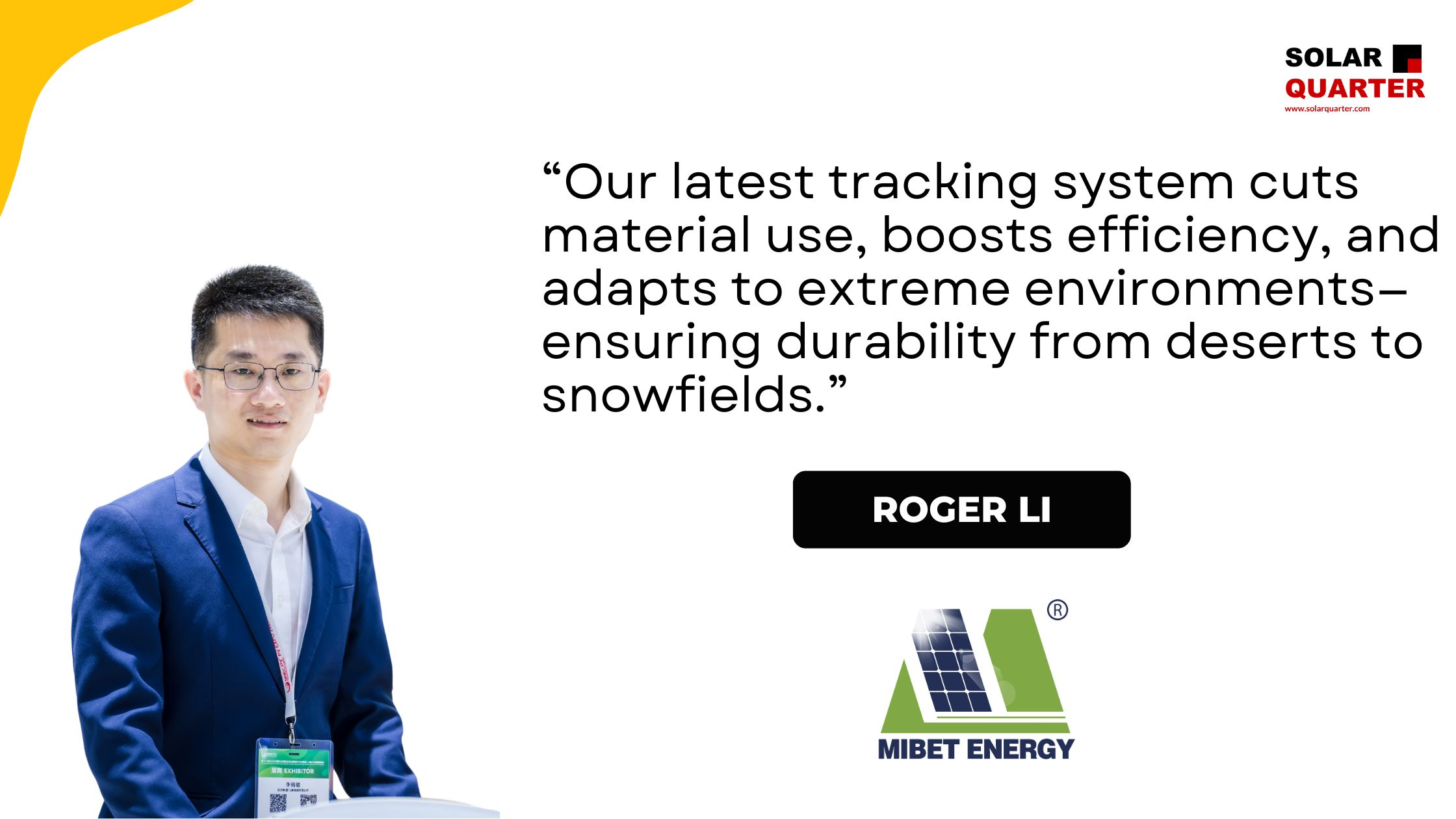
Our solar tracking system has gone through several generations of transformation, each one focused on improving performance and adaptability. The version we’re presenting at SNEC 2025 reflects a major leap forward, thanks to the continuous efforts of our R&D team. This newly upgraded system has been widely deployed in high-demand regions such as the Middle East and Latin America, where efficiency and reliability are key.
One of its most important advantages is compatibility with all large-format PV modules currently available in the market, offering installers flexibility and ease of integration. It also reduces the number of support posts required per megawatt, cutting down structural material needs and streamlining installation. These enhancements not only boost power output from solar panels but also lower balance-of-system costs, offering better return on investment for utility-scale developers.
How is Mibet adapting its mounting solutions for large-scale projects with different environmental challenges?
At Mibet, we recognize that large-scale solar projects often face extreme and varied environmental conditions, which is why our engineering teams place a strong focus on structural resilience and adaptability. In 2024, we successfully delivered mounting solutions for two landmark projects a 220 MW and a 180 MW project in Southeast Asia demonstrating our ability to scale efficiently and reliably.
This year, we’ve taken a major step forward by contributing to a 600 MW project in the Middle East, a region known for high corrosion levels, intense typhoons, and seasonal snow. Our systems are designed with high-grade materials and advanced coatings that can withstand these harsh conditions without compromising structural integrity. Whether it’s wind loads, snow loads, or salt-laden air, our mounting systems are engineered to deliver long-term durability and consistent performance, ensuring safety and operational stability for decades.
Are there any new solar mounting products or updates you’re highlighting at SNEC 2025?
Absolutely. One of the key highlights at our SNEC 2025 booth is our sixth-generation floating PV system, which has evolved through multiple iterations to become a cornerstone of our product portfolio. These systems are ideal for inland water bodies such as reservoirs and lakes, offering a reliable and space-efficient alternative to land-based solar farms.Beyond this, we are also breaking new ground with offshore floating PV technology. In collaboration with the Royal Ship Material Research Institute part of the China State Shipbuilding Corporation we are developing systems built specifically for marine deployment. Offshore PV presents unique technical challenges such as wave impact, salt corrosion, and anchoring complexities, but we are confident in our solution. One prototype is already installed in a real offshore location, undergoing performance testing under natural sea conditions. This initiative represents a forward-looking move to harness vast ocean energy potential and support the transition to renewable energy on a global scale.