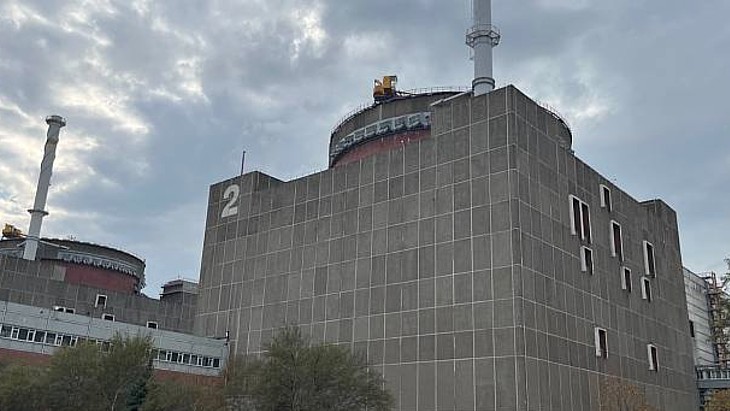
Russia’s state nuclear corporation Rosatom said that obtaining the licence “confirms that the power unit’s equipment, safety systems, and personnel qualifications fully comply with the strict requirements of Russian nuclear energy standards and regulations”.
It added that Rostekhnadzor’s backing of the operational safety of the unit “paves the way for the future development of nuclear power generation in the region”.
Alexey Likhachev, Rosatom Director General, said that “all necessary work, maintenance, and scheduled preventive maintenance are carried out in strict accordance with schedules and at a high professional level. Our goal remains unchanged – to prepare all units for future generation”.
An application has been submitted to Rostekhnadzor for an operating licence for Unit 6 and Rosatom aims to submit similar applications by the end of 2026 for units 3, 4, and 5.
The six-unit Zaporizhzhia nuclear power plant has the largest capacity of any nuclear power plant in Ukraine, and Europe, but all six units have been shut down since shortly after the start of the war, which is when it came under Russian military control.
Existing licences issued pre-war by the Ukrainian nuclear regulator were temporarily recognised, and extended where necessary, by Russia pending its regulator issuing licences.
Since September 2022 there have been teams of International Atomic Energy Agency experts stationed at the plant as part of efforts to ensure nuclear safey and security at a site which is located close to the frontline of Ukrainian and Russian forces.
Ukraine says that the best way to ensure nuclear safety and security is for the plant to return to its control, and regulatory system. Russia says that it aims to restart units at the plant under its legal and regulatory framework, when conditions are right. A Rostekhnadzor licence for Unit 1 was issued in December.
Background
At talks in June last year between IAEA Director General Rafael Mariano Grossi and Likhachev, the issue of potentially restarting the units was discussed. Grossi told a press conference at the time that there was a “common view” that it would be inadvisable to restart the plant in the current military situation, adding: “There are other more technical aspects like, for example, the availability of enough water to cool down the reactors or also the availability of sufficient, stable, external power so you can rest assured that if it’s started there will be no blackout and the plant will be able to operate.”
Russia’s Tass news agency’s coverage of those talks reported Likhachev as saying said the plant could only be restarted once there was no military threat, and quoted him as saying “we have already started construction of a floating modular pumping station with a capacity of up to 80,000 cubic metres per hour, which will address all problems related to water supply in the event that the units are brought to their design capacity”.
Zaporizhzhia Nuclear Power Plant has six VVER-type reactors which entered commercial operation between 1985 and 1996. The combined operating capacity of the plant is 5.7 GW.