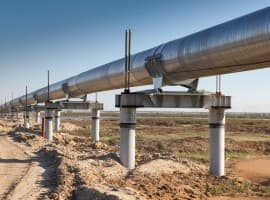
Hungary has reported that oil flows from Russia via the key Druzhba oil pipeline have continued after it came under attack by Ukraine on December 1. According to Mol Nyrt, Hungary’s main oil company, imported crude flows through the Transneft-owned pipeline have so far been unaffected. Previously, the Kyiv Independent had reported that Ukraine used remote-controlled explosives to destroy the pipeline.
“The Russian oil network, as the main source of income for the aggressor state and financing for the military-industrial complex, will continue to explode and burn until the enemy stops trying to attack Ukraine,” the Kyiv Independent reported.
With a capacity of 2 million barrels per day (bpd), the Druzhba pipeline is one of the world’s largest. The entire system, including its branches, spans more than 8,900 km. The Druzhba Pipeline transports crude oil from Russia, originating in Almetyevsk, through a branching network to several European countries. Its northern branch historically supplied Belarus, Poland, and Germany, while the southern branch runs through Ukraine to supply Hungary and Slovakia. However, current oil flows are mostly limited to the southern branch to Hungary and Slovakia due to geopolitical events, as Russian oil has been redirected and northern routes have been suspended, with some sections now used for Kazakh oil to Germany.
Ukraine’s deep-strike drone campaign targeting Russia’s oil and gas production facilities has impacted half of Russia’s major oil and gas facilities and cost its bigger adversary ~10% of its refining capacity, according to industry experts.
“Ten percent, it’s not an astonishing number,” says Tatiana Mitrova of Columbia University. “But it is still something that starts to be felt with the Russian domestic fuel crisis, with reduced oil refined products exports, and general tension inside the Russian oil sector.”
The latest round of peace talks between Russia and Ukraine has ended without a breakthrough. According to Putin’s top foreign policy aide, Yuri Ushakov, the issue of ownership of Donbas was discussed during the five-hour Kremlin meeting between Trump’s top envoys and Russian negotiators.
By Alex Kimani for Oilprice.com
More Top Reads From Oilprice.com
- Brazil’s Oil Sector Rallies Against Oilfield Services Merger Plan
- Global Supply Woes Push Copper Past $11,400 Per Ton
- Kazakhstan Plans to Double Oil Refining Capacity by 2040