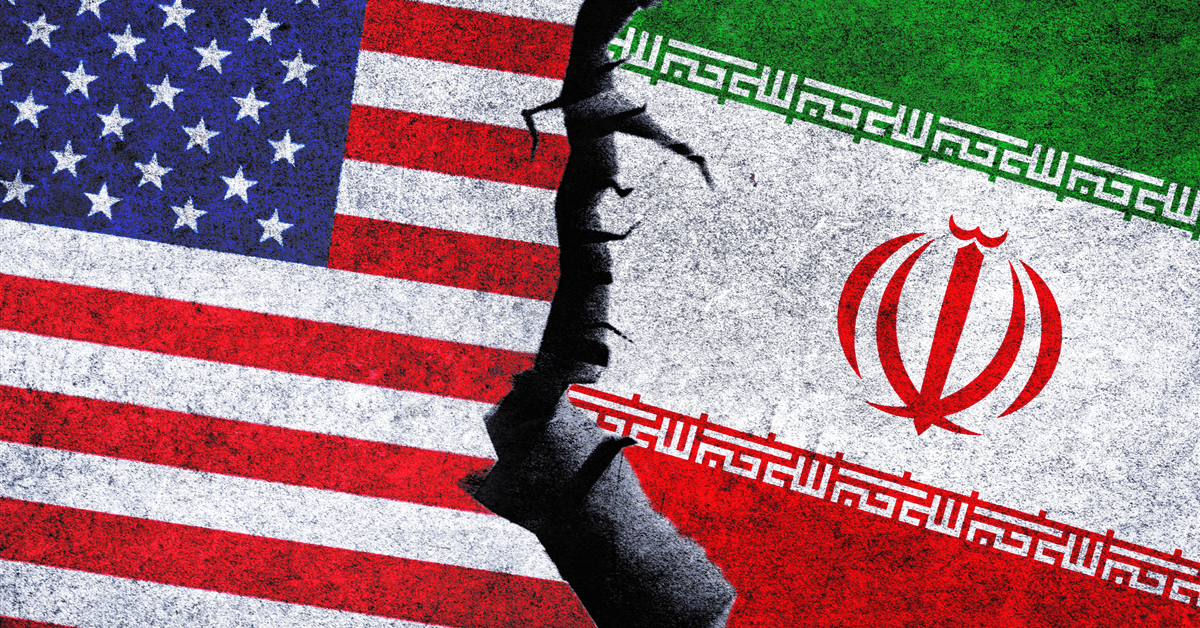
The latest round of U.S. sanctions on Iran signal a growing determination to tighten the economic noose around the Tehran administration.
That’s what Rystad Energy said in a release posted on its site last week, adding that, “if the sanctions are expanded … the consequences will reach far beyond Iran, could reshape geopolitics, and send shockwaves through energy markets”.
“While there is not yet a ‘maximum pressure’ situation – where Iranian oil exports could drop from 1.5 million barrels per day to near zero – Washington is stepping up efforts to push Tehran back to the negotiating table for a new nuclear deal,” Rystad noted in the release.
“However, escalating pressure could drive oil prices higher, conflicting with U.S. President Donald Trump’s goal of lowering energy costs to fight inflation, as he promised in his January inauguration speech,” Rystad added.
The company stated in its release that its data on oil trade flows shows that almost all Iranian crude exports make their way to China. It added that achieving effective maximum pressure would require cooperation from the Chinese government.
“The effectiveness of these sanctions in compelling Iran to negotiate is still unclear,” Rystad said in the release.
“Rystad Energy analysis suggests that, if Iran remains unresponsive, the U.S. could introduce further sanctions,” it added.
“Trump has repeatedly signaled his desire for a new nuclear deal, urging Iran to return to the negotiating table. While the immediate effects of these sanctions may be limited, they send a clear signal about the U.S. administration’s intent to escalate pressure on Iran,” it continued.
Rystad went on to note in the release that the decision by OPEC+ to increase production could play a key role in shaping the U.S. approach to maximum pressure on Iran.
“The recent drop in oil prices – partly due to the production boost from OPEC+ – might create a favorable environment for the U.S. to impose stricter sanctions on Iran,” Rystad said.
The company also highlighted in the release that Iranian crude exports surged in January to almost 1.5 million barrels per day, which it said was the highest figure since May 2024 and the second highest since March 2019.
“This increase may indicate Tehran’s expectations of forthcoming U.S. pressure,” Rystad noted in the release.
In a Skandinaviska Enskilda Banken AB (SEB) report sent to Rigzone on March 21 by the SEB team, Bjarne Schieldrop, the chief commodities analyst at the company, said, “if we lose crude and condensate exports from Iran, then it solves a problem for [the] rest of OPEC+”.
“Donald Trump wants a lower oil price. At least that is what he is saying. His goal … is thus probably not to drive Iranian oil out of the market but rather to drive Iran to the negotiation table over its nuclear program,” Schieldrop added.
“But if that doesn’t work and the result is yet more U.S. sanctions towards Iran driving its oil out of the market, then it does indeed help the rest of OPEC+ with its current very large spare capacity of some 5-6 million barrels per day,” he continued.
“So even if we end up losing all of Iran’s crude and condensate exports, the world will still not have any problem covering its needs with respect to oil,” Schieldrop went on to state.
Rigzone has contacted the White House, the Trump transition team, the Iranian ministry of foreign affairs, and the State Council of the People’s Republic of China for comment on Rystad’s release. Rigzone has also contacted the White House, the Trump transition team, the Iranian ministry of foreign affairs, and OPEC for comment on SEB’s report. At the time of writing, none of the above have responded to Rigzone.
A fact sheet posted on the White House website on February 4 stated that Trump signed a National Security Presidential Memorandum (NSPM) “restoring maximum pressure on the government of the Islamic Republic of Iran”.
“The NSPM directs the Secretary of the Treasury to impose maximum economic pressure on the Government of Iran, including by sanctioning or imposing enforcement mechanisms on those acting in violation of existing sanctions,” the fact sheet noted.
“The Secretary of State will also modify or rescind existing sanctions waivers and cooperate with the Secretary of Treasury to implement a campaign aimed at driving Iran’s oil exports to zero,” it went on to state.
Rigzone previously contacted Iran’s ministry of foreign affairs for comment on the fact sheet. The ministry did not respond to Rigzone’s request.
A statement posted on OPEC’s website on March 3 revealed that Saudi Arabia, Russia, Iraq, the United Arab Emirates, Kuwait, Kazakhstan, Algeria, and Oman will start unwinding a 2.2 million barrel per day cut from April.
To contact the author, email