Saudi Aramco has begun reducing oil production at two of its fields as the disruption around the Strait of Hormuz starts to choke off crude exports across the Gulf, according to sources cited by Reuters on Monday.
The move comes just hours before the Saudi oil giant is due to report its 2025 earnings on Tuesday, placing the focus squarely on whether the world’s largest oil exporter can keep crude moving during the escalating U.S.-Israeli war with Iran.
It was not immediately clear which oilfields were affected or how much production had been reduced. Aramco declined to comment on the reported cuts.
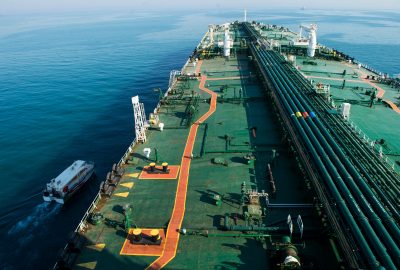
The production curbs mark one of the clearest signs yet that the disruption around Hormuz is beginning to constrain supply from the region that normally exports roughly a fifth of the world’s oil. Tanker traffic through the strategic waterway has slowed sharply in recent days as military activity, security risks and insurance cancellations make shipping increasingly difficult.
Related: Trump’s Secret Weapon in the Rare Earth War
Aramco has begun rerouting some crude cargoes to the Red Sea port of Yanbu, attempting to bypass the Strait of Hormuz using Saudi Arabia’s east-west pipeline network. The system allows the kingdom to move crude from its eastern oilfields to export terminals on the Red Sea, avoiding the Gulf shipping lane.
However, the pipeline cannot fully replace the massive volumes that normally leave Saudi Arabia through Hormuz, meaning export bottlenecks are now beginning to appear as storage tanks fill.
Other Gulf producers are running into the same export constraints as the shipping crisis spreads across the region’s energy system.
Crude output from Iraq’s southern fields has plunged by roughly 70% since the war began, dropping to about 1.3 million barrels per day from roughly 4.3 million barrels per day previously. Southern Iraq accounts for the vast majority of the country’s oil production and exports.
“Crude storage has reached maximum capacity, and the remaining output after the major cut will be used to supply the country’s refineries,” a Basra Oil Company official told Reuters.
Export activity has slowed dramatically. On Sunday, only two tankers were loaded at Iraq’s southern export terminals, each carrying about 2 million barrels. The vessels remained in the Persian Gulf according to vessel-tracking data.
Kuwait has now begun taking similar steps as storage fills across the region. Kuwait has started shutting in production at several oilfields because the standstill in tanker traffic through the Strait of Hormuz has left the country with limited capacity to store additional crude.
By Charles Kennedy for Oilprice.com
More Top Reads From Oilprice.com
- Saudi Arabia Shoots Down Drones Targeting Major Shaybah Oilfield
- Bahrain’s Bapco Energies Declares Force Majeure as War Escalates
- War Flips LNG Surplus Narrative, Morgan Stanley Says