In a report sent to Rigzone recently, Standard Chartered Bank Energy Research Head Emily Ashford outlined that Standard Chartered expects oil market sentiment “to gradually turn more positive”.
“We expect [crude oil] market sentiment to gradually turn more positive as the bearish oversupply narrative so prevalent in H2-2025 weakens, and traders turn their attention to a more positive H2-2026,” Ashford stated in the report.
“We expect the supply glut estimates of the main market commentators to be revised towards more seasonal norms, although prices are likely to remain in the low to mid $60s per barrel,” Ashford added.
Ashford also outlined in the report that Standard Chartered expects “an uptick in volatility and increasing focus on risks to both supply and demand”.
The Standard Chartered Bank Energy Research Head went on to note in the report that “low prices have begun to quash U.S. shale output growth” and added that, “if OPEC+’s gradual return of barrels recommences in Q2-2026, this would start to highlight the tightness and geographic concentration of spare capacity, which should be price supportive in the medium term”.
In the U.S. Energy Information Administration’s (EIA) latest short term energy outlook, which was released earlier this month, the EIA projected that Lower 48 States crude oil production, including lease condensate and excluding the Gulf of America, will drop from 11.28 million barrels per day in 2025 to 11.11 million barrels per day this year. Total U.S. crude oil output, including lease condensate, is forecast in the STEO to drop from 13.61 million barrels per day in 2025 to 13.59 million barrels per day in 2026.
A statement posted on OPEC’s website on January 4 revealed that, in a meeting held that day, Saudi Arabia, Russia, Iraq, UAE, Kuwait, Kazakhstan, Algeria, and Oman “reaffirmed their decision on 2 November 2025 to pause production increments in February and March 2026 due to seasonality”.
Demand Estimates, SC Webinar
In the Standard Chartered report, Ashford also outlined that Standard Chartered sees “the potential for improvements in global demand estimates, notably in China and the U.S., alongside fiscal stimulus, following 12 months of aggressive easing cycles”.
Ashford went on to reveal in the report that 55 percent of participants in Standard Chartered’s webinar on oil’s prospects this year deemed the commodity to have “the most downside risk”.
“The negativity of participants in our webinar towards oil’s prospects in 2026 was somewhat surprising,” Ashford said in the report.
“Expectations of overwhelmed storage driven by an unprecedent supply glut have not materialized, and we expect traders to recalibrate their expectations over the next few weeks,” Ashford added.
“Interventionist U.S. policy has added significant uncertainty to geopolitical risk … factors such as slowing U.S. supply growth and tighter OPEC spare capacity should be price supportive in the medium term,” Ashford continued.
The Standard Chartered report projected that the ICE Brent nearby future crude oil price will average $63.50 per barrel in 2026 and $67.00 per barrel in 2027. This commodity averaged $68.50 per barrel in 2025, the report showed.
A quarterly breakdown included in the Standard Chartered report forecast the ICE Brent nearby future crude oil price will average $62.00 per barrel in the first quarter of 2026, $63.00 per barrel in the second quarter, $64.00 per barrel in the third quarter, $64.50 per barrel in the fourth quarter, and $66.50 per barrel in the first quarter of 2027.
Global Surplus
In a report sent to Rigzone on Monday by the Skandinaviska Enskilda Banken AB (SEB) team, SEB Chief Commodities Analyst Bjarne Schieldrop warned that “the recent rally in Brent crude is not a signal from the oil market that the much discussed global surplus has been called off”.
“If we look at the shape of the Brent crude oil curve it is currently heavily front-end backwardated with the curve sloping upwards in contango thereafter. It signals front-end tightness or near term geopolitical risk premium followed by surplus,” he said.
“If the market had called off the views of a surplus, then the whole Brent forward curve would have been much flatter and without the intermediate deep dip in the curve,” he added.
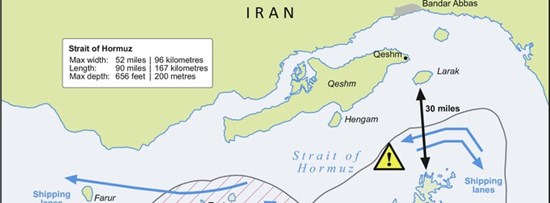
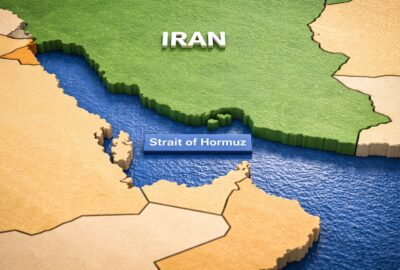
“The shape of the Brent curve is telling us that the market is concerned right now for what might happen in Iran, but it still maintains an overall view of surplus and stock building unless OPEC+ cuts back on supply,” he continued.
To contact the author, email