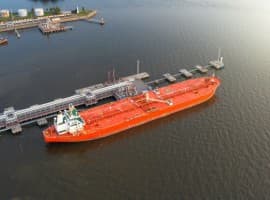
Shell is being “very careful” with its tanker movements in the Middle East amid the hostilities between Israel and Iran, Reuters reported today, citing chief executive Wael Sawan.
“The escalation in tensions over the last few days, in essence, has added to what has already been significant uncertainty in the region,” Sawan told an industry conference in Japan. “We’re being very careful with, for example, our shipping in the region, just to make sure that we do not take any unnecessary risks.”
Shell has extensive operations in the Middle East. Most of the oil produced in the region leaves it via the Persian Gulf and the Hormuz Strait that has returned to the spotlight after Israel launched missiles against Iran last Friday, with the risk of Iran deciding to close the chokepoint once again coming to the surface. Any such closure is unlikely to last long, according to analysts, due to the heavy military presence of the U.S. in the area but it would nevertheless affect oil prices and supply immediately.
“The Strait of Hormuz is, at the end of the day, the artery through which the world’s energy flows, and if that artery is blocked, for whatever reason, it’ll have a huge impact on global trade,” Shell’s Sawan said, noting that the rise in oil prices since Friday has been moderate as traders are in no rush to crowd into oil until there’s evidence of oil infrastructure damage in Iran.
The top oil executive also noted that shipping in the region has become risky due to the use of electronic system interference that affects the navigational systems of ships. Earlier in the week two tankers collided near the Strait of Hormuz. The collision was likely caused by “a navigational misjudgment”, according to a Sky News report citing UAE officials.
By Irina Slav for Oilprice.com
More Top Reads From Oilprice.com
- EU Needs $280 Billion for Nuclear Energy, And That’s Just the Start
- The Hidden Price of “Cheap” Russian Gas
- Goldman Sachs: Geopolitical Risk Could Add $10 to Oil Prices