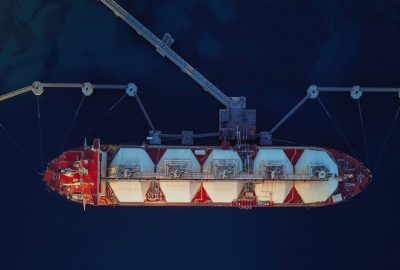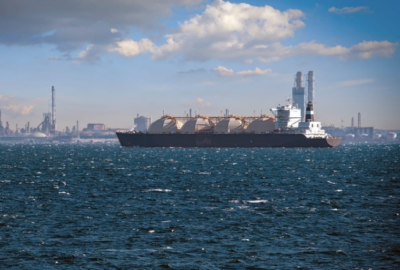
The Caspian Pipeline Consortium (CPC), which exports oil from Kazakhstan and Russia, has suspended acceptance and transshipment at its terminal in the Russian city of Novorossiysk due to adverse weather and glutting at storage facilities.
The suspension of loading and transfer operations at the Black Sea terminal began Monday, according to a statement on CPC’s website. “The shippers were notified accordingly on time”, CPC said.
Transshipment remains paused “until weather improvement and lifting of storm warnings”, CPC said, adding such suspensions prevent oil spills.
Already, “the oil shipment regularity was, to a major extent, affected by an unmanned boat attack on SPM-2 and damage to the latter, as well as the earlier commenced repairs on SPM-3, which were complicated by severe wintertime hydrometeorological conditions”, said CPC, partly owned by the Russian and Kazakhstani governments.
On November 29 CPC reported an attack on the terminal by drone boats that caused “significant damages” at Single-Point Mooring 2.
While no personnel was injured, “the emergency shutdown systems shut off the respective pipelines”, CPC said in an online statement. “Provisionally, oil spill to the Black Sea waters was prevented.
“Sea water sampling [is] underway, environmental monitoring in progress, [and] emergency oil spill response plan in action.
“Further SPM-2 operation is impossible. Offloading operations at the terminal will proceed in line with the established rules as the drone boat and flying drone threat is lifted”.
It added, “The Caspian Pipeline Consortium unites major fuel and energy companies from Russia, USA, Kazakhstan and from several countries of Western Europe. We believe that the attack on CPC is an attack on the interests of CPC member states”.
CPC said “no sanctions or restrictive measures have ever been imposed on CPC, which also testifies to the recognition of the significant CPC role in ensuring interests of the company’s Western shareholders”.
However, besides direct ownership, the Russian government also holds additional indirect stakes in CPC through two state-owned Russian oil companies that have been sanctioned by the United States and the United Kingdom. London and Washington announced the sanctions against Lukoil PJSC and Rosneft PJSC October 15 and 22 respectively.
Moscow directly owns 24 percent in CPC. Lukoil International GmbH holds 12.5 percent. A joint venture between Rosneft and Shell PLC has 7.5 percent, according to CPC.
The other partners are NC KazMunayGas JSC (19 percent), Chevron Caspian Pipeline Consortium Co (15 percent), Mobil Caspian Pipeline Co (7.5 percent), IC CPC Co (seven percent), BG Overseas Holdings Ltd (two percent), Eni International NA NV SARL (two percent), Kazakhstan Pipeline Ventures LLC (1.75 percent) and Oryx Caspian Pipeline LLC (1.75 percent).
Most of the oil passing through the 1,511-kilometer (938.89 miles) pipeline comes from fields in Western Kazakhstan, according to CPC. Put onstream October 2001, the system has increased its transport and loading capacity to 83 million tons a year, CPC says on its website.
To contact the author, email jov.onsat@rigzone.com
What do you think? We’d love to hear from you, join the conversation on the
The is a new social experience created for you and all energy professionals to Speak Up about our industry, share knowledge, connect with peers and industry insiders and engage in a professional community that will empower your career in energy.
MORE FROM THIS AUTHOR
Editor