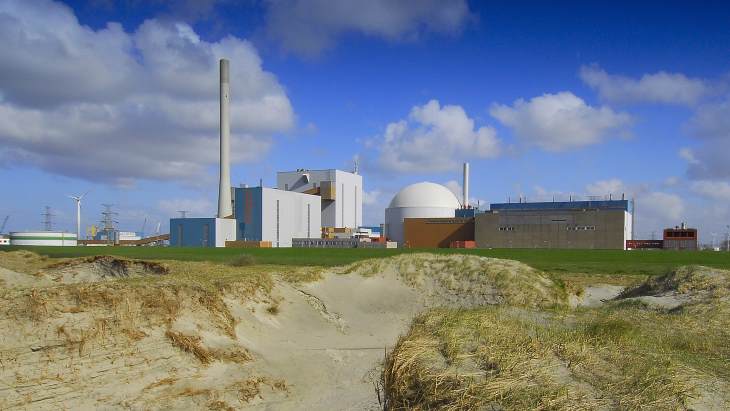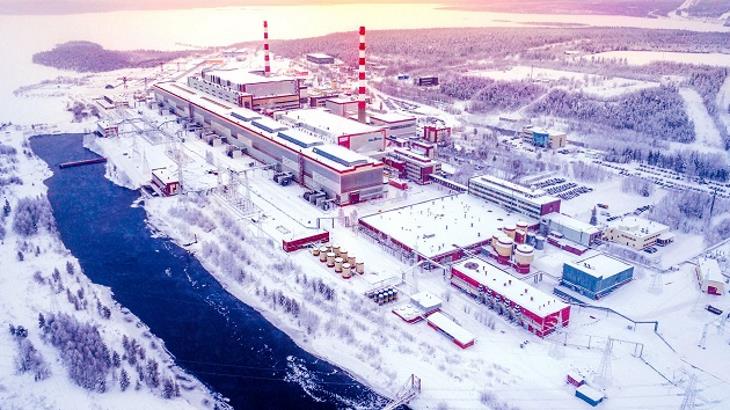
The decision means that the site selected, about 10 kilometres south of the existing plant on the shores of Lake Imandra in Russia’s Murmansk Region, meets requirements. The general contractor, TITAN-2, was said by Rosatom to be starting to prepare the site – laying access roads, clearing forests, and creating a construction and installation base.
Nikolai Rusakov, Deputy Director for Capital Construction at the Kola Nuclear Power Plant, said: “In preparation for the plant’s construction, we are working with the general designer and general contractor to develop the construction technology, timeframe, and safety issues. I am confident that the coordinated work of all participants will allow us to begin the main construction phase on schedule.”
In March last year Rosatom said that the eventual plan was for four new units at Kola II, to be VVER-S, a 600 MWe water-cooled reactor under development, with the first two to be built between 2027 and 2037. Rosatom says that, if the proposed VVER-S reactors can use a full load of MOX (mixed oxide) fuel, it will cut its use of natural uranium by 50%.
The new units are intended to replace the existing four Kola units as they come to the end of their operating lives. They are VVER-440 reactors; 1 and 2 are V-230 models and 3 and 4 are of the V-213 type. They have a capacity of 411 MWe and were all connected to the grid between 1973 and 1984.
The Kola nuclear power plant was the first to be built in the harsh climatic conditions of the Arctic, providing reliable energy supply to the northern part of the Republic of Karelia – where most of the region’s major industrial enterprises are located – as well as to more than half of the consumers in the Kola Peninsula.
There have been various plans for new capacity at Kola, with World Nuclear Association saying that in 2012 the replacement plant was due to feature two VVER-TOI units. However, in June 2021, the plant management announced that the plan was for construction to begin in 2028 for two VVER-S 600 MW reactors, with the first to be online in 2034. The ‘S’ signifies spectral shift control, with heavy water in the primary coolant.