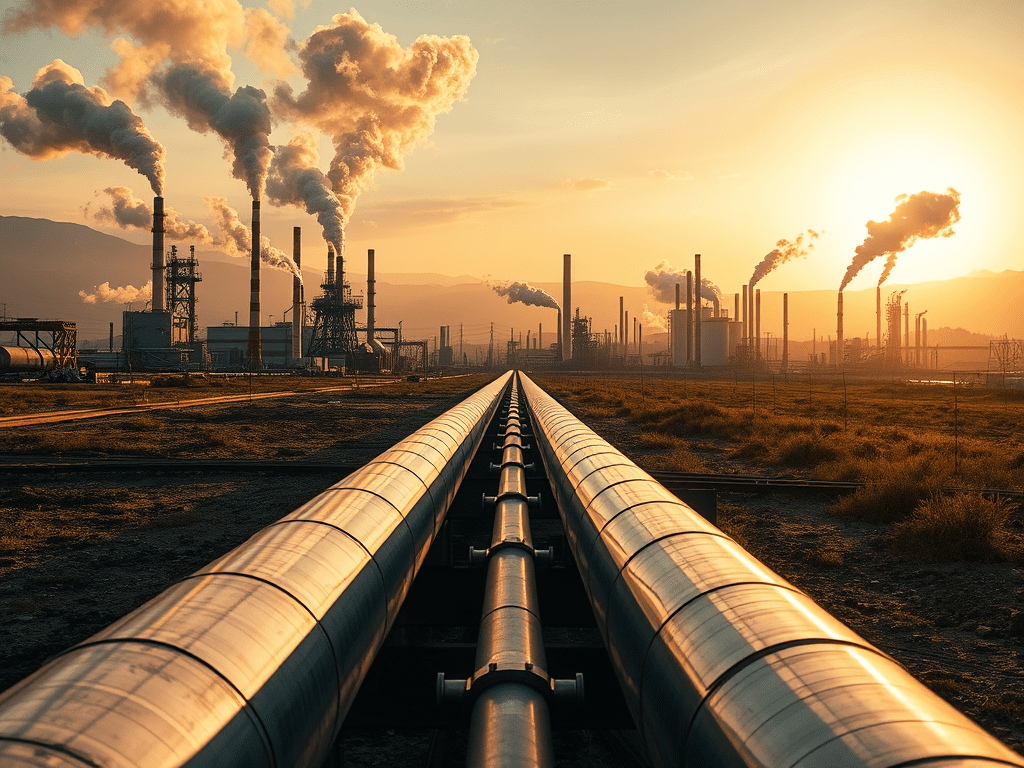
South Africa Faces 2028 Gas Crisis As Industries Seek Urgent Energy Alternatives

South Africa is heading toward a serious energy challenge as its supply of industrial gas is expected to run out by 2028. This situation, often called a “gas cliff,” could disrupt hundreds of factories that produce essential goods such as steel, glass, and food. Experts warn that without a quick and practical solution, the country could face major economic damage, including the loss of around 70,000 jobs and a decline of 4% to 7% in its GDP.

For many years, South Africa has depended on gas from the Pande-Temane fields in Mozambique, transported through pipelines operated by Sasol. However, these gas reserves are now close to depletion. Sasol has already announced that it will stop supplying gas to industrial customers by July 2028. Although there is some discussion about temporarily extending supply using synthetic gas, this option is not sustainable in the long run.

The situation is particularly difficult for industries such as steel and glass manufacturing, which require high and continuous heat that only gas can provide. Switching to electricity is not a simple option for these sectors. In some cases, moving to the current power grid could increase energy costs by up to six times, making local products too expensive to compete in global markets.

The government has proposed importing Liquefied Natural Gas (LNG) as a solution. However, this plan faces several challenges. Building the required infrastructure, including port facilities and regasification terminals, would cost at least $500 million. In addition, the size of South Africa’s industrial gas market may not be large enough to attract private investors. Even if the infrastructure is built, LNG is expected to cost about three times more than the current gas supply, which could still force many industries to shut down.

Another idea is to use LNG for electricity generation to make the investment more viable. However, critics argue that this approach is not practical, as renewable energy sources like solar and wind are already cheaper. Increasing electricity tariffs to support gas infrastructure could place an additional burden on consumers and businesses.

Researchers are now suggesting a more immediate and cost-effective alternative: Liquefied Petroleum Gas (LPG), especially propane. South Africa already has import terminals for propane at Richards Bay and Saldanha, which reduces the need for new infrastructure. Propane can be used as a direct replacement for natural gas in many industrial processes and is much more affordable to implement.

As the 2028 deadline approaches, believe that switching to propane could provide a practical bridge solution. It may help industries continue operating while the country gradually transitions to cleaner energy options like biogas or hydrogen.


Subscribe to get the latest posts sent to your email.
 

  • Related Posts

    Middle East Weekly: Oman Plans Musandam RE Study, Kuwait Fund Backs 11 MW Solar, L&T Wins 6 GWh BESS Order, ACWA–KOWEPO Partner on RE, NHC–EDF Partner on Clean Energy, ACWA Signs 6 GWh BESS, Masdar Starts 35 MW BESS, Saudi Signs 2 GW BESS Deals

    Oman’s Nama Power and Water Procurement Company (PWP) has issued an RFP for a techno-economic feasibility study to assess renewable energy opportunities in the Musandam Governorate. The study will evaluate…

    ACME Solar Commissions 15 MW/240.752 MWh BESS Project In Rajasthan

    ACME Solar Holdings Limited has announced the successful commissioning of a 15 MW/240.752 MWh Battery Energy Storage System (BESS) project in Rajasthan. The project was commissioned on August 27, 2026,…

    Have You Seen?

    Trump says Venezuelan oil will be used to refill U.S. Strategic Petroleum Reserve

    • August 30, 2026
    Trump says Venezuelan oil will be used to refill U.S. Strategic Petroleum Reserve

    Middle East Weekly: Oman Plans Musandam RE Study, Kuwait Fund Backs 11 MW Solar, L&T Wins 6 GWh BESS Order, ACWA–KOWEPO Partner on RE, NHC–EDF Partner on Clean Energy, ACWA Signs 6 GWh BESS, Masdar Starts 35 MW BESS, Saudi Signs 2 GW BESS Deals

    • August 29, 2026
    Middle East Weekly: Oman Plans Musandam RE Study, Kuwait Fund Backs 11 MW Solar, L&T Wins 6 GWh BESS Order, ACWA–KOWEPO Partner on RE, NHC–EDF Partner on Clean Energy, ACWA Signs 6 GWh BESS, Masdar Starts 35 MW BESS, Saudi Signs 2 GW BESS Deals

    ACME Solar Commissions 15 MW/240.752 MWh BESS Project In Rajasthan

    • August 29, 2026
    ACME Solar Commissions 15 MW/240.752 MWh BESS Project In Rajasthan

    SMBC Reaches Financial Close on JSW Energy’s 210 MW Hybrid Renewable Energy Project in Maharashtra

    • August 29, 2026
    SMBC Reaches Financial Close on JSW Energy’s 210 MW Hybrid Renewable Energy Project in Maharashtra

    SECI Invites Cybersecurity Auditors To Strengthen Renewable Energy Sector Security

    • August 29, 2026
    SECI Invites Cybersecurity Auditors To Strengthen Renewable Energy Sector Security

    The Lifeline of Solar: Why the Right Cable Matters  

    • August 29, 2026
    The Lifeline of Solar: Why the Right Cable Matters  

    Ukraine Drones Spark Fire at Russian Refinery as Fuel Crisis Worsens

    • August 29, 2026
    Ukraine Drones Spark Fire at Russian Refinery as Fuel Crisis Worsens

    India Surpasses 300 GW of Non-Fossil Power Capacity

    • August 28, 2026
    India Surpasses 300 GW of Non-Fossil Power Capacity

    Pakistan’s Five Refineries Set for $6 Billion Upgrade Push

    • August 28, 2026
    Pakistan’s Five Refineries Set for $6 Billion Upgrade Push

    Amazon Nears 1 GW of Wind Power in Sweden With Four New Deals

    • August 28, 2026
    Amazon Nears 1 GW of Wind Power in Sweden With Four New Deals