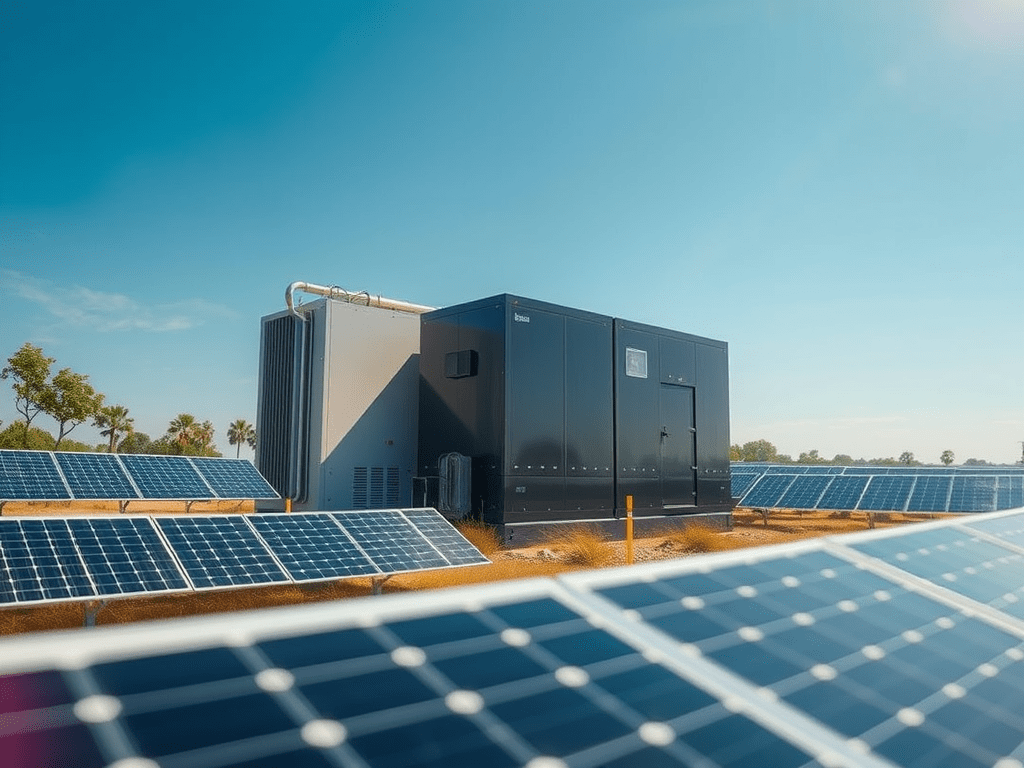
Standard Solar and Port Newark Container Terminal (PNCT) have completed a 7.2 megawatt (MW) solar project specifically designed to function within the complex operations of a busy marine terminal. The system, which combines rooftop and elevated canopy arrays, delivers clean energy without disrupting port activities. Developed in partnership with the Port Authority of New York and New Jersey and the City of Newark, the project was strategically constructed across active truck lanes, rooftops, and parking areas. This approach allowed for efficient use of space while maintaining full operational continuity throughout the construction process.
The solar installation now supplies approximately 50% of PNCT’s annual electricity needs and has helped reduce the terminal’s emissions by half. Spanning the 320-acre terminal site, the system is also capable of sending excess power back to the Newark grid, enhancing local energy resilience and contributing to emissions reduction goals. The project features 3.8 MW of canopy-mounted arrays over truck lanes and an additional 3.4 MW of rooftop and parking canopy systems. A real-time dashboard has also been deployed to monitor energy production and track carbon savings.
C.J. Colavito, General Manager of Integrated Project Teams, Standard Solar, said in a statement, “Designing and installing a system of this scale within a fully operational, high-traffic container facility required custom engineering and constant coordination. From elevated canopy structures to rooftop arrays, every component was designed to work around ongoing port activity without compromising safety or performance.”
Rick Berube, Chief Operations Officer, Standard Solar, stated, “This project showcases the ingenuity and adaptability of solar to thrive in even the most complex, space-constrained logistics environments. We’re proud to help PNCT lead the way toward a cleaner, more resilient port, benefiting not just terminal operations but the Newark community and region as a whole.”
Newark Mayor Ras Baraka, mentioned, “Working with our partners for a more sustainable Newark is an immense priority for my administration. We are acting locally while thinking globally on this world-changing issue. Port Newark’s solar energy project will help make our city healthier for present and future generations. We must continue efforts that combine our local infrastructure with clean power generation, driving Newark Forward, building new jobs, increasing the air quality of our community, and doing our part to fight climate change.”
Jim Pelliccio, president and CEO of Port Newark Container Terminal, commented, “PNCT, Standard Solar and Mayor Baraka, working together with the Port Authority, have been relentless in partnering for responsible expansion of the port to meet the shipping needs of our growing regional and national economy, without sacrificing the health and well-being of our neighbors. Our investments in sustainability have set the groundwork for an ambitious vision to transform the future of Port Newark, setting unparalleled standards for efficiency, environmental responsibility and economic prosperity.”
This solar initiative forms a key part of PNCT’s broader sustainability strategy, developed under a 2011 lease agreement with the Port Authority. It complements several other efforts implemented by PNCT to improve energy efficiency and reduce its environmental footprint. These include upgrades to LED lighting, the adoption of hybrid straddle carriers, energy-efficient electric cranes, and propane-powered yard tractors. Standard Solar owns the solar system and will operate and maintain it over the long term, ensuring consistent energy generation and measurable environmental impact for years to come.