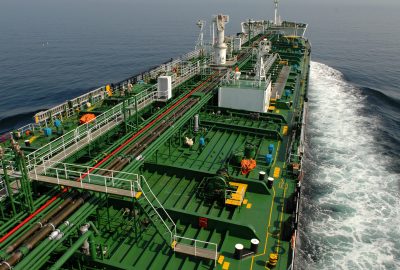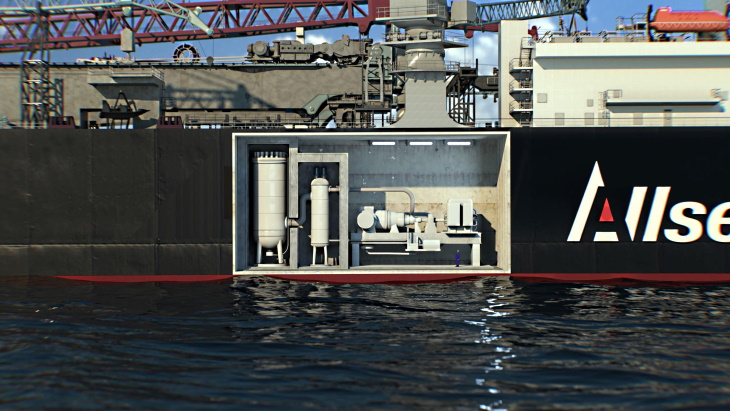
In June, Allseas launched a five-year plan to design, develop and deploy a small modular reactor (SMR) tailored for integration into offshore vessels and for onshore use. The company has selected high-temperature gas-cooled reactors (HTGRs), using tri-structural isotropic – or TRISO – particle fuel, with a power output of about 25 MWe or 70 MWt. The “compact, intrinsically safe and scalable design” of Allseas’ SMR makes it suitable for a wide range of applications – from offshore operations, commercial shipping, and port areas to industrial sites such as chemical clusters, steel plants, refineries, and data centres, the company said. Additionally, the SMR can provide an autonomous, resilient energy supply for defence critical infrastructure. The technology could also provide a reliable and powerful energy source for growth sectors such as semiconductors, AI, quantum technology and supercomputing.
In the first year of its plan, Allseas aims to finalise initial design studies for offshore and onshore use. This will be followed by prototype development and pre-licensing discussions in consultation with key stakeholders, including regulators as well as safety and classification bodies, and in close collaboration with its research and innovation partners, including TNO, NRG-Pallas, Delft University of Technology, and the Royal Association of Netherlands Shipowners.
Allseas has now released the conducted by Roland Berger confirming that its nuclear technology can play a critical role in strengthening the Dutch economy, reducing grid congestion, enhancing energy security, and decarbonising the maritime sector and industry.
Roland Berger estimates potential for deploying up to 110 Allseas SMRs on land in the Netherlands and 700 across the global maritime sector, generating substantial economic value and CO₂ reduction. It estimates Allseas’ SMRs could contribute up to EUR130 billion (USD150 billion) to the Dutch economy by 2050, generated directly through investments by Allseas and its value chain and indirectly via growth in Dutch industry and maritime sectors. This would help retain 10,000-15,000 jobs and create 35,000-40,000 new skilled positions.
By generating energy directly at the point of use, Allseas’ SMR reduces strain on the national electricity grid, the study found. This autonomous energy supply frees up grid capacity, allowing existing businesses to expand and making the Netherlands more attractive to new enterprises. According to the study, this could unlock EUR40 billion in additional economic value and save up to EUR12 billion in high-voltage grid investments – a significant portion of the EUR104 billion planned through to 2050.
Roland Berger said Allseas’ SMR would deliver clean electricity at prices competitive with fossil and renewable alternatives. It would also supply industrial heat up to 650°C, 30% cheaper than gas turbines and 80% cheaper than renewable heat sources. The technology also enables significant CO2 reductions – up to 25% (10 million tonnes annually) in Dutch industry and up to 5% (55 million tonnes annually) in the global maritime sector by 2050. Together, this equals the annual emissions of 3.5 million Dutch homes.
Roland Berger validated the findings with leading knowledge institutions, energy experts and market players, including TNO, COVRA, Urenco and the Port of Rotterdam.
Allseas said: “The results provide a factual foundation for the further development of nuclear technology within Allseas.”
“This study demonstrates our small modular reactor is technologically innovative and strategically valuable for the Netherlands,” said Stephanie Heerema, Project Manager Nuclear Developments at Allseas. “With this technology, we can meet the urgent demand for stable, clean, and affordable energy, while creating an export product that accelerates the global energy transition.”
“As a responsible family-owned company, we always take a long-term view. The conclusions of this study show exciting potential for our technology to address today’s challenges and strengthen our commitment to executing our five-year plan.”
In December 2021, the Netherlands’ new coalition government placed nuclear power at the heart of its climate and energy policy. In addition to keeping the Borssele plant in operation for longer, the government also called for the construction of new reactors. Based on preliminary plans, two new reactors will be completed around 2035 and each will have a capacity of 1000-1650 MWe. The government is also taking steps to prepare the Netherlands for the possible deployment of SMRs.